
CRI and TLCI both describe color performance, but they answer different questions. Learn how to specify LED sports lighting for spectators, players and broadcast cameras.
How Long Do LED Lights Last? Lifespan Explained
How long do LED lights last? The U.S. Department of Energy says good-quality white LED lighting products are expected to operate for about 30,000 to 50,000 hours or longer. That range is useful as a starting point, but it is not a promise that every fixture will run untouched until an hour meter reaches a fixed number.
An LED luminaire is a system. Its light source may continue producing light while the driver, surge protector, seal, connector, control device or optical material reaches the end of its useful life first. Temperature, operating hours, contamination, voltage quality and maintenance all affect what happens in the actual installation.
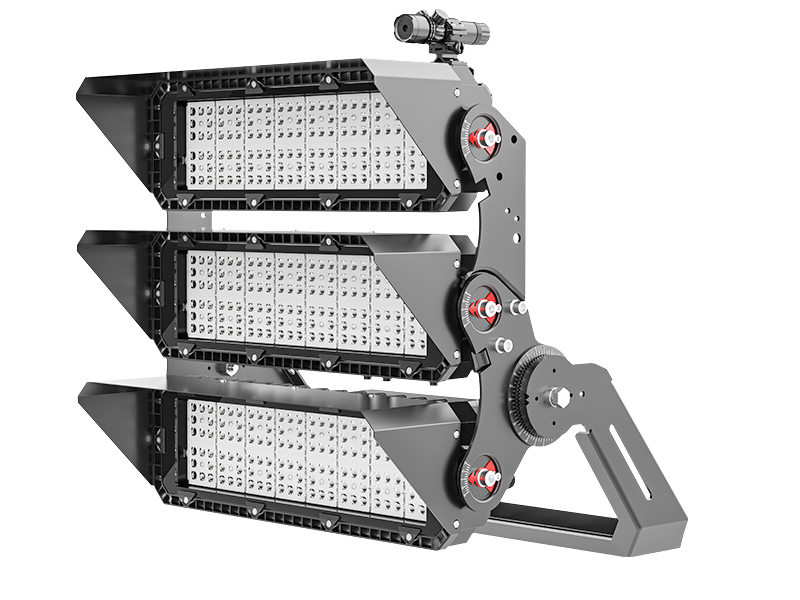
How long do LED lights last in calendar years?
A rated operating life can be converted into years with a simple calculation:
Calendar years = rated operating hours ÷ daily operating hours ÷ 365
| Daily operation | 50,000 operating hours equals | Typical context |
|---|---|---|
| 8 hours per day | About 17.1 years | Office, retail or single-shift facility |
| 12 hours per day | About 11.4 years | Outdoor area or extended shift |
| 16 hours per day | About 8.6 years | Two-shift industrial operation |
| 24 hours per day | About 5.7 years | Continuous production or infrastructure |
These figures describe accumulated operating time only. A fixture installed outdoors for 17 calendar years still experiences temperature cycles, moisture, airborne pollution and electrical events while it is switched off. Controls may reduce burning hours, but they do not stop materials and seals from ageing.
When a client asks, “how long do LED lights last in our operating schedule?”, the daily hours supply only the first part of the answer. The fixture construction and site conditions determine whether those theoretical years are realistic.
LED rated life is not a countdown to sudden failure
Traditional lamps are often discussed in terms of the point at which a proportion of a test group has burned out. LEDs usually lose output gradually, so their performance is commonly expressed as lumen maintenance.
L70 is the operating time at which the relevant light source is projected to retain 70% of its initial luminous flux. An LED that reaches L70 has not necessarily gone dark. It may still operate, but the installation might no longer deliver the maintained illuminance required for a road, warehouse, production line or playing field.
Other thresholds can be specified. L80 and L90 require 80% and 90% of initial output to remain, so they reach their thresholds earlier than L70 for the same depreciation curve. A project that cannot tolerate much light loss may be designed around a higher maintenance threshold rather than waiting for L70.
A suffix such as B50 adds a population statement. In simplified terms, an L70-B50 value identifies the time when 50% of the population is expected to have reached the L70 threshold. Read the complete notation; “50,000 hours” by itself leaves important assumptions unstated.
LM-80 and TM-21: what they prove and what they do not
A reliable answer to “how long do LED lights last?” needs evidence with a clearly defined scope. Package-level lumen maintenance and complete-luminaire reliability are related, but they are not the same measurement.
These two references appear on many LED datasheets, but they perform different jobs:
- LM-80 is an IES method for measuring the maintenance of light output characteristics from LED packages, arrays or modules under controlled conditions.
- TM-21 uses LM-80 data to project long-term luminous-flux maintenance for those LED light sources.
They do not, on their own, predict the lifetime of the complete luminaire. The Illuminating Engineering Society explicitly warns against using a TM-21 projection as an entire-product lifetime claim because the driver, optics and other components have different failure mechanisms.
TM-21 also limits how far measured data may be projected. Under the commonly described 6X rule, 10,000 hours of qualifying LM-80 data cannot support a reported projection beyond 60,000 hours. A much longer number generated by extending the curve may look precise, but it is not a compliant reported TM-21 projection.
The LED operating temperature and drive current in the finished fixture matter. Ask for the in-situ temperature measurement that connects the selected LED package and luminaire configuration to the applicable LM-80 data. A report for the same brand but a different package, drive condition or thermal environment does not automatically support the product being offered.
What usually determines real LED service life?
Driver temperature and component quality
The driver converts the incoming power into regulated current for the LEDs. It contains capacitors, semiconductors, magnetics and control circuitry, all operating under electrical and thermal stress. DOE reliability guidance notes that driver electronics can be a more important concern than the LED source itself.
How long do LED lights last under high ambient temperature? There is no single derating factor for every design. The answer depends on the measured temperatures of the LED source, driver and other components inside the actual housing.
Compare the driver’s rated life at a stated case temperature, not only a brand name or maximum ambient-temperature line. The assembled luminaire should keep the measured driver temperature within the conditions used for that rating.
Heat removal from the LEDs
LEDs produce less wasted energy than many legacy sources, but they still generate heat at the junction. The thermal path—from the LED board through the interface and housing to the surrounding air—controls operating temperature. Blocked fins, heavy dust, undersized housings and mounting arrangements that trap hot air can all work against the design.
Electrical surges and power quality
Outdoor poles, long cable runs and industrial distribution systems can expose fixtures to switching transients and lightning-related surges. Surge protection should be coordinated with the project supply, grounding and exposure; a single kilovolt figure on a datasheet is not a complete protection design.
Water, dust and chemical exposure
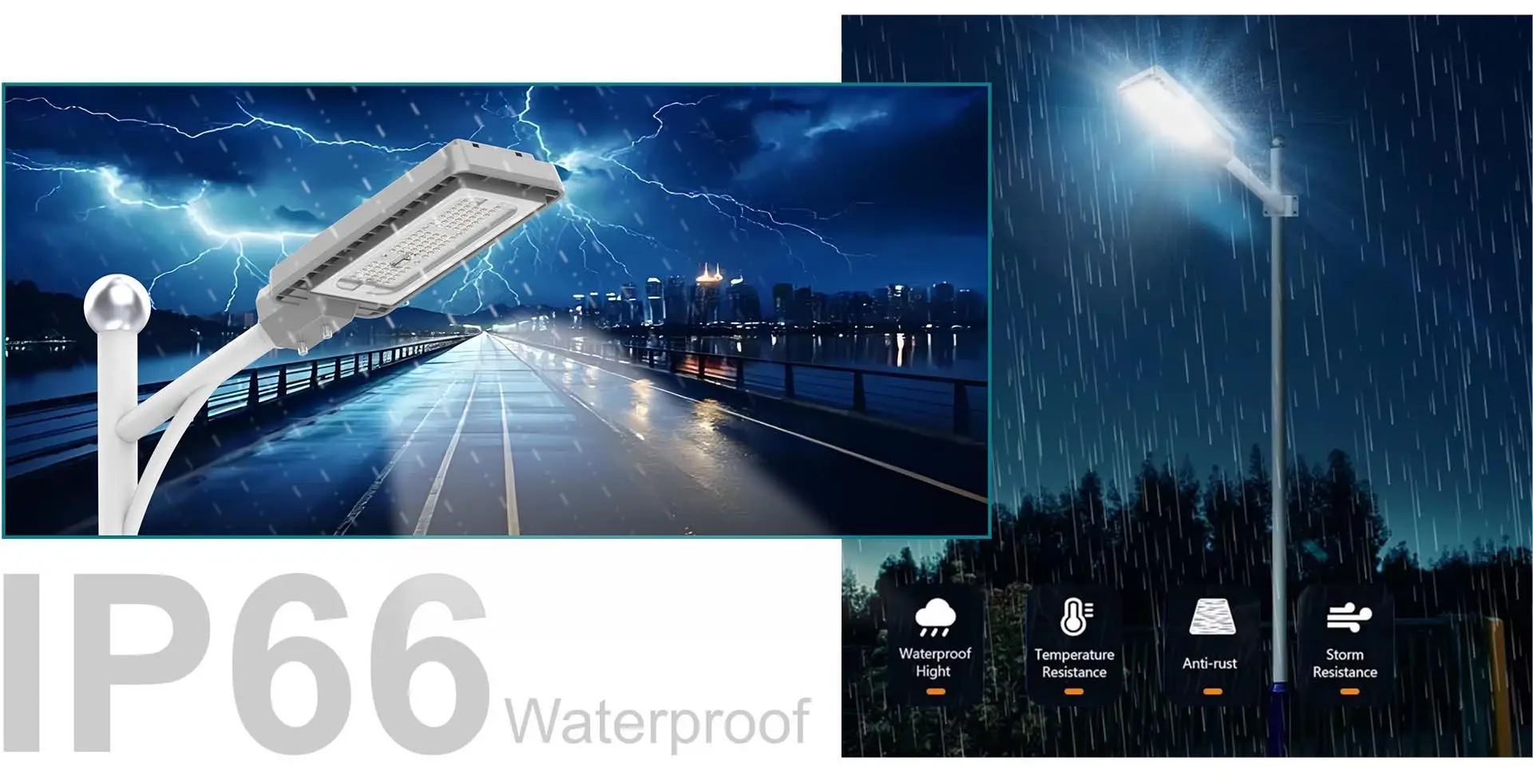
Ingress can damage drivers, boards and connectors or contaminate optical surfaces. An IP rating comes from a defined test and does not guarantee indefinite performance after poor installation, damaged gaskets or incompatible cable glands. Coastal salt, chlorine, cleaning chemicals and corrosive vapours also require suitable housing, coating and fastener materials.
How long do LED lights last outdoors? A credible estimate must account for surge exposure, enclosure construction, corrosion resistance, ambient temperature and the planned inspection cycle—not only the nominal L70 figure.
Optical and color changes
A light can remain switched on while its lens yellows, output falls, distribution changes or color shifts beyond an acceptable limit. Those changes may trigger replacement in retail, broadcast, architectural and inspection applications before the LEDs reach their published L70 value.
Controls and switching
Dimming and occupancy controls can reduce operating hours and heat exposure. Poorly matched controls can do the opposite by causing flicker, unstable operation or repeated driver stress. Confirm dimming protocol, minimum level, sensor logic and switching-device compatibility during specification.
How long do LED lights last when dimmed? Lower output can reduce operating stress in a compatible system, but the benefit cannot be quantified without the driver design, dimming profile and thermal conditions.
How long do LED lights last in different applications?
| Application | Main life stress | Useful specification check |
|---|---|---|
| Warehouse high bay | High ambient temperature, dust and difficult access | Driver case temperature, cleanable housing and service access |
| Street lighting | Surges, daily thermal cycling, rain and pollution | Surge coordination, enclosure details and tool-free service options |
| Sports and high mast | High output, wind exposure and expensive access | Thermal data, remote-driver options, modular repair and aiming retention |
| Food processing | Wash-down, chemicals, cold zones and hygiene | Ingress rating, material compatibility and cleaning method |
| Marine or coastal | Salt, humidity and galvanic corrosion | Housing, bracket and fastener materials plus coating system |
This is why one answer to “how long do LED lights last?” cannot cover every project. A moderate indoor fixture and a floodlight facing salt spray may use a similar LED package but experience very different system-level ageing.
How to compare lifetime claims from suppliers
Start by asking what the claimed number actually describes. Is it an LED-package lumen-maintenance projection, a complete-luminaire test, a driver rating or an internal design target? Then request the conditions behind it.
The useful question is not only “how long do LED lights last?” but also what performance threshold, component scope, temperature and statistical basis support the answer.
- exact LED manufacturer, package and drive current;
- LM-80 report applicable to that LED source;
- TM-21 projection with test duration and reported limit;
- in-situ LED temperature for the worst-case luminaire configuration;
- driver model, rated life and case-temperature condition;
- complete-luminaire photometric data and initial output;
- maximum rated ambient temperature and mounting restrictions;
- surge protection configuration and test basis;
- ingress, impact and corrosion evidence relevant to the site;
- warranty term, exclusions, remedy and labour coverage;
- availability of replacement drivers, LED modules and seals.
Be cautious when a quotation simply says “100,000-hour lifespan” without an L-value, temperature, projection report or component scope. A defensible statement is usually less dramatic and much more specific.
Rated life and warranty are not the same
A five-year warranty does not mean the fixture will fail in year six, and a 50,000-hour lumen-maintenance claim does not create a 50,000-hour warranty. The warranty is a commercial commitment with defined conditions. Rated life is a performance or reliability statement based on specified evidence.
Read whether the warranty covers parts only, complete replacement, labour, lifting equipment, freight and consequential costs. For a high-bay or high-mast project, access can cost more than the replacement component.
Maintenance that helps LED fixtures last
How long do LED lights last with regular maintenance? Maintenance cannot turn a weak product into a reliable one, but it can prevent blocked cooling surfaces, damaged seals and loose connections from shortening the useful service period.
- Keep heat-sink surfaces and ventilation paths clear using an approved cleaning method.
- Inspect gaskets, cable glands, covers and drain features after service work.
- Check for corrosion, loose fasteners, damaged coatings and water marks.
- Record driver, module and surge-protection replacements by fixture location.
- Measure representative illuminance instead of waiting for complaints.
- Review control schedules so empty areas are not operating at full output.
- Use approved replacement components with compatible output current, voltage and controls.
Cleaning should restore the intended thermal and optical condition without damaging seals or coatings. Do not pressure-wash a luminaire merely because its enclosure carries an IP rating unless the manufacturer and site procedure permit that method.
When should LED lighting be replaced?
Replacement should follow the application’s performance and maintenance plan rather than a universal hour count. Relevant triggers include:
- maintained illuminance or uniformity falling below the project requirement;
- repeated driver or control failures across the installed population;
- unacceptable color shift or mismatched replacement modules;
- corrosion, cracked optics or degraded seals that threaten safety;
- obsolete components that make planned repair impractical;
- a retrofit whose measured energy and maintenance savings justify replacement.
For industrial projects, see ROKEE’s LED high bay lights, LED street lights and LED sports lights. Send the ambient conditions, operating schedule, mounting details and maintenance requirements for a product and thermal-configuration review.
Frequently asked questions
How long do LED lights last in years?
A 50,000-hour rating equals about 17.1 years at eight hours per day, 11.4 years at 12 hours per day or 5.7 years in continuous operation. Actual service life also depends on the fixture, environment and failure criterion.
Do LEDs burn out or slowly get dimmer?
Both outcomes are possible. LED sources usually depreciate gradually, while a driver or another component can fail suddenly and switch the luminaire off.
What does L70 at 50,000 hours mean?
It means the relevant LED source or product is projected to retain 70% of its initial luminous flux at 50,000 operating hours under the stated conditions. It does not mean every complete fixture will run without another component failure for that period.
Does frequent switching shorten LED life?
LEDs generally tolerate switching better than many discharge lamps, but the driver and control system still need to be designed for the switching pattern. Compatible occupancy controls can reduce operating hours and heat exposure.
Why do some LED fixtures fail early?
Common causes include excessive temperature, driver or component defects, electrical surges, water ingress, corrosion, poor connections and unsuitable controls. A failed installation should be diagnosed rather than blamed automatically on the LED chips.
Authoritative references
Related Posts