
CRI and TLCI both describe color performance, but they answer different questions. Learn how to specify LED sports lighting for spectators, players and broadcast cameras.
NEMA vs Zhaga Socket for Smart Street Lights
The NEMA vs Zhaga socket decision is not simply a choice between an old and a new connector. Both interfaces can support replaceable control nodes on outdoor luminaires, but they use different mechanical formats, electrical arrangements and interoperability frameworks. The best option depends on the local control ecosystem, node power requirements, driver compatibility and maintenance strategy.
Write the interface into the street-light specification early. Adding a socket later may change the luminaire housing, wiring, driver, ingress protection and control architecture.
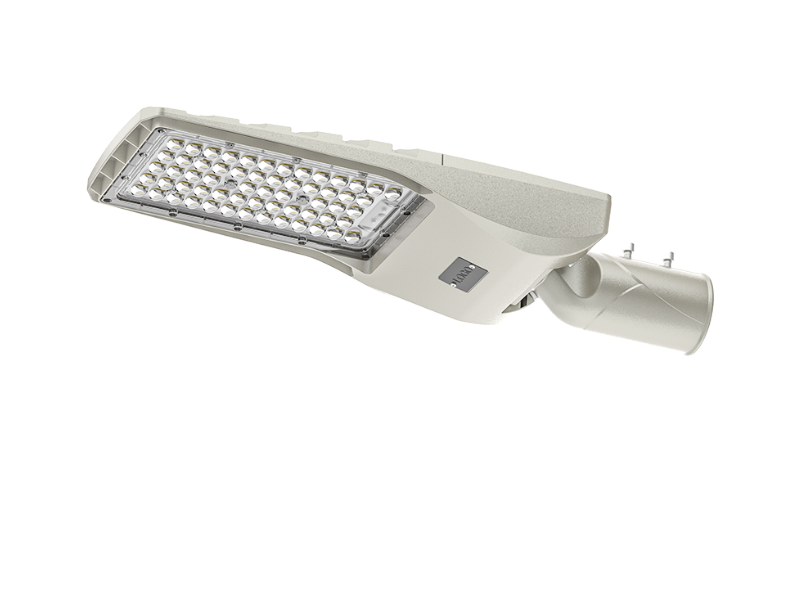
What a smart street-light socket does
An external socket allows a photocell, sensor or networked control node to be installed and replaced without opening the main luminaire compartment. A basic photocell may switch the light at dusk and dawn. A connected node may also provide dimming, scheduling, energy data, alarms or asset-management functions.
The socket does not create those functions by itself. The node, LED driver, wiring and management platform must support the required behavior. A mechanical fit is only one part of compatibility.
That is why a NEMA vs Zhaga socket review should start with the complete control architecture, not a photograph of the connector.
NEMA socket: established outdoor control format
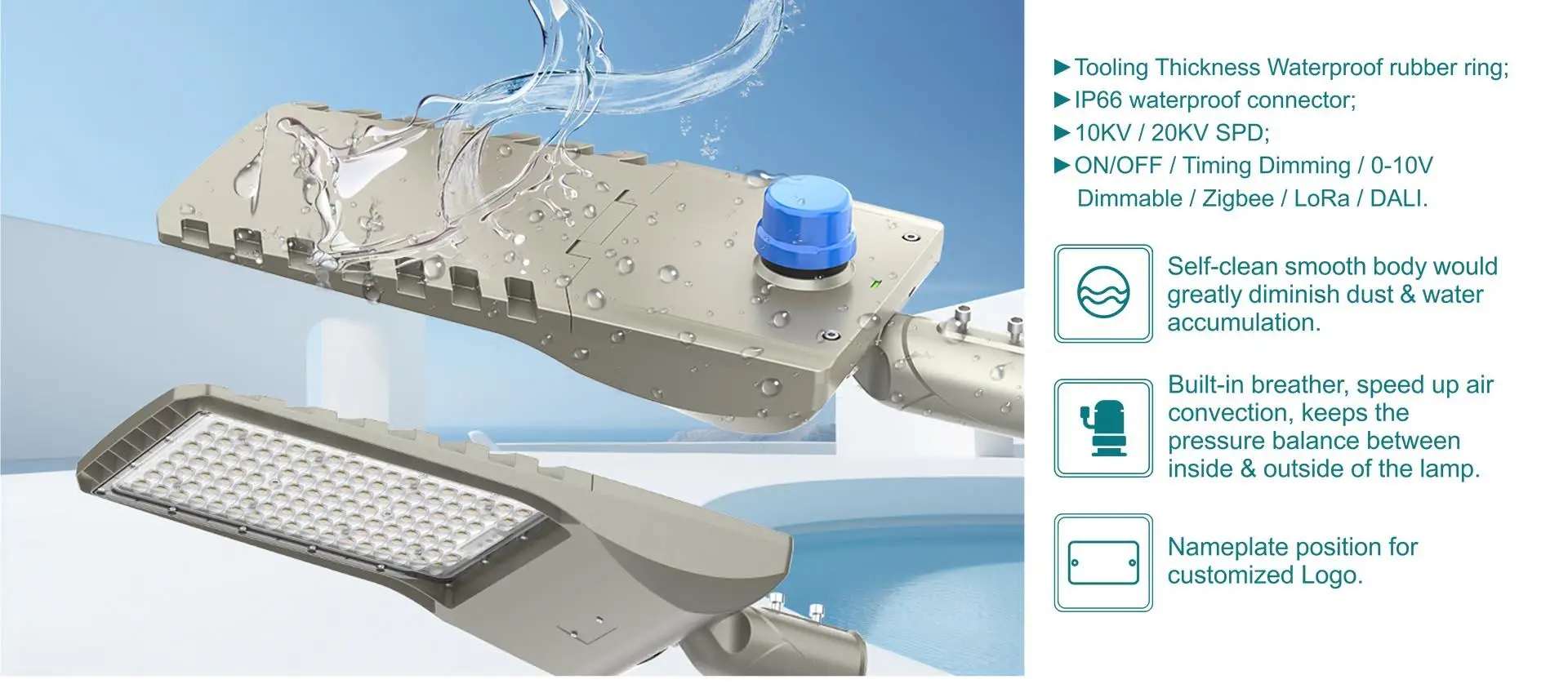
In North American roadway lighting, the twist-lock photocontrol format has a long installed history. ANSI C136.41 covers dimming control between an external locking-type photocontrol or similar device and a roadway or area luminaire. Multi-contact receptacles commonly described as seven-pin NEMA sockets can provide the line connections plus low-voltage control or communication contacts, depending on the implementation.
Advantages of the NEMA approach include a mature supply chain, familiarity among utilities and room for line-powered control nodes. The external node is typically larger than a Zhaga Book 18 device. Verify the exact receptacle, contact assignment, driver protocol and node rating; “NEMA ready” is not a complete control specification.
Zhaga socket: compact interface for a modular ecosystem
Zhaga Book 18 defines a compact interface between an outdoor luminaire and a sensing or communication module. In a Zhaga-D4i system, the luminaire-side components and control device work within a defined data and auxiliary-power architecture. Certification matters: a connector that resembles the Book 18 form factor is not, by appearance alone, proof of full interoperability.
Zhaga sockets can be placed on the top or bottom of a luminaire depending on the sensing and communication requirement. The compact form is useful for low-profile control nodes, while D4i-capable drivers can make luminaire, energy and diagnostic data available to compatible controls.
NEMA vs Zhaga socket comparison
| Decision point | NEMA-style receptacle | Zhaga Book 18 interface |
|---|---|---|
| Common market context | Strong installed base in North American roadway and area lighting | International smart-city and D4i-oriented projects |
| Node form | Larger twist-lock photocontrol or network node | Compact module format |
| Power architecture | Can accommodate line-powered devices; confirm implementation | Low-voltage auxiliary power within the Book 18/D4i architecture |
| Control compatibility | Depends on receptacle contacts, driver and node protocol | Depends on Book 18, D4i components and certification scope |
| Typical procurement driver | Existing utility photocell/node fleet and local maintenance practice | Compact controls, sensor options and defined smart-luminaire ecosystem |
Neither column means that every product using the label will communicate with every control platform. Request a component schedule that names the luminaire, driver, receptacle, node, protocol and central management system.
Five questions that decide the interface
These five questions turn the NEMA vs Zhaga socket discussion into a maintainable project decision.
1. What is already installed?
A city with thousands of compatible photocells, commissioning tools and trained technicians may value continuity more than connector size. A greenfield smart-city project may prioritize a certified modular ecosystem. Survey the existing fleet before issuing the luminaire schedule.
2. Does the node require mains or auxiliary power?
Control-node power is a fundamental architecture choice. Confirm voltage, steady-state consumption, inrush and failure behavior. Do not assume that an adapter preserves every electrical and data function.
3. Which dimming and data protocol is used?
Identify whether the project uses DALI/D4i, 0–10 V or another defined interface. Then confirm the exact LED driver supports it. Our guide to DALI vs DMX lighting control explains why the protocol should follow the application rather than the connector name.
4. Where should the sensor sit?
A top-mounted node may have a good view for daylight sensing and radio communication. A bottom-mounted sensor may be better for motion or environmental detection. Check shielding by trees, poles, solar panels and the luminaire housing.
5. Who owns commissioning and cybersecurity?
For connected lighting, define device provisioning, credentials, software updates, data ownership, network coverage and what the light does when communication fails. These requirements are independent of the physical NEMA vs Zhaga socket choice.
How to write the street-light specification
A clear RFQ should name the applicable interface standard and edition, required certification, driver protocol, node power supply, mounting position and ingress protection after the node or protective cap is installed. It should also state whether the luminaire must ship with a photocell, shorting cap, control node or weatherproof blanking cap.
Document the NEMA vs Zhaga socket decision in both the luminaire schedule and control-system submittal so two vendors cannot interpret the interface differently.
- Specify the operating voltage and surge environment.
- List all required dimming, metering and diagnostic functions.
- Require compatibility evidence for the proposed driver and node.
- Confirm that field replacement does not require opening the sealed driver compartment.
- Test a complete sample with the intended management platform before volume production.
ROKEE’s LED street light range includes smart-ready configurations for different roadway projects. The G10 flip-top smart LED street light, for example, is designed around service access and configurable project requirements. Confirm the required socket and control package when requesting a quotation rather than treating it as a universal default.
Frequently asked questions
Can a Zhaga node be installed on a NEMA socket?
Not directly. They use different mechanical and electrical interfaces. An adapter may exist for a particular application, but its power, data, sealing and certification implications must be checked.
Is a seven-pin NEMA socket always a smart-lighting system?
No. It provides an interface, but smart functions depend on the connected node, driver wiring, communication network and software platform.
Does a Zhaga socket require a D4i driver?
Zhaga Book 18 and D4i are designed to work together in certified Zhaga-D4i outdoor systems. Confirm the certification and component requirements for the project rather than relying on the connector shape.
Which socket is better for a street-light retrofit?
The better choice normally matches the existing node fleet, utility maintenance practice, control protocol and future management platform. Compatibility with installed equipment can outweigh connector size.
Can a street light have both NEMA and Zhaga interfaces?
Some project-specific luminaires can be configured with more than one interface or mounting position. The manufacturer must confirm enclosure rating, wiring, driver capacity and the allowed simultaneous devices.
Related Posts