A successful street lighting design does more than make a road look bright. It must…
LED Sports Lighting for Outdoor Stadiums: A Practical Planning Guide
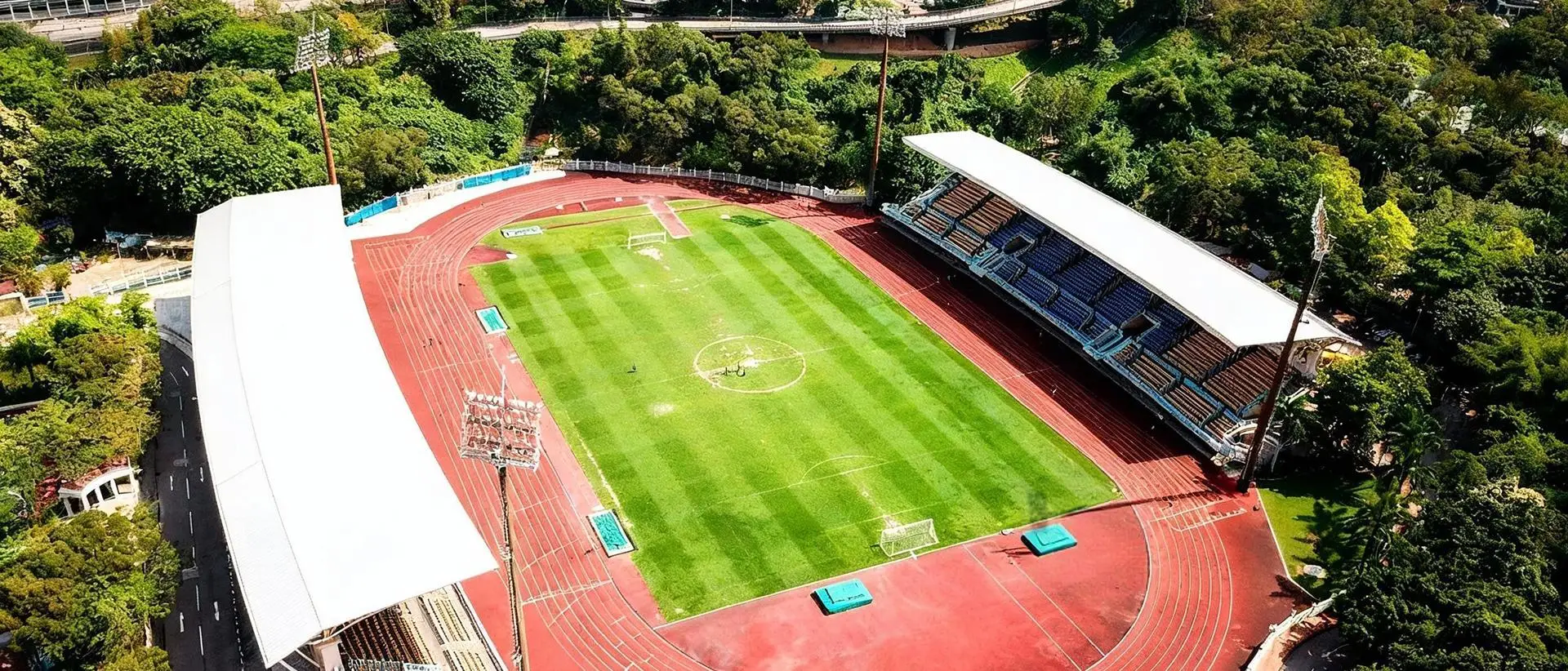
LED sports lighting is now the preferred solution for many outdoor stadiums because it combines precise optical control, instant switching, long service life and compatibility with modern controls. However, a successful stadium project is not simply a matter of replacing old floodlights with high-wattage LED fixtures. The lighting design must support player visibility, spectator comfort, broadcast requirements, safe circulation and responsible use of light after dark.
This guide explains the main decisions behind an outdoor stadium lighting system. It is intended for venue owners, electrical contractors, consultants and procurement teams preparing a new installation or retrofit. Final targets should always be confirmed by a qualified lighting designer according to the sport, competition level, local regulations and any governing-body requirements.
What Makes LED Sports Lighting Different?
Traditional metal-halide systems require warm-up and restrike time, while LED luminaires reach full output immediately. This makes event scheduling easier and enables zoning, dimming and scene control. Well-designed optics can also place more useful light on the playing surface and reduce wasted uplight or spill light.
The value of LED sports lighting depends on the complete system—not only fixture efficacy. Optics, aiming, pole positions, mounting height, electrical quality, thermal design and controls all affect the result. A high lumen rating does not guarantee good visibility if the beam pattern produces bright spots, dark zones or excessive glare.
Start With the Required Lighting Class
Begin by defining how the venue will be used. A community training field, regional competition venue and televised professional stadium usually need different lighting levels and performance criteria. The LED sports lighting design brief should identify:
- The sport and field dimensions.
- Training, amateur, professional or broadcast use.
- Horizontal and vertical illuminance targets.
- Uniformity requirements.
- Glare and spill-light limits.
- Camera positions and slow-motion broadcast needs.
- Emergency, cleaning and maintenance modes.
FIFA notes that consistent lighting, even distribution across the pitch and reduced environmental impact are important criteria for modern football floodlighting. Its official floodlight standards and guidance are a useful reference for football projects, but the project team must confirm which edition and competition category apply.
Key Photometric Metrics to Specify
Illuminance
Horizontal illuminance describes the light reaching the playing surface. Vertical illuminance measures light on vertical planes and is especially important for recognizing players, tracking airborne balls and producing clear camera images. A professional design calculates both rather than relying on a single average lux value.
Uniformity
Uniformity describes how evenly light is distributed. Poor uniformity forces eyes and cameras to adjust repeatedly between bright and dark zones. A strong LED sports lighting design controls both average-to-minimum and maximum-to-minimum relationships according to the applicable standard.
Glare
Glare can reduce visual comfort and make a fast-moving ball difficult to follow. It is influenced by mounting height, aiming angle, luminous intensity at critical viewing directions and the number and location of luminaires. Visors, shields and purpose-designed sports optics can help, but they must be evaluated in the photometric model.
Flicker and Color Quality
For televised venues, driver performance matters as much as light output. Low flicker supports high-speed and slow-motion recording. Appropriate correlated color temperature and color rendering help cameras reproduce uniforms, turf and skin tones consistently. Ask suppliers for test data that matches the proposed driver and dimming configuration.
Choose Beam Angles Through a Lighting Calculation
Narrow beams are useful for long throws from high masts, while medium or wider distributions can cover nearer zones. Most LED sports lighting systems require a combination of optics. Selecting one beam angle for every position often creates inefficient overlap or dark areas.
Before ordering fixtures, request a calculation based on accurate pole coordinates, mounting heights, field geometry and luminaire photometric files. The report should show isolux plots, point-by-point values, uniformity, aiming coordinates, glare evaluation and off-site spill light. Review a suitable range of LED sports light products only after the required distributions are understood.
Plan Poles, Aiming and Structural Loads Together
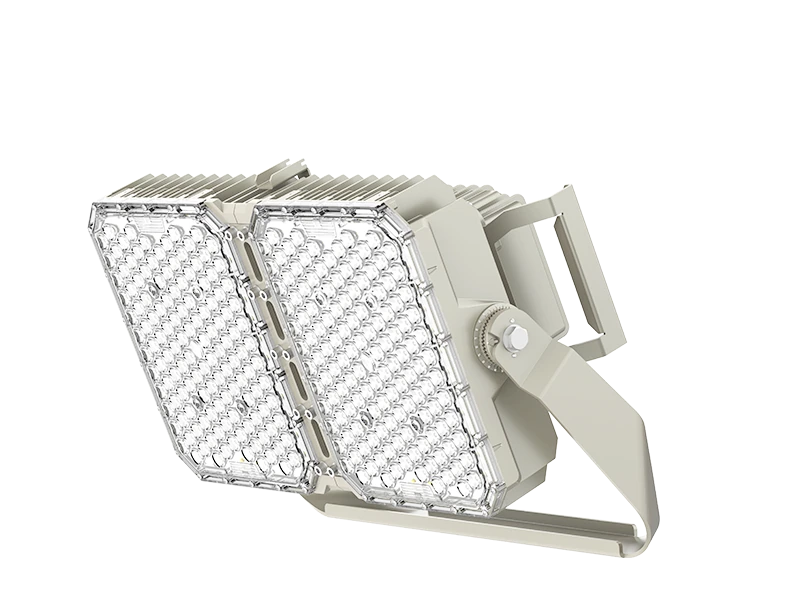
High-mast positions influence shadowing, glare and maintenance access. Structural engineers should verify wind area, fixture weight, brackets, pole capacity and foundation loads. Electrical designers must also account for inrush current, surge protection, cable lengths, voltage drop and control wiring.
Aiming should be completed using the coordinates from the approved lighting design. Small angular errors can move a narrow beam far away from its intended target. Numbering each luminaire and providing an aiming schedule makes commissioning and future maintenance more reliable.
Reduce Spill Light and Environmental Impact
Outdoor stadiums can affect nearby homes, roads and wildlife. The U.S. Department of Energy explains that directional LED optics can improve cutoff and control backlight and uplight in its outdoor area lighting guidance. DarkSky and the Illuminating Engineering Society also recommend that outdoor light be useful, targeted, no brighter than necessary, controlled and warmer-colored where practical.
For LED sports lighting, responsible design may include shielding, lower-output training scenes, curfews, precise aiming and automatic shutoff. The appropriate color temperature should be selected after considering broadcast needs, local requirements and the surrounding environment.
Use Controls to Match the Event
A control system can provide separate scenes for maintenance, training, amateur competition, professional matches and broadcast events. Dimming reduces energy use when full output is unnecessary. Instant switching also supports event effects, although dynamic scenes should be tested for electrical load, synchronization and camera compatibility.
Specify the control protocol, zoning, local override, failure mode and network-security responsibilities early. For RGBW or DMX applications, review relevant stadium lighting projects to understand how functional white light and entertainment scenes can coexist.
Evaluate Quality Beyond Wattage
Compare complete LED sports lighting data: lumen output at operating temperature, efficacy, photometric files, surge protection, ingress and impact ratings, driver lifetime, thermal performance, corrosion protection and warranty terms. For coastal or chemically aggressive sites, material selection and surface treatment require additional attention.
Ask how lumen maintenance is documented and whether replacement drivers, optical modules and control components will remain available. Serviceability is especially important when fixtures are mounted on tall masts and access requires specialized equipment.
Commissioning and Maintenance Checklist
- Confirm fixture model, optic, quantity and mounting orientation.
- Verify pole positions, brackets, torque settings and electrical protection.
- Aim every luminaire according to the approved schedule.
- Measure illuminance and uniformity after dark.
- Check glare, spill light, controls, dimming and emergency behavior.
- Record final aiming angles and control settings for future maintenance.
- Create a cleaning, inspection and re-measurement schedule.
Commissioning protects the LED sports lighting design intent. If measured results differ from the calculation, investigate aiming, voltage, control settings and site geometry before adding more fixtures.
Plan the System Before Selecting the Fixture
The best LED sports lighting project begins with performance requirements and a detailed site model. It then matches optics, output, poles, controls and electrical design to those requirements. This approach produces a more predictable result than comparing products by wattage alone.
ROKEE Lighting supports project teams with fixture selection, photometric planning and application-specific configurations. Contact our lighting team with your drawings, pole heights, target lighting level and project location to prepare a stadium lighting proposal.
Frequently Asked Questions
What lighting level does an outdoor stadium need?
The required lighting level depends on the sport, venue size, competition class and whether the event will be televised. A project-specific lighting calculation should confirm illuminance, uniformity, glare and vertical-lighting requirements.
How do you choose beam angles for stadium lighting?
Narrow beams are generally used for long-distance projection from high masts, while medium and wide beams illuminate nearer areas. Most stadiums require a combination of beam angles based on pole positions and mounting heights.
Why is uniformity important in sports lighting?
Good uniformity reduces bright and dark areas across the playing surface, improving visibility for athletes, spectators and cameras.
Related Posts