
ATEX is EU law. IECEx is a voluntary international certificate built on the same IEC…
How to Choose Warehouse LED High Bay Lights
Choosing warehouse LED high bay lights requires more than matching a wattage to the mounting height. A good system must provide enough light for the work, control glare, illuminate vertical rack faces, integrate with controls and remain reliable in the actual temperature and dust conditions. The layout should also support safe movement, accurate picking and comfortable visual performance.
This practical guide covers the information facility managers, contractors and purchasing teams should collect before requesting a quotation. A qualified lighting designer should confirm final light levels and layout against the tasks, applicable codes and local regulations.
Start With the Warehouse Tasks
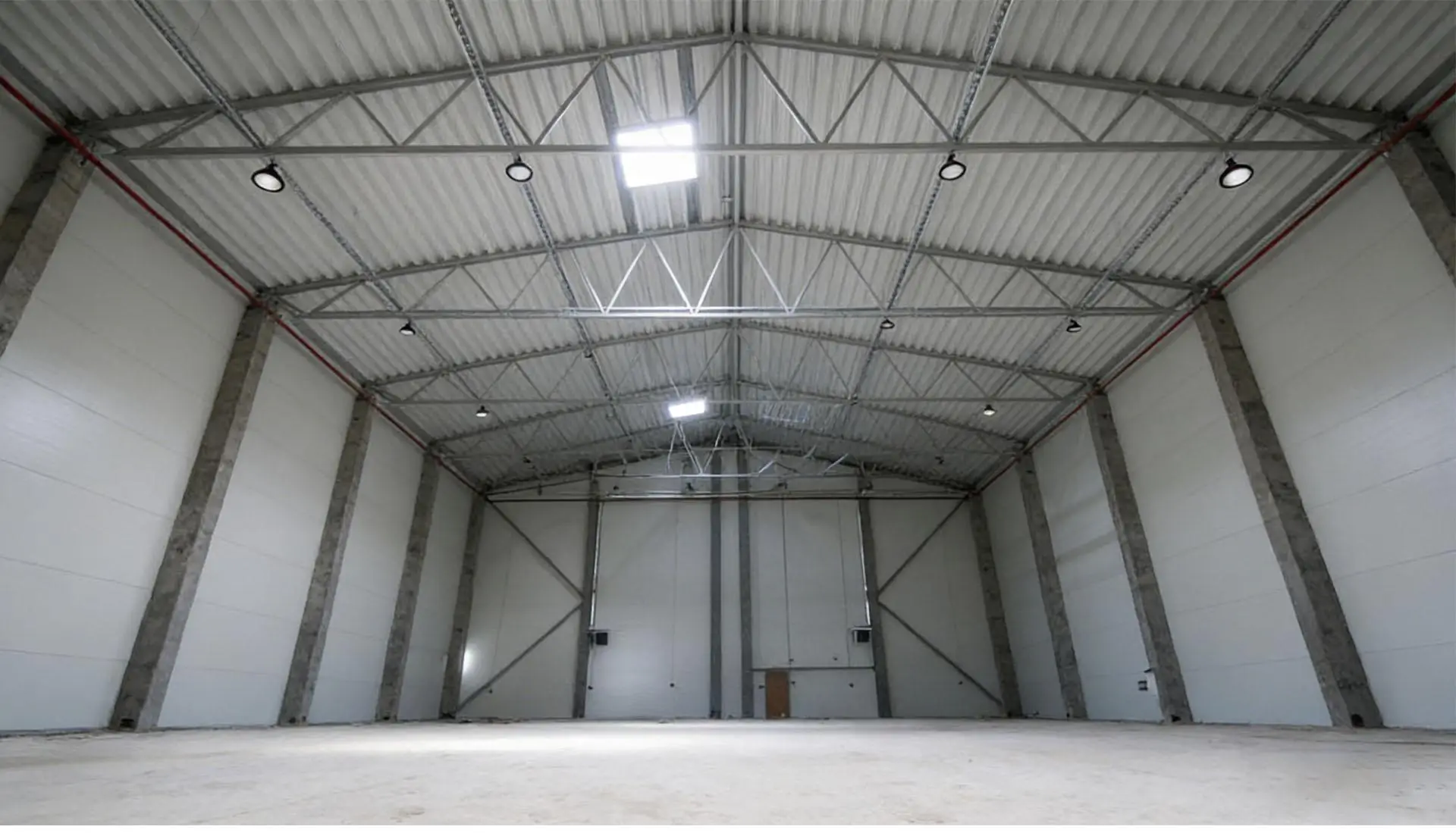
A bulk storage area, packing station, loading bay and high-rack picking aisle do not have identical visual needs. Document where people read labels, operate forklifts, inspect goods or work with machinery. Consider vertical visibility as well as horizontal illuminance because labels and rack faces are often the real visual target.
OSHA’s warehousing guidance emphasizes adequate lighting for exit routes and safe operation. Its warehouse hazards and solutions resource is a useful safety reference, but project teams must identify all standards that apply to their facility and location.
Measure Mounting Height and Aisle Geometry
Record the finished-floor-to-luminaire height, ceiling structure, rack height, aisle width and any cranes, ducts or sprinklers. These dimensions determine the required distribution and spacing of warehouse LED high bay lights. “High bay” commonly describes taller industrial spaces, but product labels are not a substitute for a calculation.
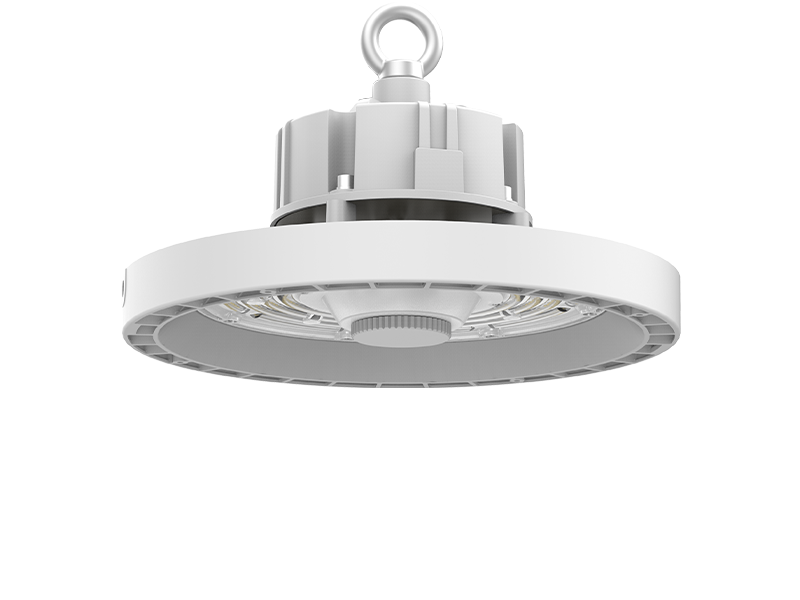
Wide open areas may work well with round UFO fixtures and broad distributions. Tall narrow aisles often need aisle optics or linear high bays that send more light along the aisle and onto vertical rack faces. Using a very wide beam at excessive height can create glare near the fixture while leaving the working plane underlit.
Set the Illuminance and Uniformity Targets
The target for warehouse LED high bay lights depends on the task, worker age, contrast, surface reflectance and applicable standard. Do not rely on a single average lux value. Minimum values and uniformity matter because dark patches can hide obstacles or make labels difficult to read.
Include task planes at the correct height and vertical calculation grids where racks are important. Emergency routes, stairs, loading edges and quality-control stations may need separate criteria. A site survey should also record daylight and existing surface colors.
How to Size Warehouse LED High Bay Lights
Wattage describes power consumption, not useful light on the task. Compare initial and maintained lumens, efficacy, distribution and projected lumen maintenance. The U.S. Department of Energy’s industrial LED luminaire purchasing guidance uses lumens per watt as a key efficiency measure and includes high-bay luminaires in its covered categories.
Efficient warehouse LED high bay lights can still perform poorly if the beam pattern is wrong. Request IES or LDT files for the exact model and optic, then calculate the actual layout. Review available ROKEE industrial lighting products according to the distribution required by the space.
Manage Glare and Visual Comfort
High-output warehouse LED high bay lights can be uncomfortable when workers repeatedly look upward or drive forklifts beneath them. Glare depends on intensity, viewing angle, mounting height, optics and room brightness. Diffusers, reflectors and lower-brightness distributions may help, but they can also affect efficiency.
Ask the designer to evaluate likely viewing directions, not only numerical averages on the floor. A uniform system with sensible spacing often feels better than fewer extremely bright fixtures.
Use Controls to Reduce Operating Hours
Warehouses frequently contain zones that are occupied only part of the day. Occupancy sensors can dim or switch fixtures in inactive aisles, while daylight controls can reduce output near skylights. Zoning should match actual operational patterns rather than treating the building as one circuit.
Check sensor coverage at the real mounting height and around racks. Define the background level, delay time, fade behavior and manual override. Networked controls may provide energy and maintenance data, but the facility should understand commissioning and cybersecurity responsibilities.
Check Temperature, Dust and Moisture
Ambient conditions affect the driver life and lumen output of warehouse LED high bay lights. Cold stores require luminaires and sensors rated for low temperature. Hot manufacturing warehouses may need products with higher ambient ratings. Dusty or wash-down areas require appropriate ingress protection and cleaning methods.
Review chemicals, oil mist, vibration and impact risks as well. A fixture appropriate for a clean logistics center may not be suitable above a corrosive process. If combustible dust creates a classified hazardous location, ordinary warehouse LED high bay lights must not be used; select properly certified hazardous-area equipment.
Compare Lifetime Cost
Purchase price is only one component. Estimate annual energy, controls savings, access cost, cleaning, driver replacement and downtime. Ask for warranty terms and component availability. A serviceable design can be valuable when lifts or production shutdowns are required to reach the ceiling.
Document the assumed operating hours and energy rate so proposals can be compared on the same basis. Avoid savings claims based on an unrealistic schedule or on wattage reduction without confirming maintained light levels.
Warehouse Survey Checklist
- scaled floor plan and ceiling layout;
- mounting height and available mounting points;
- rack height, width and aisle direction;
- tasks and target light levels by zone;
- surface colors and daylight openings;
- temperature, dust, moisture and chemical exposure;
- operating hours and occupancy patterns;
- existing voltage, circuits and controls;
- emergency-lighting and maintenance requirements.
Installation and Commissioning
Verify the locations of warehouse LED high bay lights against racks, sprinklers and equipment before installation. Confirm electrical load, inrush current, dimming wiring and sensor placement. After installation, measure representative task areas and check dark zones, glare and control operation.
Record final settings and create a cleaning and inspection plan. See ROKEE warehouse and industrial lighting projects for application examples, then adapt the approach to the actual facility.
Request a Warehouse Lighting Calculation
The best warehouse LED high bay lights are the ones that meet the task with controlled glare, suitable uniformity and reliable performance in the site environment. Begin with accurate dimensions and operating information.
Contact ROKEE Lighting with your floor plan, mounting height, rack layout, required light level and operating hours for a project-specific recommendation.
Frequently Asked Questions
How many LED high bay lights does a warehouse need?
The count depends on dimensions, mounting height, racks, target light levels, reflectance, fixture output and optic. A photometric calculation is the reliable way to determine quantity and spacing.
Should I choose UFO or linear high bay fixtures?
UFO fixtures often suit open areas, while linear or aisle distributions can suit rack aisles. The correct choice comes from the geometry and photometric result, not shape alone.
What color temperature is best for a warehouse?
Neutral or cool white is common, but the decision should reflect visual tasks, worker comfort, color discrimination and site standards. Color rendering and consistency are also important.
Related Posts