
ATEX is EU law. IECEx is a voluntary international certificate built on the same IEC…
Custom LED Stadium Lights Supplier: What to Expect
Custom LED stadium lights are not standard floodlights with a different label. A genuine custom supply covers venue-specific optics, output packages, mounting geometry, electrical integration and control behavior designed around one field or arena. This guide explains when customization is justified, what a supplier should deliver, and how to evaluate quotations that both claim to be “custom”.
The distinction matters because stadiums concentrate risk: high mounting heights, large spectator areas, broadcast requirements and difficult access make correction work expensive. Custom engineering done before procurement is far cheaper than retrofit work done after installation.
What Does Custom Mean in Stadium Lighting?
Customization exists on a spectrum. At the moderate end, a supplier selects beam angles, wattage steps, visors and mounting brackets from a modular platform to fit a specific field. At the deep end, the supplier develops dedicated optics, modifies housing structure for a roof constraint, or integrates special control protocols. Both are legitimate custom approaches, but the deliverables and lead times differ.
A custom LED stadium lights supplier should state clearly which parts of the system are platform products and which are project-specific. Vague claims of “fully customized” with no engineering evidence are a warning sign. Ask for the photometric calculation, the optics chosen and why, and the mounting design rationale. Governing references such as FIFA’s stadium guidelines help anchor the performance brief before customization decisions are made.
When Custom LED Stadium Lights Are Worth It
Standard sports floodlights cover many training and community fields well. Customization earns its cost in specific situations:
- constrained geometry, such as poolside venues, courts surrounded by buildings, or short pole setbacks;
- strict spill-light limits near residential areas or roads;
- broadcast or competition levels requiring vertical illuminance at camera positions;
- existing structures that impose unusual mounting angles or load limits;
- multi-sport venues needing one fixture family to serve several field layouts.
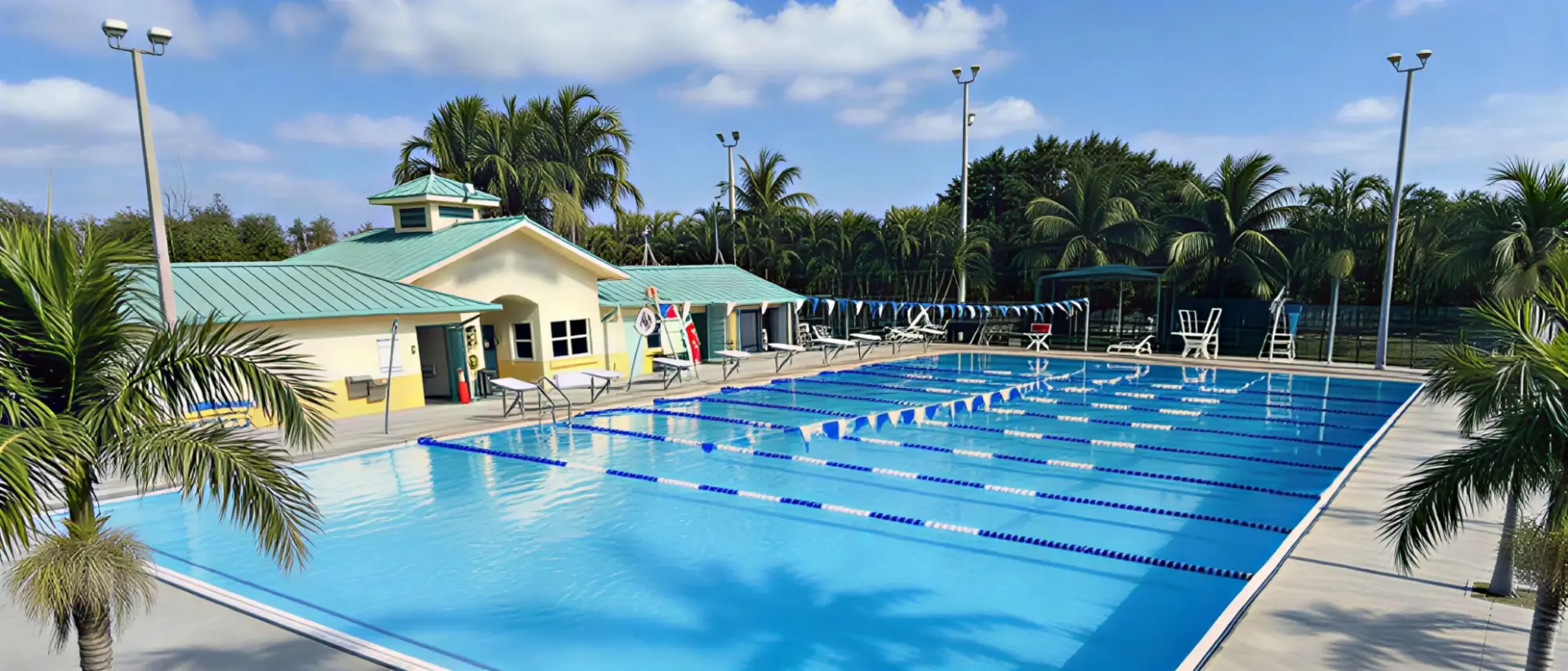
The swimming pool project shown above is a typical case: luminaires sit close to the water in a constrained envelope, so beam shaping and glare control had to be designed for that geometry rather than selected from a generic catalog.
Optics and Beam Design
Beam design is where custom LED stadium lights separate from catalog products. The supplier should combine narrow beams for distant aiming points with wider distributions for nearby coverage, control overlap to achieve uniformity, and use accessories such as shields or visors to cut spill. Real IES or LDT files, not manufacturer “typical” curves, must feed the calculation.
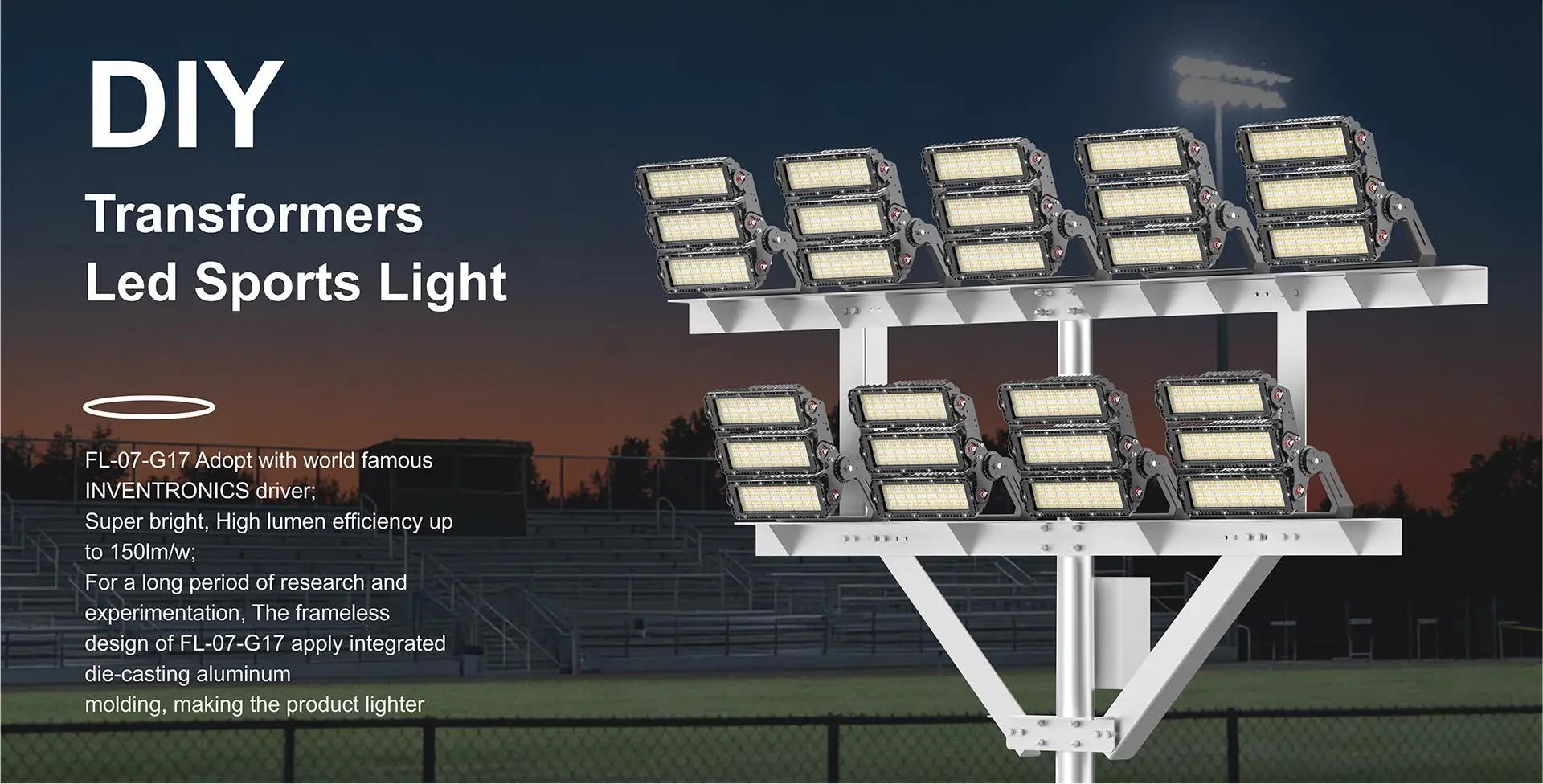
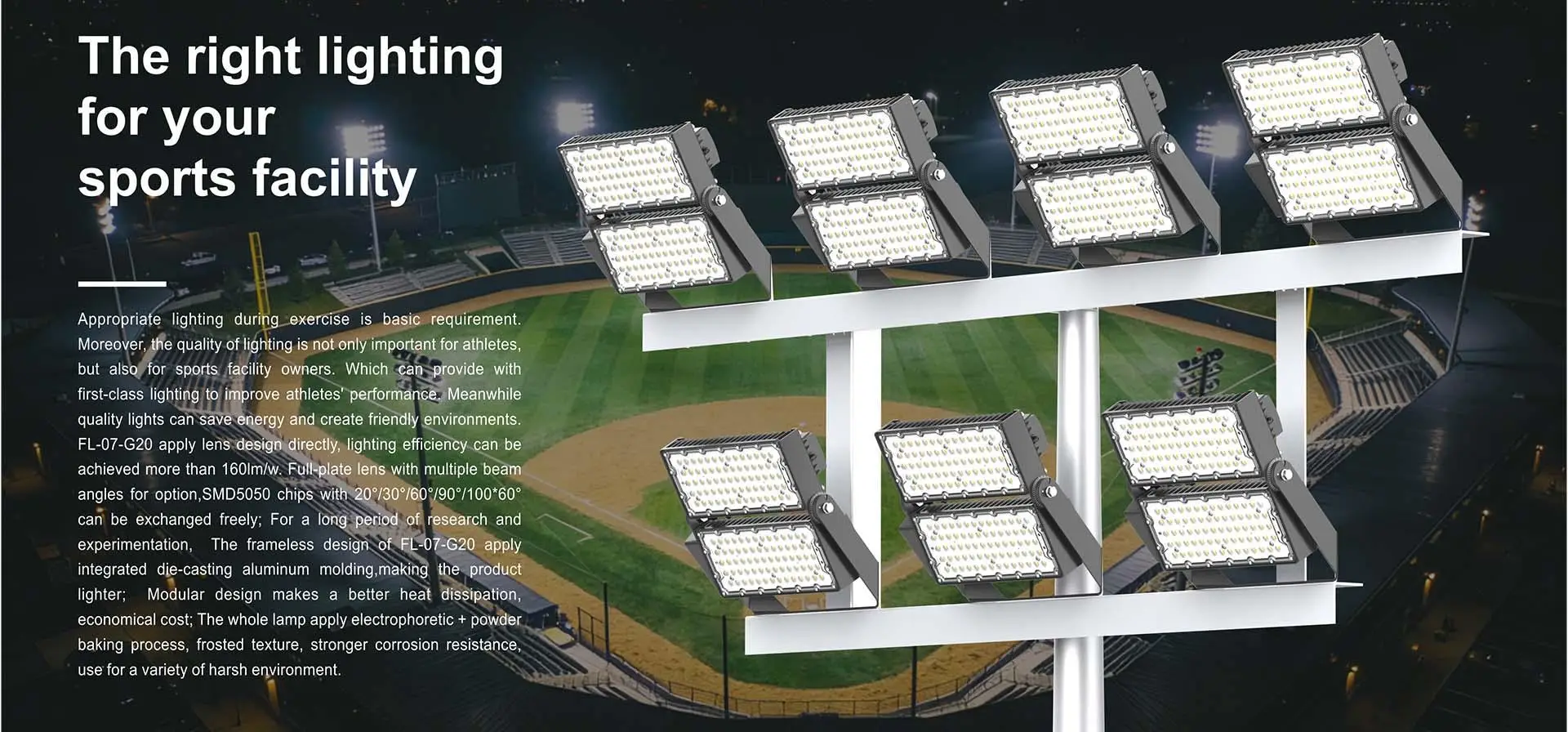
Review the ROKEE LED sports light range as a platform example: modular stadium luminaires with interchangeable optics allow project-specific beam mixes without bespoke tooling, which shortens lead time while keeping the design venue-specific.
Mechanical, Mounting and Wind Load
Custom work extends to structure. Headframe geometry, bracket angles, projected wind area and weight distribution must match the pole or roof design. A supplier delivering custom LED stadium lights should provide weight, dimensions, wind area and, where needed, force data for the structural engineer, plus aiming diagrams that keep each luminaire reachable by the planned access method.
For retrofit venues, confirm the existing structure has been reviewed before new headframes are specified. Corrosion protection class should match the site environment; coastal venues need more than the standard coating package.
Electrical, Controls and Commissioning
Custom systems often include scene control for training, competition and events, DMX or DALI integration, and monitoring of driver status across hundreds of luminaires. The supplier should define the control architecture, provide addressing and programming documentation, and take responsibility for commissioning support until measured results match the design. Efficiency baselines from the U.S. Department of Energy’s solid-state lighting program give buyers an independent reference when comparing system-level performance.
Budget structure is part of the same conversation. Our stadium lighting cost guide explains how design, aiming and commissioning appear as line items, so custom engineering can be compared against standard options on a like-for-like basis.
How to Evaluate a Custom LED Stadium Lights Supplier
- venue-specific photometric calculation with real photometric files, not generic data;
- clear statement of which elements are custom and which are platform;
- structural data for poles or roofs, including wind area and mounting loads;
- glare and spill analysis where neighbors or broadcast demand it;
- control design, commissioning scope and acceptance measurement plan;
- references from venues with similar constraints;
- warranty terms covering drivers and optics, with spare-part availability.
A supplier confident in its engineering will welcome these questions. See ROKEE sports lighting projects for documented custom installations.
Start Your Custom Stadium Lighting Project
Send ROKEE your field plan, sport and competition level, lighting criteria and any site constraints through the contact page. You will receive a venue-specific photometric proposal showing optics, fixture count, aiming and controls for your project.
Frequently Asked Questions
Do custom stadium lights cost more than standard ones?
Project-specific engineering adds cost, but it can reduce total project cost by lowering fixture count, pole load or correction work. Compare complete proposals on identical lighting targets rather than unit prices.
How long does a custom stadium lighting project take?
Platform-based customization typically follows standard production lead times; fully bespoke optics or housings add tooling and validation time. The supplier should state both at quotation stage.
Can existing poles be reused with custom lights?
Often yes, after structural review. Custom brackets and headframes are frequently designed precisely to adapt new LED luminaires to existing structures.
Related Posts