
ATEX is EU law. IECEx is a voluntary international certificate built on the same IEC…
Stadium Lighting Cost Guide: Budget and Project Factors
Stadium lighting cost cannot be estimated accurately from fixture wattage or field size alone. The final budget may include luminaires, poles or roof structures, electrical distribution, controls, installation equipment, photometric design, aiming, testing and long-term maintenance. Competition level, broadcasting requirements and existing infrastructure can change every one of these items.
This guide explains the main cost drivers and the information needed for a useful quotation. It avoids universal price claims because labor rates, codes, structural conditions, currency, logistics and performance criteria vary widely between projects.
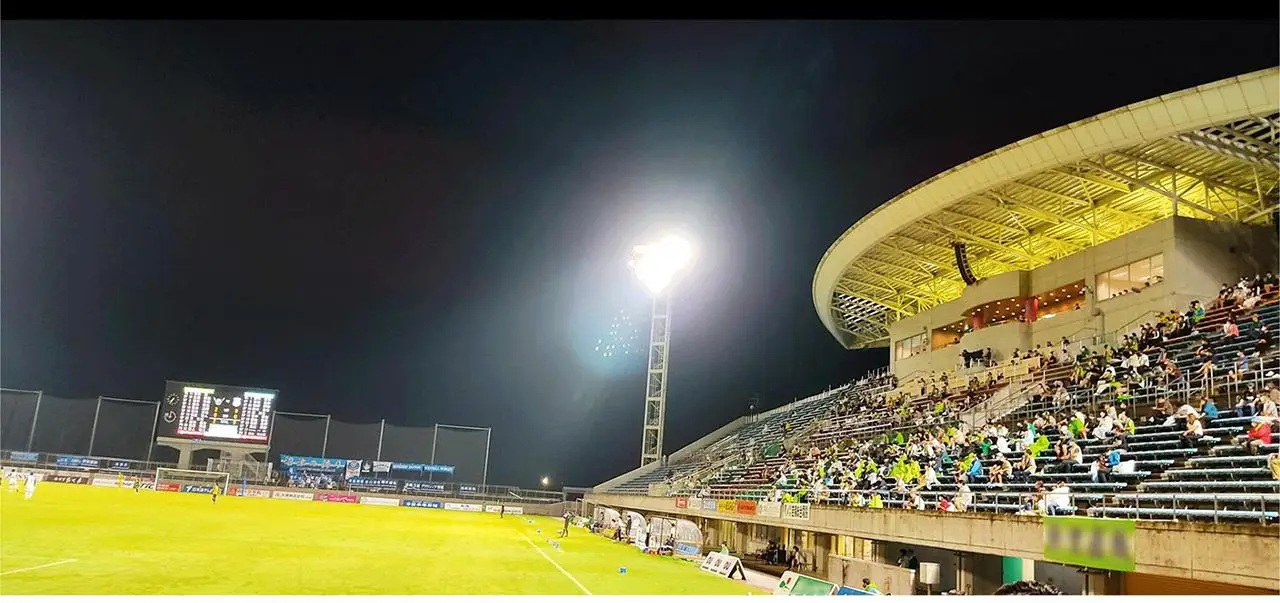
What Is Included in Stadium Lighting Cost?
A complete budget should separate the lighting equipment from the work required to make it operate safely and achieve the design. Typical categories include LED sports luminaires, drivers, mounting brackets, glare-control accessories, high-mast poles or roof supports, foundations, cables, switchgear, surge protection and control hardware.
Professional services also matter. Site surveys, structural engineering, electrical design, photometric simulation, permit support, aiming and commissioning may be separate line items. Freight, cranes, traffic management, nighttime work and removal of old equipment can be significant. Comparing fixture-only quotations with turnkey proposals will give a misleading result.
Performance Level Is the First Cost Driver
A community training field, a regional competition venue and a broadcast stadium do not have the same requirements. Higher competition classes may require greater maintained illuminance, tighter uniformity, better glare control and stronger color performance. Television production may add vertical illuminance requirements toward camera positions, flicker limits and scene-control needs.
Establish the sport, level of play, spectator capacity, camera use and governing criteria before asking for equipment quantities. FIFA’s stadium guidelines resources illustrate why venue planning must coordinate the field of play, infrastructure and operational requirements. Local associations and authorities may specify different or additional criteria.
Fixture Quantity, Output and Optics
Luminaires are a visible part of stadium lighting cost, but a low unit price does not guarantee a low project price. Optical efficiency determines how much emitted light reaches the field. Precise distributions can reduce wasted light, improve uniformity and sometimes reduce fixture count, structural load and connected power.
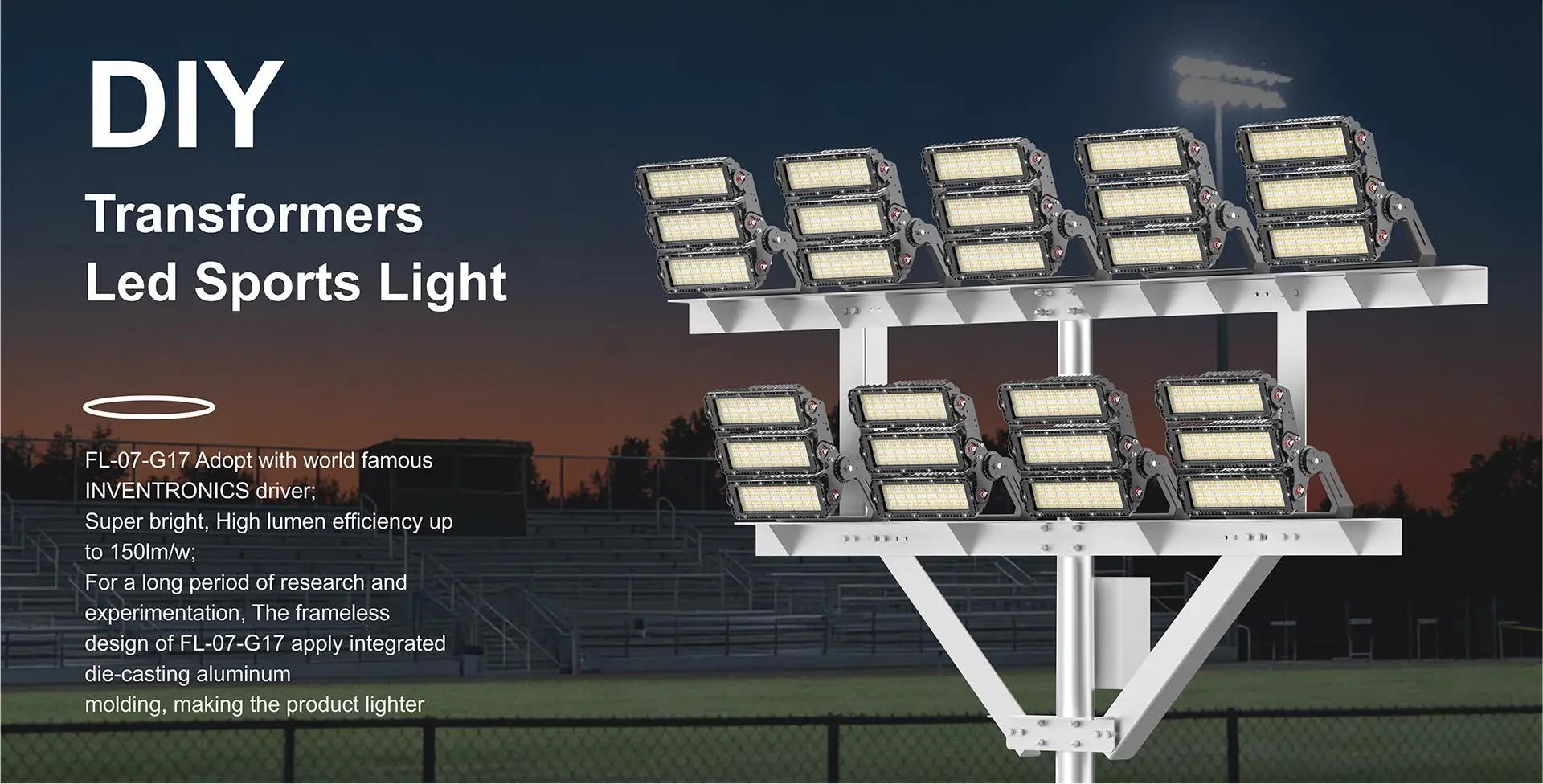
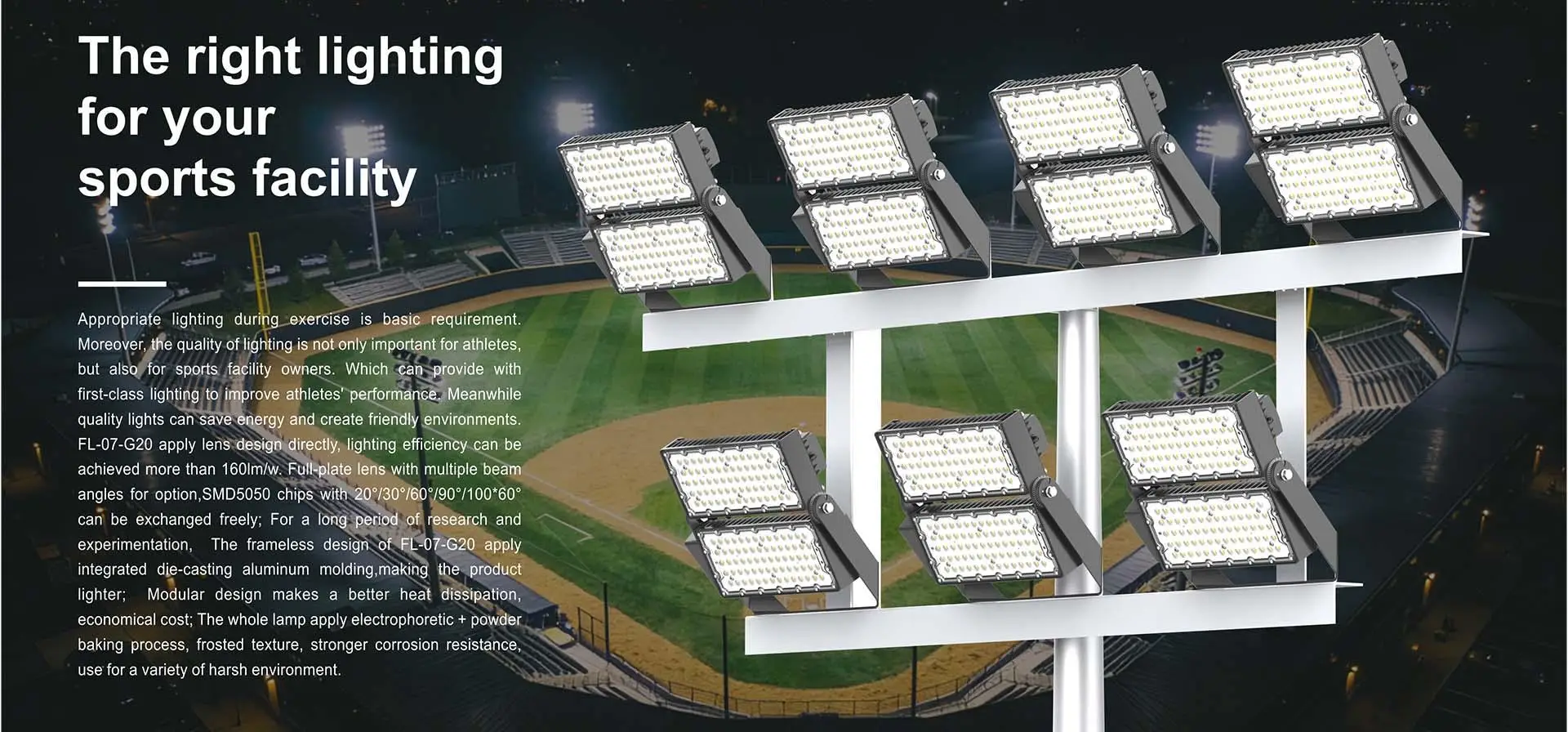
Compare proposals using the same maintained lighting targets and calculation assumptions. Confirm the exact LED package, driver current, beam angle, accessories and photometric file. Review the ROKEE LED sports light range as a starting point, then select output and optics through a project-specific calculation rather than a simple wattage replacement.
Poles, Foundations and Structural Work
New high-mast poles can represent a major share of the budget. Pole height, headframe size, wind area, soil conditions, foundation design, access and corrosion protection all affect price. Roof-mounted systems require confirmation that the structure can carry luminaire weight and wind loads without unacceptable vibration.
A retrofit may reuse existing poles, but only after a qualified structural review. New LED arrays can have a different projected area and weight distribution from old floodlights. Corrosion, foundation condition and cable routes must also be checked. Saving on an unverified structure can create safety risk and costly redesign later.
Electrical Infrastructure and Surge Protection
The electrical scope may include transformers, distribution panels, contactors, branch circuits, grounding, cable replacement and power-factor considerations. Long cable runs to high masts affect conductor size and voltage drop. Existing infrastructure may be reusable, partially reusable or unsuitable for the new load and control architecture.
Outdoor high-mast systems are exposed to switching events and lightning-related surges. Coordinate luminaire surge protection with upstream protective devices and site grounding. Include disconnects, safe isolation and access for maintenance. These elements can change stadium lighting cost even when two proposals use a similar fixture count.
Controls, Dimming and Event Programming
Simple recreational fields may need scheduled switching and a few dimming levels. Multi-use or broadcast venues may require DALI, DMX or another control protocol, scene programming, monitoring and integration with show lighting. Emergency or security modes may need separate logic.
Control hardware is only part of the expense. Network design, addressing, programming, operator training and documentation should be included. Define who is responsible for commissioning and future support. A system that is difficult to operate can waste energy and increase service calls.
Installation, Aiming and Commissioning
Installation cost depends on mast height, access roads, crane or lift requirements, work windows and venue operations. A retrofit may require removal and disposal of legacy floodlights before new brackets and luminaires can be installed. Projects in remote locations may carry additional transport and accommodation costs.
Precise aiming is not optional. Crews need an aiming schedule, suitable instruments and safe access to each mounting position. After aiming, measure representative field points, review glare and spill, verify control scenes and document final settings. Include corrective aiming time in the project plan instead of assuming the first installation will be final.
Photometric Design Reduces Budget Uncertainty
A calculation identifies the fixture count, beam mix, mounting positions and aiming needed to reach the target. It should report maintained horizontal and vertical illuminance, uniformity, glare metrics and relevant off-site effects. Use the exact IES or LDT files and realistic maintenance assumptions.
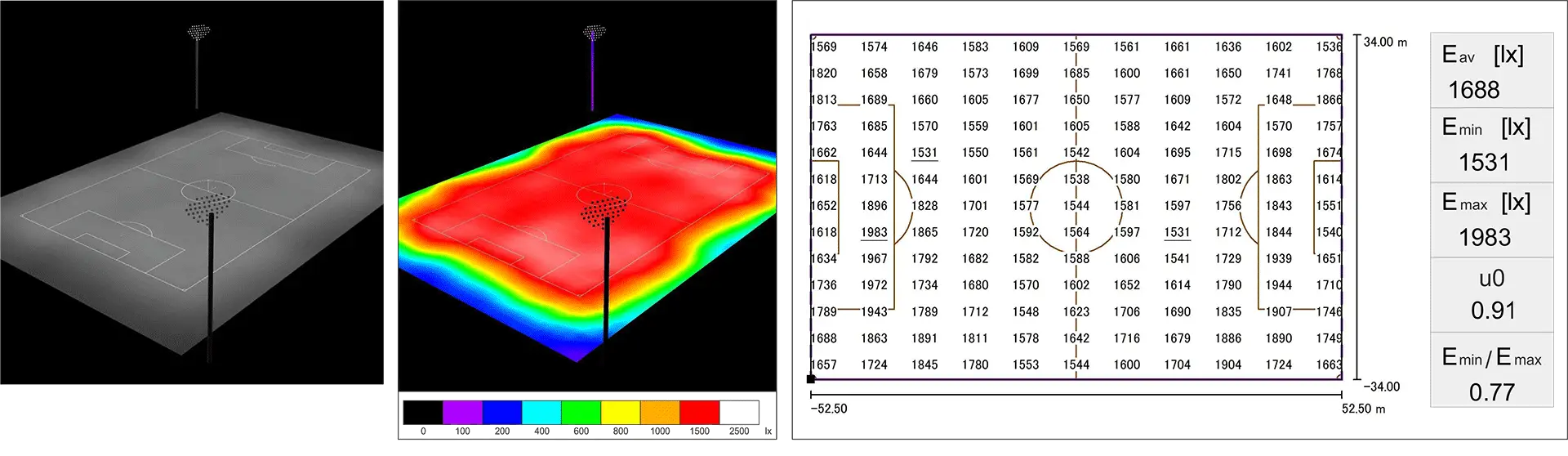
Design work has a cost, but it reduces uncertainty in equipment, power and construction quantities. It also allows alternatives to be compared on equal performance. The planning steps in our LED sports lighting guide can help teams prepare the necessary project data.
New Construction Versus LED Retrofit
New construction provides freedom to optimize pole positions, electrical routes and controls, but it includes complete civil and structural work. A retrofit can avoid some of those costs if usable infrastructure exists. It may also introduce constraints such as fixed pole locations, limited headframe capacity or outdated wiring.
For retrofit comparisons, document the existing system’s power, maintenance history and measured lighting performance. Do not claim savings from wattage alone. Confirm that the proposed LED solution delivers the required maintained result and that dimming schedules reflect actual event use.
Operating and Lifetime Cost
Purchase and installation are only the initial portion of stadium lighting cost. Estimate annual energy from connected load, operating hours and control schedules. Include inspections, cleaning, access equipment, driver or control replacement and the operational impact of failures.
Compare warranty coverage, spare-part availability and service responsibilities. A higher-efficiency product may reduce energy, while a serviceable system can reduce future lift and downtime expenses. The U.S. Department of Energy’s energy-efficient exterior lighting guidance provides useful procurement considerations for evaluating efficiency and controls.
A Practical Stadium Lighting Budget Formula
Use a structured worksheet rather than a price per fixture:
Total project budget = luminaires and accessories + poles or structural work + electrical infrastructure + controls + installation + design and commissioning + logistics, permits and contingency.
This formula keeps stadium lighting cost comparisons transparent. Ask every bidder to identify inclusions, exclusions, assumptions and validity period. Keep taxes, duties and currency basis visible. When comparing alternatives, use the same field criteria, operating hours, structural scope and expected service period.
Information Needed for an Accurate Quotation
- scaled field plan and sport markings;
- level of play, spectator use and broadcast requirements;
- target illuminance, uniformity, glare and spill criteria;
- existing or proposed pole locations and heights;
- structural drawings and available headframe capacity;
- site voltage, panels, cable routes and control requirements;
- operating hours and required lighting scenes;
- access limitations, work windows and local labor conditions;
- destination, delivery schedule, taxes and permit responsibilities.
How to Control Cost Without Sacrificing Performance
Control stadium lighting cost by defining the performance brief before product selection, modelling several optical layouts and reusing infrastructure only when it is verified. Separate training, competition and maintenance scenes so the venue does not operate at full output unnecessarily. Coordinate civil, structural, electrical and lighting design early to avoid late changes.
Do not reduce stadium lighting cost by removing glare control, surge coordination, structural checks or commissioning. These measures protect performance and safety. A transparent proposal should show how each value-engineering option affects light levels, power, installation and maintenance.
Request a Project-Specific Lighting Budget
An accurate stadium lighting cost estimate begins with a defined performance brief and verified site information. See ROKEE sports lighting projects for application examples, then use your own venue data for the final design.
Contact ROKEE Lighting with the field plan, pole details, competition level, lighting criteria and control needs for a photometric proposal and itemized project quotation.
Frequently Asked Questions
How much does stadium lighting cost?
There is no reliable universal figure. Field size, competition class, broadcast requirements, pole and foundation scope, electrical condition, controls, installation access and location all influence the budget. A site-specific design is required.
Is an LED retrofit cheaper than a new system?
It can be when existing poles, foundations and electrical infrastructure are suitable. Structural inspection and photometric design are necessary to confirm what can safely be reused.
What should a stadium lighting quotation include?
It should identify equipment, optics, quantities, performance assumptions, structural and electrical scope, controls, installation, aiming, testing, freight, warranty, exclusions and commercial terms.
Related Posts