
ATEX is EU law. IECEx is a voluntary international certificate built on the same IEC…
Warehouse Lighting Manufacturer: How to Choose the Right One
Warehouse lighting manufacturer capability matters more than catalog wattage when a project is planned. Two suppliers can offer similar-looking high bay fixtures, yet deliver very different results in photometric design, build quality, certification and long-term support. Choosing the right manufacturer reduces redesign work, installation delays and maintenance cost over the life of the facility.
This guide explains what separates a genuine manufacturer from a trading company, which capabilities to verify before placing an order, and how the evaluation applies specifically to warehouse environments such as logistics centers, distribution hubs and cold storage.
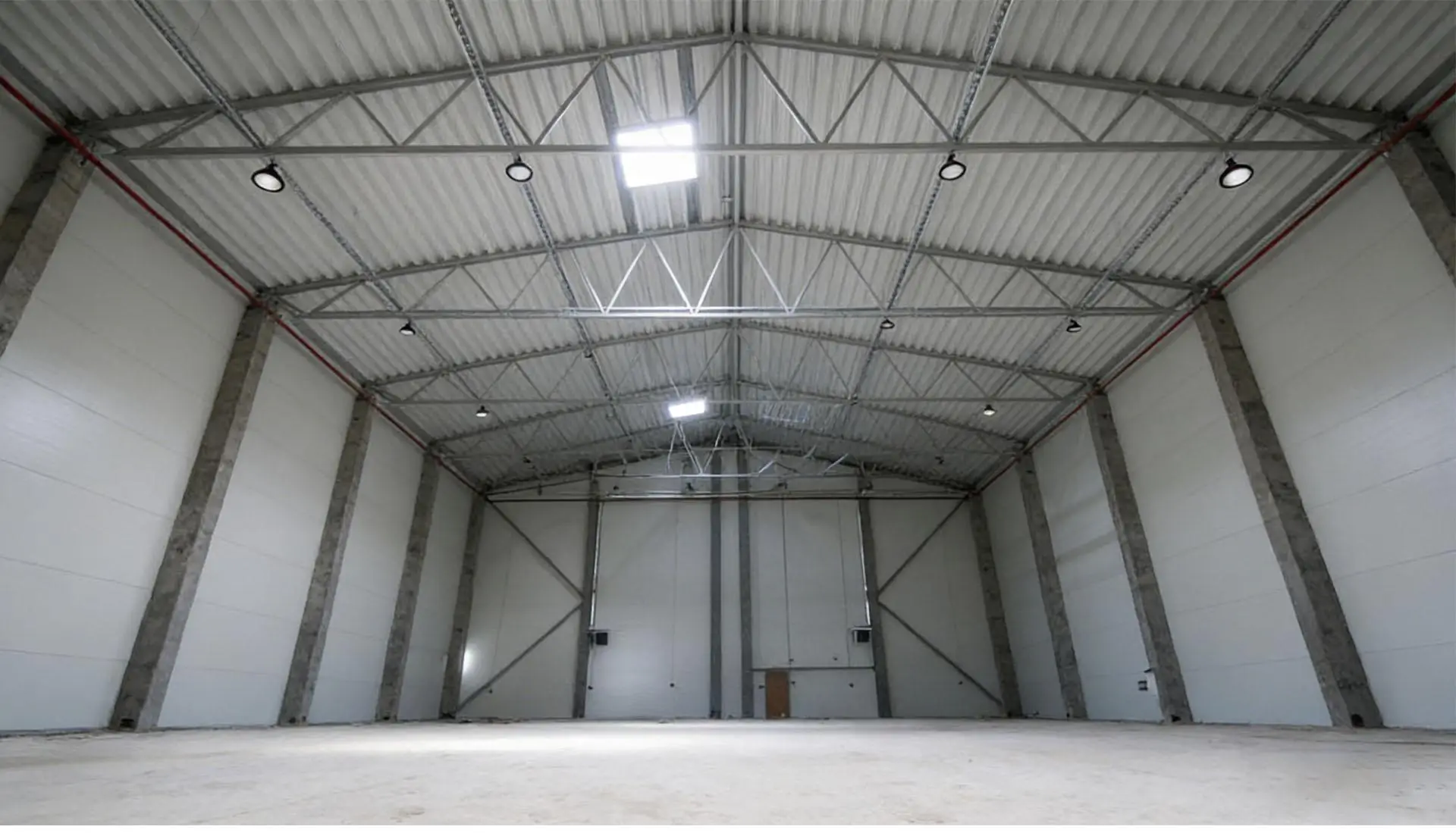
What Separates a Warehouse Lighting Manufacturer from a Reseller
A trading company resells catalog products and forwards questions to a third-party factory. An actual warehouse lighting manufacturer controls the engineering chain: optical design, thermal management, driver selection, housing production, assembly, testing and documentation. That control shows up in details buyers can request rather than in marketing claims.
Ask for IES and LDT photometric files produced for the exact fixture, thermal test reports, driver and LED package specifications, and production test records. A manufacturer can supply these quickly and consistently across product batches. If files differ between quotations or sample reports come from unrelated product families, the seller is probably not the producer.
Engineering and Photometric Support
Warehouse projects succeed or fail on photometric design. Rack heights, aisle widths, obstruction layouts and mounting positions determine which beam distribution actually reaches the working plane. A capable manufacturer provides dialux or AGi32 calculations using real files, models rack obstructions, and reports maintained illuminance and uniformity rather than a simple lumens-per-square-meter figure.
Engineering support also covers electrical planning: voltage drop on long runs, surge protection coordination, emergency circuit integration and control protocols. An experienced warehouse lighting manufacturer also maintains component traceability, so the LED package and drivers quoted are the ones delivered. When these questions receive engineering answers instead of price sheets, the supplier is behaving like a manufacturer. Our warehouse lighting design guide lists the project data a supplier needs for this calculation.
Manufacturing and Quality Control
Production quality determines whether sampled performance survives volume production and years of operation. Relevant checks include LED binning consistency, soldering and assembly process control, driver burn-in, high-potential and surge testing on finished units, and salt-spray or aging tests where the environment demands them.
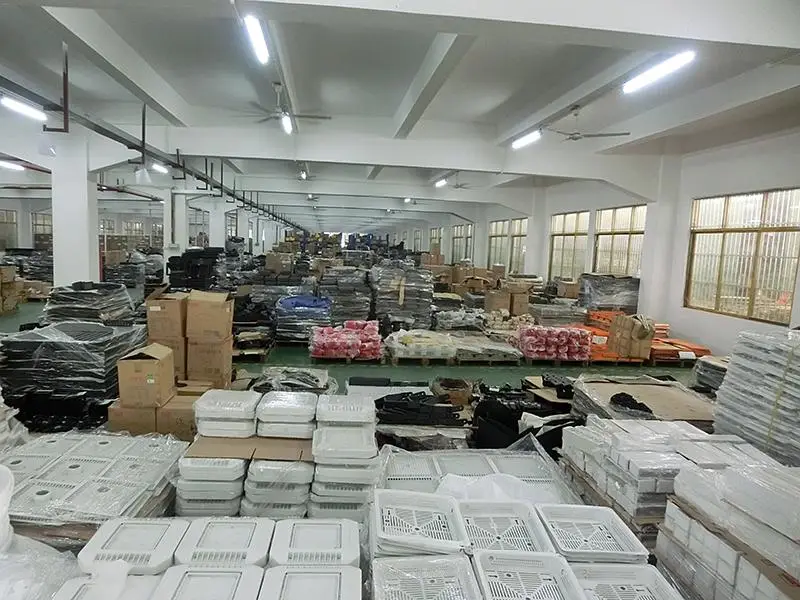
Buyers should ask which tests run on every unit and which run per batch, request sample retention policies, and confirm how warranty claims are diagnosed and settled. A warehouse lighting manufacturer with its own production line can answer these questions precisely; intermediaries usually cannot. Visiting the line, or requesting a recorded factory audit, is the simplest way to confirm the claim.
Certifications and Compliance
Certification requirements depend on the destination market. Common items include CE and UKCA marking, RoHS, UL or ETL listings for North America, SAA for Australia, and market-specific energy documentation. Certificates must match the exact model and be verifiable through the issuing body’s database, not only through PDF copies.
For warehouses handling food, chemicals or cold chain goods, additional requirements may apply, such as IP ratings against dust and wash-down conditions, low-temperature driver ratings, or photobiological safety reports. Confirm the certification scope before the purchase contract is signed, because retrofitting compliance documents after shipment is rarely possible. The U.S. Department of Energy’s solid-state lighting program publishes baseline performance data that helps buyers sanity-check manufacturer claims.
Product Range for Warehouse Environments
A single warehouse usually needs more than one fixture type. Typical combinations include:
- UFO high bay lights for bulk storage and open floor areas;
- linear high bay lights for narrow rack aisles, where the elongated distribution reduces cross-aisle waste;
- low-bay or linear fixtures for picking modules and mezzanines;
- canopy and wall pack fixtures for docks and exterior perimeters;
- emergency versions or battery backup where escape routes require it.
Review the ROKEE LED high bay light range to see how output, beam options and accessories cover these cases. A manufacturer with a coherent industrial range can match optics to each zone instead of forcing one product into every application.
Project Support: Design, Logistics and Commissioning
Beyond the product, a warehouse lighting manufacturer contributes to schedule and risk control. Typical support includes lighting layout revisions during the design phase, packing engineered for container shipping, documentation for customs and installation teams, spare-part recommendations, and responsive technical support during commissioning. Safety-oriented layouts should also reflect OSHA’s warehousing guidance on lighting, aisle marking and powered equipment operations.
Ask how design revisions are handled when rack layouts change after the quotation, what the warranty process requires as evidence, and whether drivers and spare units can be ordered years later. Manufacturers that keep production records per order can usually honor these requests; resellers often cannot.
See ROKEE industrial lighting projects for examples of completed warehouse installations and the design decisions behind them.
How to Compare Manufacturers Objectively
Use a checklist rather than comparing prices alone:
- photometric files and calculation service for the actual project;
- verified certificates matching the quoted models;
- production test procedures and sample reports;
- LED package, driver brand and thermal design documentation;
- warranty terms, claim process and spare-part availability;
- shipping experience to the destination port and packing standards;
- references from comparable warehouse installations.
Score each candidate on these points. Price differences usually reappear later as maintenance cost, energy overuse or replacement work, so weight capability over unit price. A genuine warehouse lighting manufacturer will also agree to sample validation before mass production; resellers rarely control that step.
Plan Your Warehouse Lighting With ROKEE
ROKEE is a warehouse lighting manufacturer producing high bay, linear high bay and complementary industrial fixtures with in-house engineering and test capability. Send your warehouse dimensions, rack layout, mounting height and target lux levels through the contact page for a photometric layout and an itemized quotation.
Frequently Asked Questions
What is the difference between a warehouse lighting manufacturer and a trading company?
A manufacturer owns production and engineering and can supply original photometric files, test data and certificates for its own models. A trading company resells third-party products and depends on others for technical answers.
How should a warehouse buyer verify LED quality?
Request LED package and driver specifications, thermal and production test reports, and certificates verifiable in official databases. Test samples against the supplied photometric files before mass production.
Do warehouses need custom fixtures?
Rarely. Standard high bay ranges with the right optics, controls and ratings cover most warehouses. Customization usually applies to mounting, emergency integration or unusual environments such as cold storage.
Related Posts