
ATEX is EU law. IECEx is a voluntary international certificate built on the same IEC…
How to Choose LED Flood Lights for Sports Fields
Choosing LED flood lights for sports fields starts with the lighting class the field must achieve, not with a fixture catalog. Training grounds, school fields, club venues and broadcast stadiums have different requirements for illuminance, uniformity, glare and color rendering, and each requirement changes the right fixture choice.
This guide sets out the selection sequence in the order professional projects follow: define criteria, choose optics, control glare, design mounting, verify with photometric calculation, then finalize products. Following this order prevents the most common mistake, which is buying fixtures first and hoping the layout works.
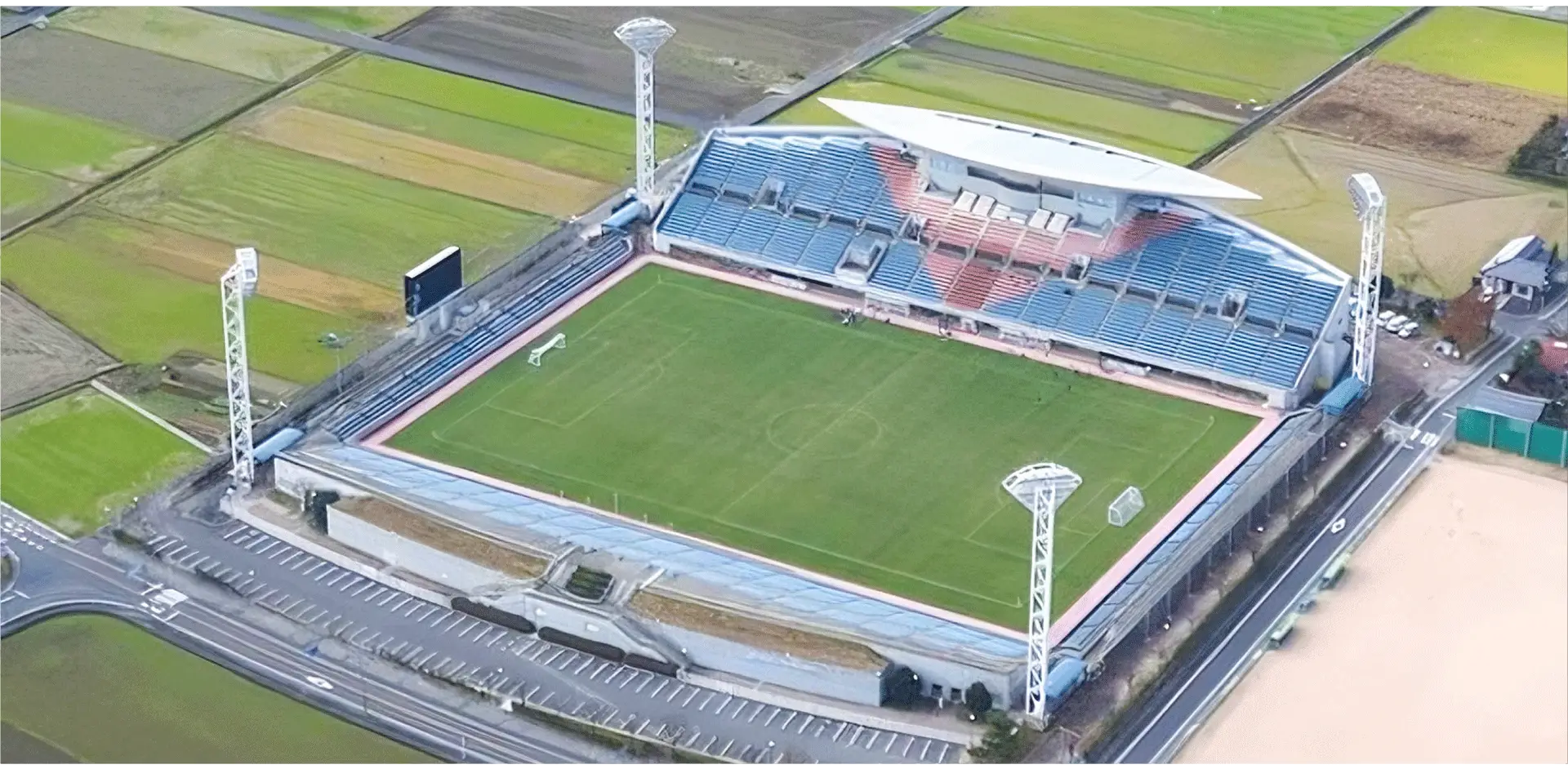
Choosing LED Flood Lights for Sports Fields by Lighting Class
Each sport and competition level implies a target: maintained horizontal illuminance on the field, uniformity ratios, and often vertical illuminance toward the main camera. A recreational training field may accept moderate levels with relaxed uniformity, while competition venues must hold tighter values across the full field of play.
Governing bodies publish criteria; FIFA’s stadium guidelines show how venue level drives lighting requirements, and national federations or local authorities may add their own. Write down the class, the sport, spectator capacity and any broadcast intention before requesting quotations, because LED flood lights for sports fields are specified differently at every level.
Beam Angles and Optical Distribution
Sports lighting uses mixed beam strategies. Narrow beams carry intensity to distant aiming points on tall masts; medium and wide beams fill nearby zones and smooth transitions. Modular flood lights with interchangeable optics let the designer tune this mix per project.
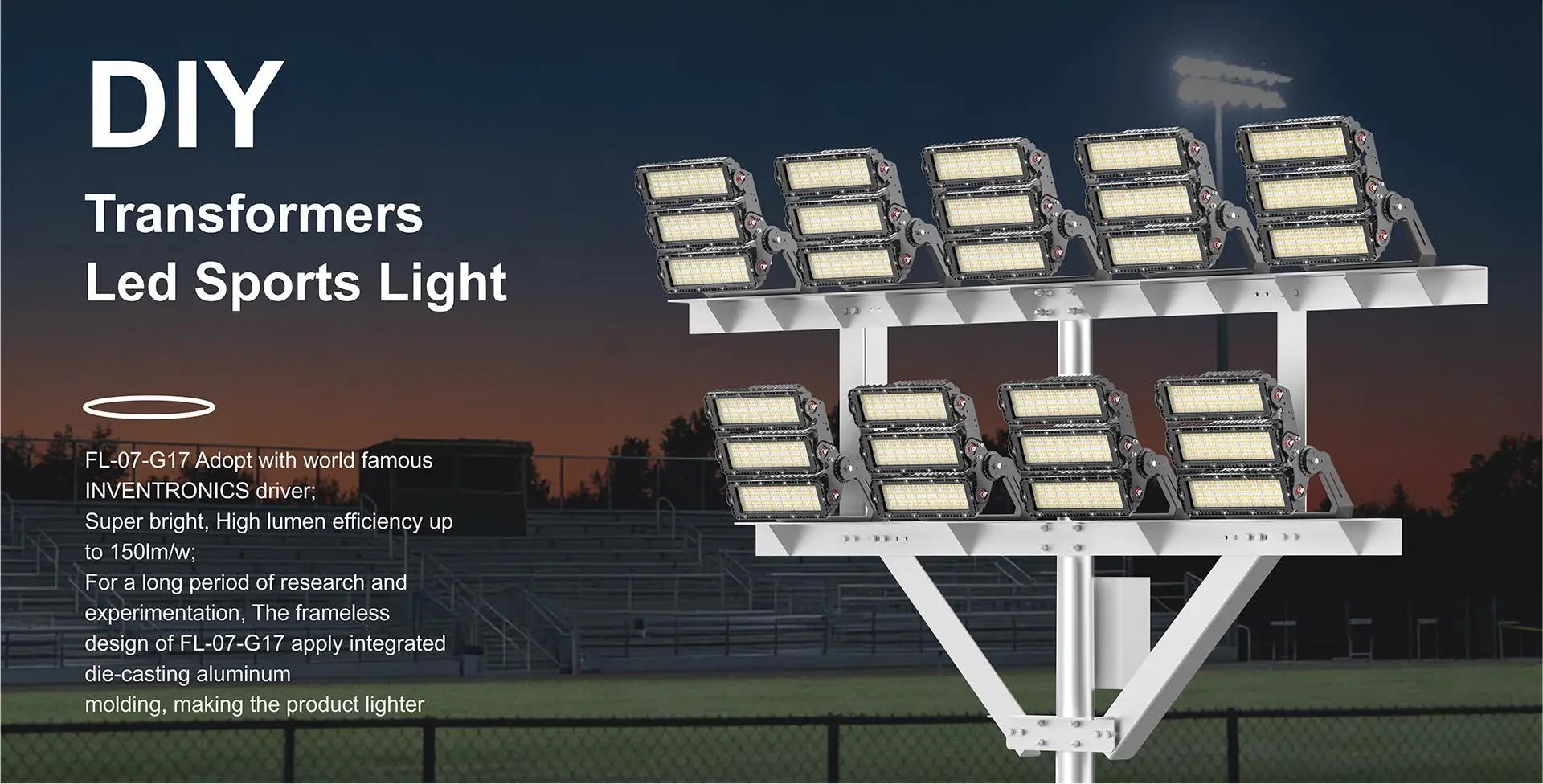
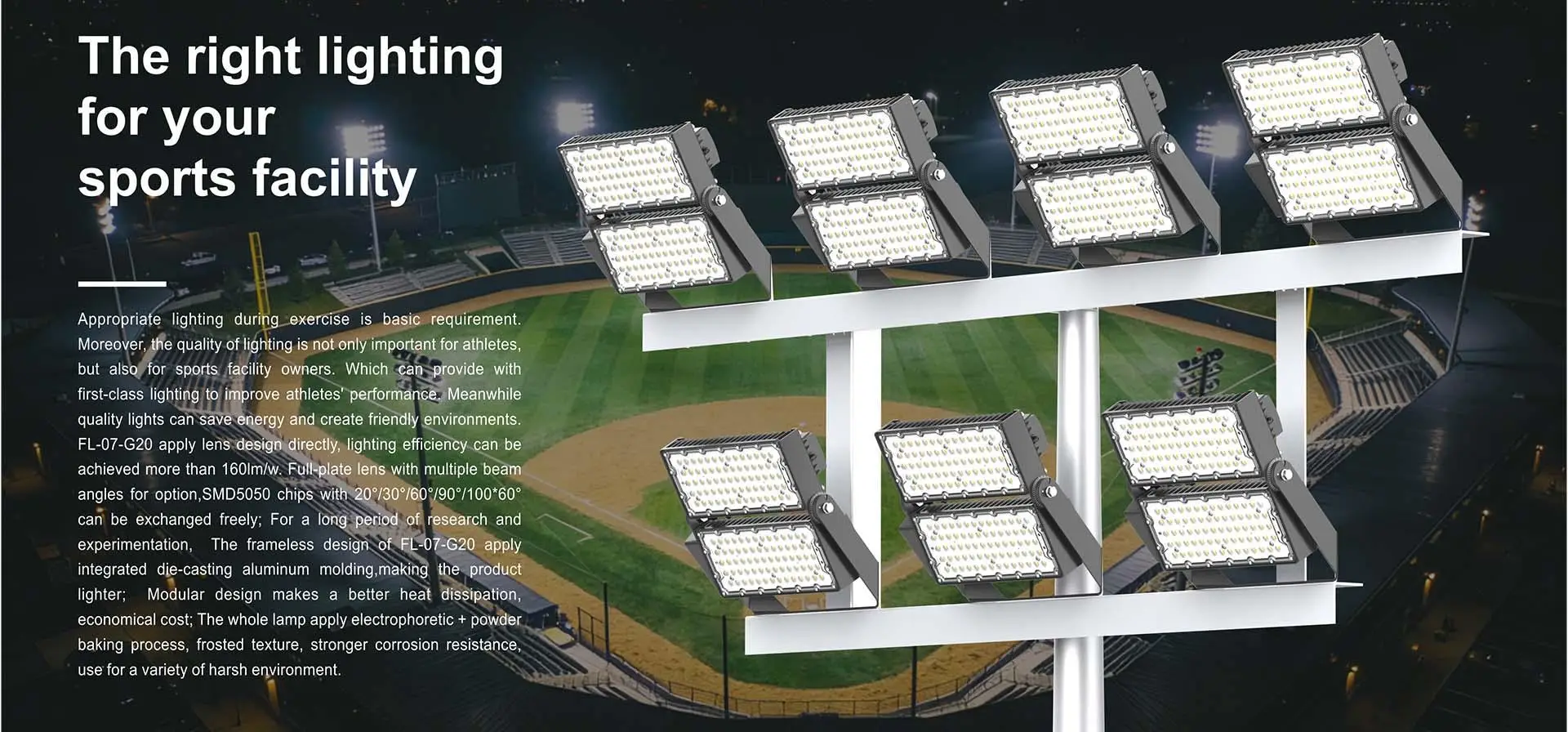
When comparing options, ask for the actual IES or LDT files and check optical efficiency: how much emitted light reaches the field after losses. A fixture with higher optical efficiency can sometimes reduce fixture count, pole load and connected power compared with a nominally similar wattage product. This is also where LED flood lights for sports fields differ most between suppliers: identical wattage does not mean identical light on the playing surface. The ROKEE LED sports light range offers modular optics for exactly this reason.
Glare and Spill Control
Glare affects players tracking high balls and goalkeepers facing low-angle light. Fixtures with controlled beam edges, anti-glare visors or shielding reduce disability glare without losing field coverage. Mounting height matters too: higher masts with properly aimed narrow beams usually produce less glare than low poles with wide flood distributions.
Spill light beyond the boundary is a neighbor-relations issue that often decides whether a field gets an operating permit. Where residential areas or roads sit nearby, select flood lights with available shields, specify back-light control in the aiming plan, and include off-site points in the calculation. LED flood lights for sports fields used near airports, residential blocks or nature reserves deserve extra scrutiny here. The International Dark-Sky Association’s outdoor lighting guidance is useful context for environmentally sensitive sites.
Mounting Height and Pole Positions
Pole layout interacts with every optical decision. Corner towers, sideline arrays and eight-pole arrangements each suit different field sizes and camera positions. Higher mounting positions allow gentler aiming angles, better uniformity and less glare, but increase structural and installation cost.
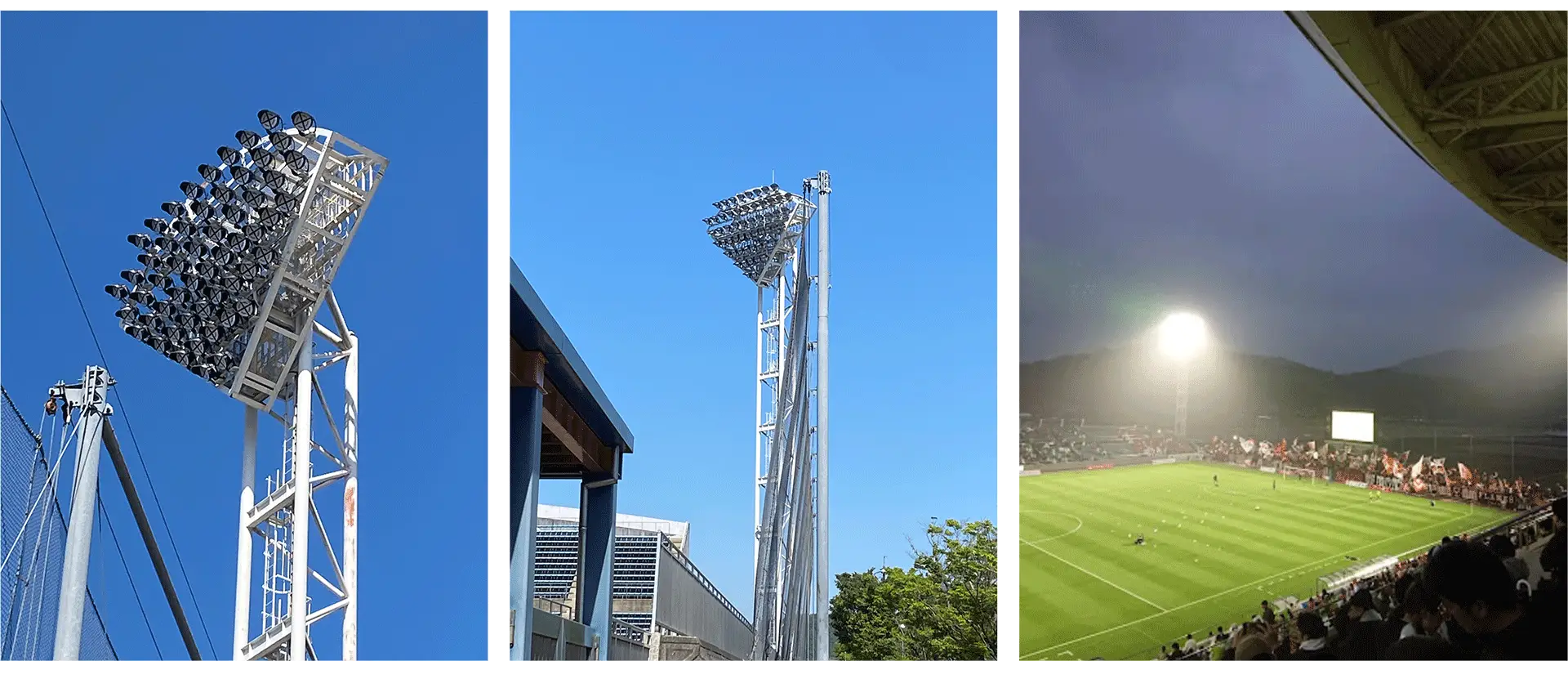
Confirm that pole structures can carry the new LED array. LED flood lights differ from legacy floodlights in projected wind area and weight distribution, so retrofit projects need a structural review before fixtures are ordered. See our high mast LED lights guide for pole-related planning detail.
Drivers, Surge Protection and Efficiency
Drivers, surge protection and efficiency complete the electrical picture for LED flood lights for sports fields. Outdoor sports installations face switching events and lightning-related surges, so coordinate fixture surge protection with site grounding and upstream devices. Specify driver efficiency and quality, because drivers drive long-term reliability more than LED packages do. For multi-use venues, dimmable drivers with scene control allow training levels at reduced power instead of full-output operation for every session.
Verify With Photometric Design and Aiming
Only a calculation using real files, real mounting positions and realistic maintenance factors proves a design. The report should show maintained horizontal illuminance, uniformity, glare metrics and relevant spill points. After installation, aim per the schedule, measure representative field points and correct aiming where measured results deviate from design. Treat the acceptance measurement as the final step of choosing LED flood lights for sports fields, not as an optional extra.
Budget context for this work is covered in the stadium lighting cost guide, which separates design, installation and commissioning costs so proposals can be compared fairly.
Selection Checklist
- lighting class, sport and broadcast requirements defined in writing;
- photometric files for the exact fixtures under quotation;
- beam mix and optics justified by calculation, not wattage charts;
- glare and spill analysis including off-site points where needed;
- structural confirmation for new or reused poles;
- surge protection and control scenes specified;
- aiming, commissioning and acceptance measurement included.
Get a Field-Specific Proposal
ROKEE manufactures LED flood lights and dedicated sports luminaires with modular optics for field projects. Send your field plan, sport, competition level and lighting criteria through the contact page for a photometric layout and itemized quotation.
Frequently Asked Questions
What wattage LED flood lights do sports fields need?
Wattage follows from the lighting class, mounting height and optics, established per project through photometric calculation. Two fields of the same size can need very different outputs.
How many flood lights does a football field require?
Fixture count depends on competition level, pole layout and optical performance. A calculation for the specific field and mounting geometry is the only reliable source for the number.
Can existing metal halide poles be reused for LED flood lights?
Frequently yes, after structural review of the poles and headframes. Confirm wind area and load compatibility before ordering the LED array.
Related Posts