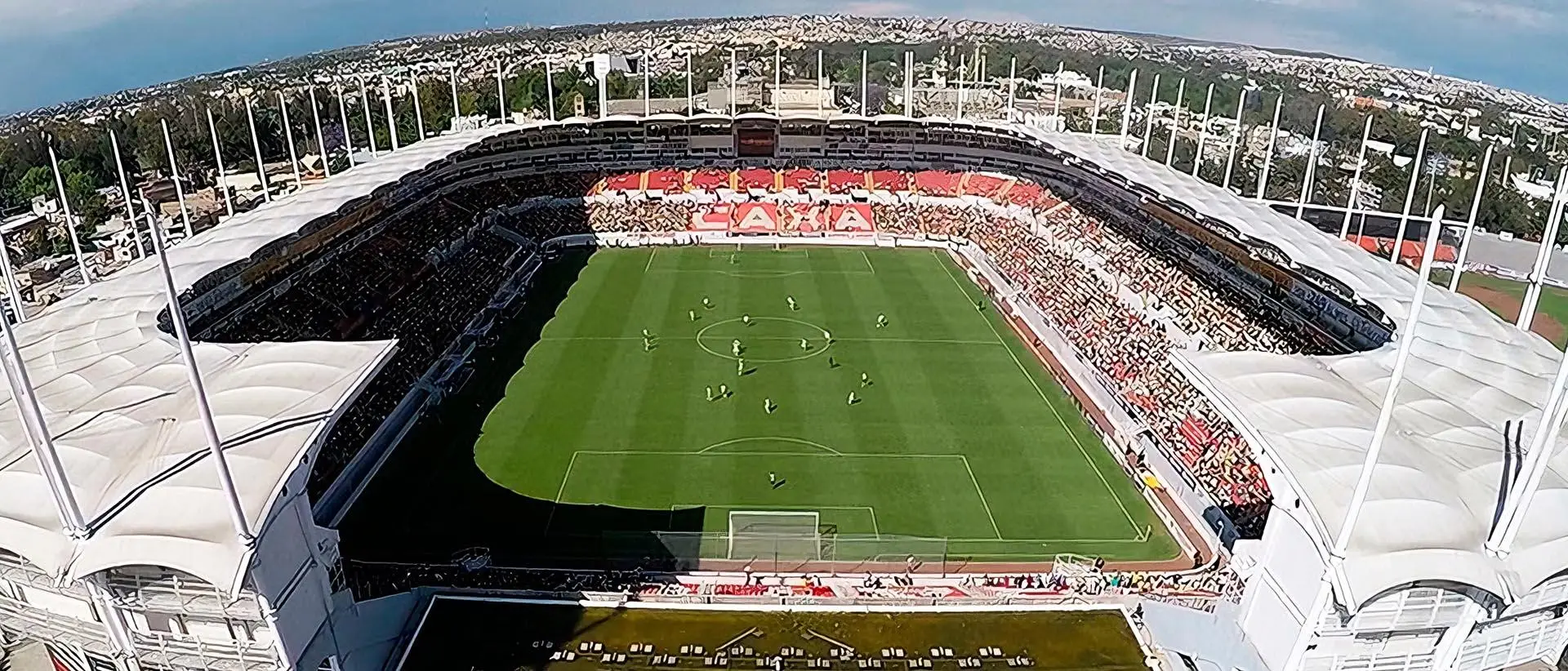

CRI and TLCI both describe color performance, but they answer different questions. Learn how to specify LED sports lighting for spectators, players and broadcast cameras.
10 Industrial Lighting Manufacturers Compared
The right industrial lighting manufacturer depends on the site, not on a universal top-ten ranking. A logistics operator may value controls, rapid regional delivery and standardised high bays. A refinery needs certified hazardous-area equipment. A port may put corrosion resistance and service access ahead of maximum efficacy. A contractor working across several countries has to consider certification and after-sales coverage as carefully as the fixture itself.
This guide compares ten industrial lighting manufacturers with different strengths. It is not a league table and no company paid for inclusion. The profiles are based on publicly available product ranges, application material and technical documentation reviewed in October 2026. Product ownership, approvals and availability can change, so verify the current specification for the exact model and destination country.
A useful comparison of industrial lighting manufacturers should show where each company fits instead of repeating the same claims about quality, efficiency and service.
How these industrial lighting manufacturers were selected
The list combines large international groups, harsh-environment specialists and a project-focused manufacturer. Each company has a visible industrial product range rather than a single general-purpose fixture. We looked for evidence of at least several of the following:
- high-bay, linear, flood, area or hazardous-location luminaires;
- published photometric files and technical datasheets;
- controls, sensors or lighting-management compatibility;
- application support for factories, warehouses or heavy industry;
- certification options for one or more major markets;
- project examples, commissioning support or a recognised distribution network.
Being included does not mean every product from that company suits every project. Certification applies to a defined model and configuration, not to a brand as a whole.
Industrial lighting manufacturer comparison
| Manufacturer | Country base | Strongest fit | Typical buying route |
|---|---|---|---|
| Signify | Netherlands | Large portfolios, connected lighting and multinational programmes | Regional sales and distribution |
| Acuity Brands | United States | North American industrial, warehouse and infrastructure projects | Agents, distributors and project channels |
| Current | United States | Commercial and industrial luminaires with networked controls | Regional distribution and specification |
| Dialight | United Kingdom | Heavy industrial and hazardous locations | Direct and authorised channels |
| Glamox | Norway | Marine, offshore and demanding professional environments | Regional project organisations |
| TRILUX | Germany | European production, logistics and connected industrial buildings | Specification and project sales |
| Zumtobel | Austria | Industrial buildings requiring strong visual quality and controls | Professional specification channel |
| R. STAHL | Germany | Explosion-protected lighting and electrical systems | Specialist hazardous-area channels |
| Larson Electronics | United States | Portable, temporary and specialist industrial lighting | Direct online and project sales |
| ROKEE Lighting | China | Custom industrial LED projects and direct factory sourcing | Direct manufacturer quotation |
The “strongest fit” column is a starting point, not an exclusive definition. Most companies serve more applications than can be shown in one table.
These industrial lighting manufacturers also use different sales models, so catalogue price alone does not reveal the final project cost or level of support.
1. Signify
Signify operates several professional lighting brands and combines luminaires with connected-lighting platforms and lifecycle services. Its scale is useful for organisations that want similar standards across multiple facilities or countries, particularly when lighting has to connect with a broader smart-building programme.
Signify is worth shortlisting when regional representation, controls integration and long-term service structure carry substantial weight. The portfolio is broad, so the buyer still needs to identify the correct industrial brand, product family and local certification rather than specifying the corporate name alone.
2. Acuity Brands
Acuity Brands has a strong North American position through brands including Lithonia Lighting and Holophane. The published industrial portfolio covers linear and round high bays, low bays, special applications and control-enabled products. Holophane adds heavy-industrial and infrastructure options.
This group is a practical candidate for U.S. and Canadian projects that rely on established specification, distributor and contractor channels. Check the exact listing, voltage, lead time and Buy American or BABA requirement where those conditions apply.
3. Current
Current combines commercial and industrial fixtures with networked controls. Its portfolio draws on established lighting brands and covers high-bay, low-bay, area and other professional applications. The controls offering can be useful when occupancy, scheduling and energy reporting are central to a retrofit.
Current is most relevant to buyers who want luminaires and controls through a familiar North American channel. As with any multi-brand group, confirm which brand supplies the fixture, which platform operates it and who is responsible for commissioning.
4. Dialight
Dialight concentrates heavily on industrial LED lighting. Its published high-bay families address manufacturing, power generation, water and wastewater, metals and mining, chemical, petrochemical, and oil and gas applications. Separate industrial and hazardous-location models are available with different certifications.
Dialight belongs on the shortlist when operating conditions are severe and maintenance access is expensive. Buyers should compare the certification marking, ambient range, optics, emergency options and warranty conditions for the exact regional model.
5. Glamox
Glamox is particularly visible in marine, offshore and energy applications. Its application material covers vessels, engine rooms, decks, hazardous areas, offshore wind and other locations where vibration, corrosion, emergency operation and marine approvals can be decisive.
For shipbuilding, offshore assets and demanding coastal facilities, that application depth can be more useful than a large catalogue of general warehouse lights. Confirm vessel class, hazardous-area zone, material, cable entry and emergency requirements early in the design.
6. TRILUX
TRILUX addresses production halls, warehouses, logistics areas, cold stores, food facilities, car parks and ancillary industrial spaces. Its range and project material make it suitable for owners who want one lighting approach across both the production floor and supporting building areas.
The company is a natural comparison point for European projects focused on visual comfort, energy control and connected-building operation. Evaluate the proposed control architecture and maintenance service alongside fixture efficacy.
7. Zumtobel
Zumtobel serves professional architectural and industrial lighting, with particular emphasis on lighting quality, continuous-row systems and controls. It can suit production or logistics buildings where glare, visual appearance and integration with the rest of the facility matter as much as raw lumen output.
Zumtobel is generally considered through a professional design and specification process rather than a simple fixture-price comparison. Request a maintained calculation and controls schedule so the visual-quality benefits are measurable in the tender.
8. R. STAHL
R. STAHL specialises in explosion protection. Its lighting sits within a wider hazardous-area electrical portfolio, making the company relevant to chemical, pharmaceutical, oil and gas, and other sites where luminaires must coordinate with certified electrical equipment.
Use R. STAHL as a specialist benchmark rather than comparing it only with ordinary high-bay suppliers. Zone or Division classification, gas or dust group, temperature class, ambient range and certificate schedule should all be reviewed by a competent hazardous-area engineer.
9. Larson Electronics
Larson Electronics offers a wide range of industrial, portable, temporary, explosion-proof and high-output lighting. The catalogue is useful for unusual tasks that do not fit a standard permanent high-bay layout, including work lights, carts, towers and mobile power arrangements.
The company is worth checking when the requirement is highly specific or portable. Because the range is diverse, buyers should verify electrical compatibility, approvals and environmental ratings product by product.
10. ROKEE Lighting
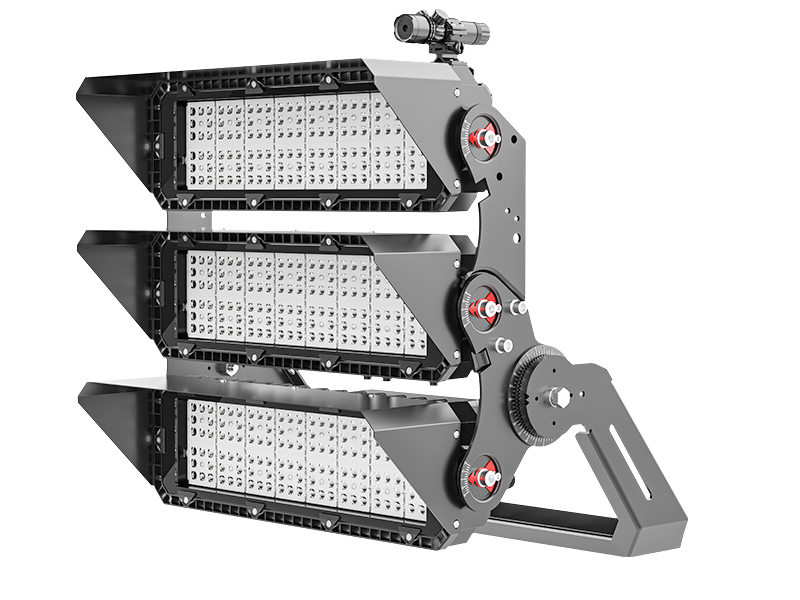
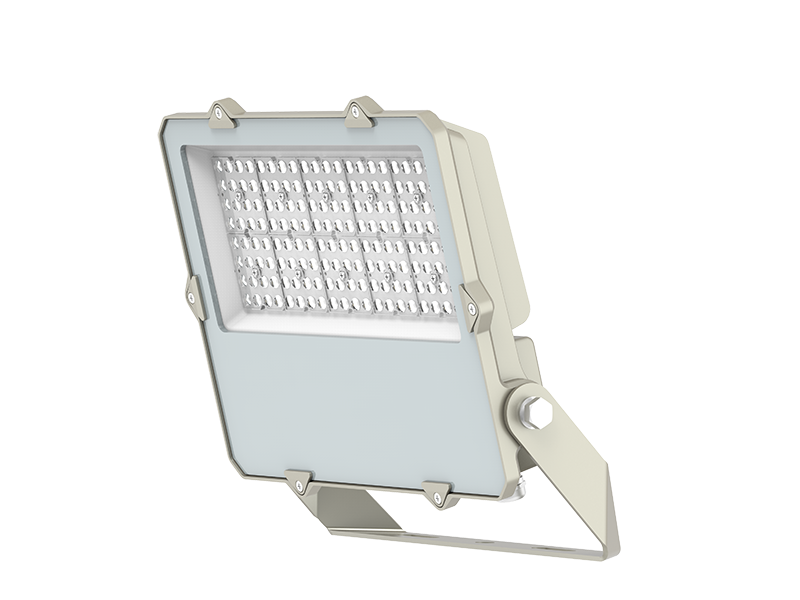
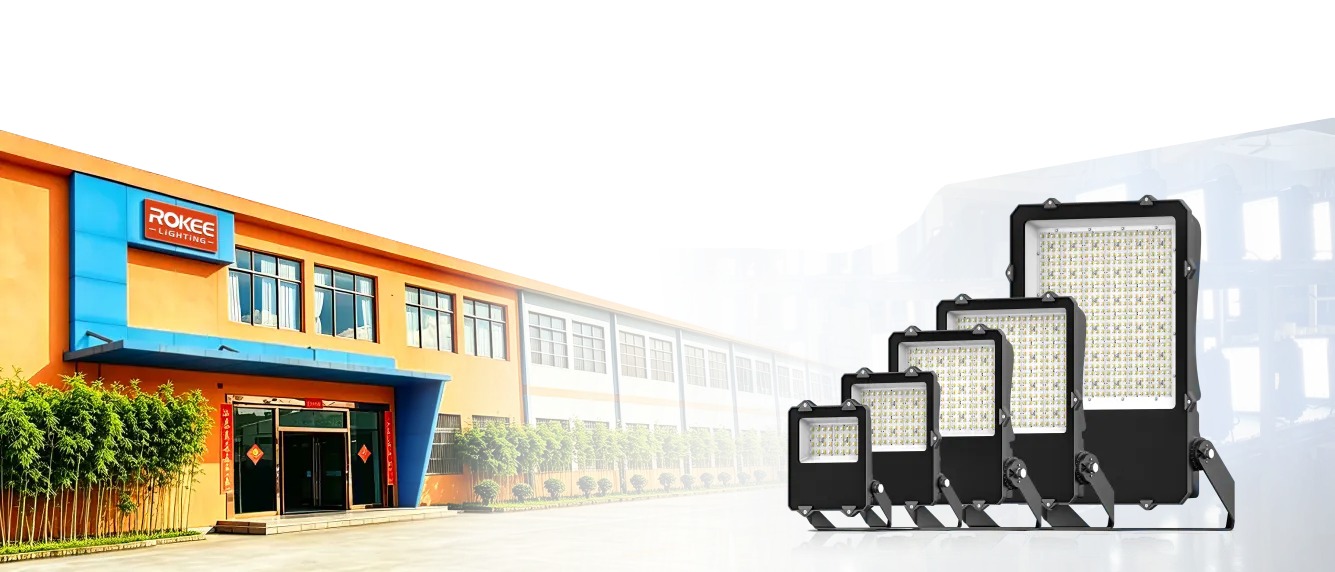
ROKEE Lighting is a China-based industrial LED lighting manufacturer serving project and distribution customers. The range includes LED high bays, linear high bays, floodlights, sports lights, street lights and explosion-proof luminaires. Project support includes optical selection, photometric planning and configuration around power, voltage, controls and mounting.
ROKEE is most relevant when the buyer wants direct factory communication, custom configuration and one source for several high-output outdoor and industrial product families. A regional manufacturer or distributor may be simpler when immediate local stock, an established national specification network or a particular domestic certification is mandatory. For ROKEE or any export supplier, put the required certification, documentation, spare parts and acceptance tests into the enquiry before comparing prices.
Compared with large multinational industrial lighting manufacturers, ROKEE’s practical distinction is direct access to the product and project team rather than a large local distribution network.
How to choose between industrial lighting manufacturers
Start with the environment
List dust, water, chemicals, corrosion, vibration, temperature and hazardous substances. An IP rating does not prove chemical resistance, and a general corrosion-resistant claim does not replace a marine or project-specific material review.
Specify the visual result
Give every bidder the same drawings, mounting heights, task planes, maintained illuminance, uniformity and glare criteria. Require photometric files for the exact optic and wattage. Comparing lumens without distribution usually rewards the wrong fixture.
Check certification at model level
Ask for the certificate number and scope. Confirm that the voltage, driver, emergency option, mounting method and ambient range in the quotation are covered. This is particularly important for ATEX, IECEx, UL hazardous-location and marine approvals.
Evaluate controls before ordering
Write down the required interface—0–10V, DALI, sensor, wireless platform or DMX—and identify who will commission it. A control-ready driver is not the same as a complete working control system.
Compare lifecycle cost, not only unit price
Include energy, installation, access equipment, cleaning, driver replacement, downtime, spares and shipping. A lower-cost luminaire can be the expensive option if a failed component stops production or requires a lift for every service visit.
What to include in an industrial lighting RFQ
Industrial lighting manufacturers can only prepare comparable proposals when they receive the same technical and commercial brief.
- site location and applicable electrical or lighting standards;
- drawings, dimensions, obstructions and mounting heights;
- ambient temperature, contaminants and cleaning method;
- hazardous-area classification where applicable;
- maintained illuminance, uniformity and glare requirements;
- voltage, frequency, surge protection and control interface;
- required certificates, reports, IES/LDT files and warranty;
- quantity, delivery destination, schedule and spare-parts plan.
A precise RFQ makes quotations easier to compare and exposes gaps before purchase. Read the warehouse lighting manufacturer guide for a deeper supplier checklist, or send ROKEE the project drawings and specification for a photometric proposal.
Red flags when reviewing an industrial lighting supplier
Even established industrial lighting manufacturers should be assessed at product level. Watch for the following gaps in a quotation:
- certification logos without a certificate number or model scope;
- photometric files that do not match the quoted optic;
- lifetime claims without test conditions or driver information;
- one fixture proposed for every mounting height and task;
- no written process for warranty, spare drivers or discontinued models;
- an unusually low price that excludes controls, brackets, surge devices or freight.
Frequently asked questions
Who is the best industrial lighting manufacturer?
There is no single best company for every project. The strongest choice depends on the application, required certification, regional support, controls, delivery and lifecycle cost.
Should I buy from a manufacturer or a local distributor?
Direct sourcing can offer configuration flexibility and closer factory communication. A local distributor may provide faster stock, familiar approvals and easier on-site support. Large projects sometimes use both.
How can I verify an industrial LED lighting manufacturer?
Check the legal company details, factory evidence, product-level certificates, photometric reports, warranty terms, references and response to a detailed technical RFQ.
What documents should a lighting supplier provide?
Typical documents include datasheets, IES or LDT files, installation instructions, certificates required by the project, test reports, warranty terms and a marked photometric calculation.
Is the highest lumens-per-watt fixture always the best?
No. Distribution, glare, maintained output, thermal performance, reliability and serviceability can matter more than a small efficacy difference.
Source and update policy
Company descriptions and links were checked against manufacturer websites in October 2026. Inclusion is editorial and does not imply endorsement, certification equivalence or a paid relationship. Buyers should confirm current ownership, product availability and approvals directly with each manufacturer.
Related Posts