
CRI and TLCI both describe color performance, but they answer different questions. Learn how to specify LED sports lighting for spectators, players and broadcast cameras.
IP65 vs IP66 vs IP67: Which LED Light Rating Fits?
The practical difference between IP65 vs IP66 vs IP67 is the water test applied to the enclosure, not the brightness or overall quality of the luminaire. IP65 addresses water jets, IP66 addresses more powerful water jets, and IP67 adds temporary immersion protection under the test conditions defined for that rating. All three use the first digit 6, which indicates a dust-tight enclosure.
A higher number is not automatically the best specification. The right rating depends on how water reaches the light, how long it remains there, whether the luminaire may be submerged and whether cleaning chemicals, salt, heat or pressure create additional risks outside the IP test.
Use the IP65 vs IP66 vs IP67 comparison as an exposure checklist: ordinary outdoor jets, more powerful jets, or temporary immersion. It is a faster and safer starting point than asking for the highest available number.
What an IP rating actually tells you
IP means ingress protection. The classification system is defined in IEC 60529. The first numeral describes protection against access to hazardous parts and solid foreign objects. The second describes protection against water. For IP65, IP66 and IP67, the first numeral is the same: 6, the highest dust-ingress category in this system.
The second numeral is where the exposure changes. It is important to treat each code as a tested condition rather than a promise that the light can survive every environment containing water.
| Rating | Dust protection | Water protection in practical terms | Typical lighting use |
|---|---|---|---|
| IP65 | Dust-tight | Protected against water jets | General outdoor lighting, canopies and locations exposed to rain |
| IP66 | Dust-tight | Protected against powerful water jets | Exposed façades, industrial yards and stronger washdown exposure |
| IP67 | Dust-tight | Protected against temporary immersion under specified test conditions | Low-mounted equipment or sites where temporary flooding is credible |
Do not read the table as a continuous scale of complete product durability. IP67 is tested for temporary immersion, but that alone does not describe high-pressure cleaning. Likewise, an IP66 light is not automatically suitable for permanent submersion. If a project has more than one exposure, write all required conditions into the specification.
IP65 vs IP66 for outdoor LED lights
For normal exterior use, the IP65 vs IP66 decision usually comes down to the severity and direction of water exposure. A sheltered wall pack or luminaire mounted under a canopy may only experience wind-driven rain. A flood light on an open seaport, bridge or industrial façade can face stronger spray from several directions. Cleaning practices also matter: a hose used during routine maintenance creates a different exposure from rain.
IP66 provides a stronger water-jet classification, but it does not compensate for a poor installation. Cable glands must fit the cable diameter, unused entries must remain sealed, covers must be closed to the specified torque and the mounting orientation must follow the manufacturer’s instructions. Opening an enclosure in the field and trapping moisture inside can defeat an otherwise sound design.
IP66 vs IP67: jets are not the same as immersion
The IP66 vs IP67 comparison is commonly misunderstood. The IP67 test addresses temporary immersion; it does not simply mean “more waterproof” in every situation. A luminaire installed close to the ground in a flood-prone underpass may benefit from immersion protection. A high-mounted industrial flood light exposed to forceful washdown may instead need a clearly documented jet rating. Some products carry multiple markings when they have been evaluated for more than one condition.
Permanent underwater lighting requires a design specifically intended and certified for that service. Do not select an ordinary IP67 area light for a fountain, pool or submerged installation based on the number alone.
Choose the rating from the site exposure
For an IP65 vs IP66 vs IP67 decision, walk the site or review maintenance procedures before issuing the RFQ. The same fixture family may need a different enclosure option when moved from a sheltered wall to a washdown zone or flood-prone mounting point.
General outdoor and architectural areas
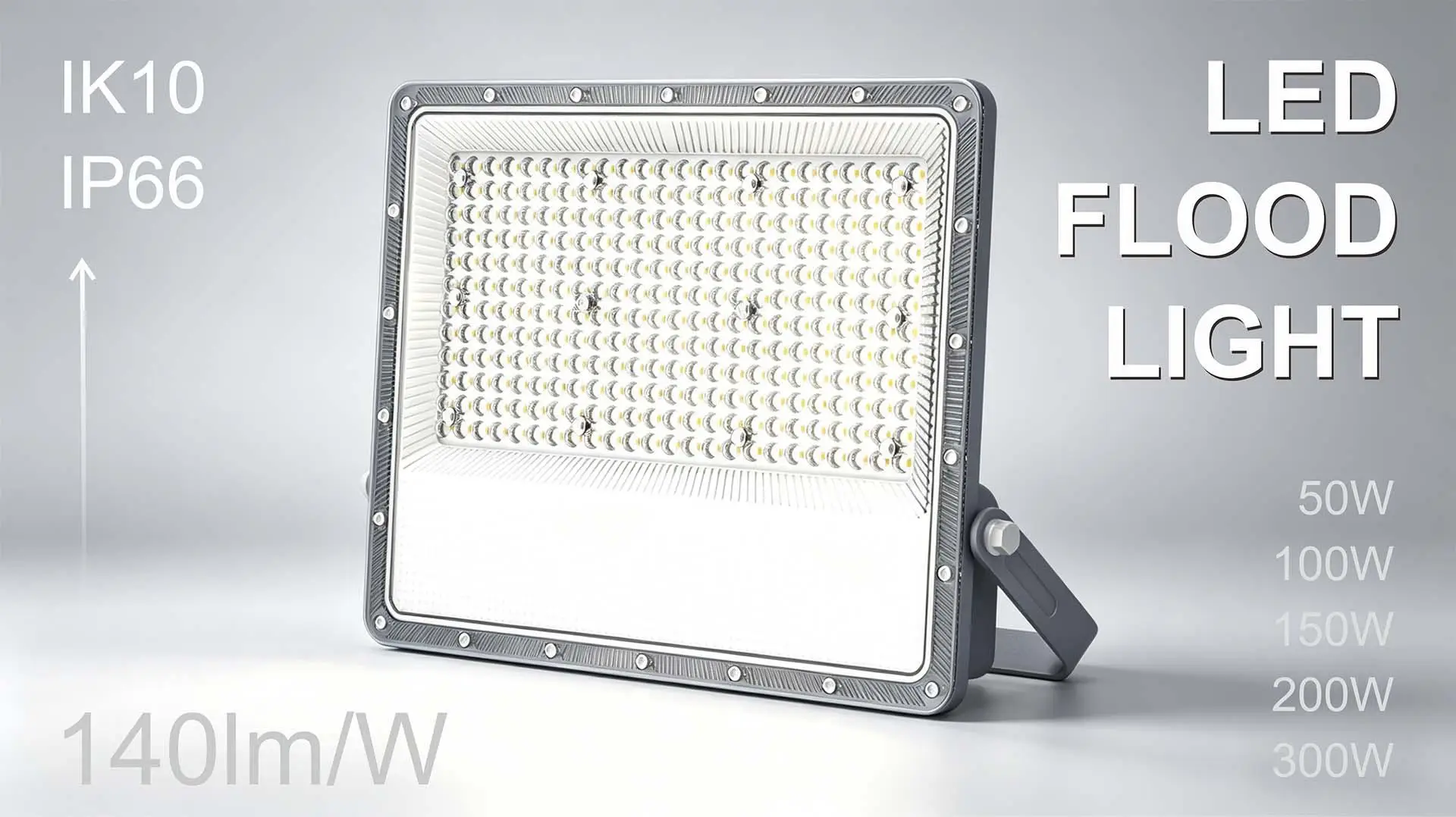
For luminaires exposed to dust and normal rain, IP65 is a common starting point. Confirm the mounting position, drainage and wind exposure rather than copying a rating from another project. Our LED flood light range includes optical and mounting choices for outdoor areas, but the exact product data sheet should always control the specification.
Industrial washdown and exposed infrastructure
Where maintenance teams use stronger water jets, or where a luminaire sits in an unsheltered infrastructure location, IP66 may provide a better match. Ask how the space is cleaned, from what distance and in which directions. Food plants and chemical sites may also require material compatibility, hygienic geometry or resistance to cleaning agents—properties an IP code does not assess.
Temporary flooding risk
Consider IP67 when equipment may be temporarily immersed, such as in low-lying landscapes, underpasses or drainage areas. Check the manufacturer’s declared installation limits and cable-entry arrangement. Water can travel along a cable or through a field splice even when the factory enclosure passes its own test.
What the IP number does not cover
A useful IP65 vs IP66 vs IP67 specification also identifies risks that sit outside IEC 60529:
- Impact resistance: use the relevant IK rating where vandalism, balls, tools or debris can strike the luminaire.
- Corrosion: coastal salt, chemicals and dissimilar metals require suitable alloys, fasteners, pretreatment and coating. An IP67 enclosure can still corrode.
- Pressure washing: high-temperature or close-range pressure cleaning can exceed ordinary IP test conditions.
- Condensation: sealed luminaires still experience temperature and pressure cycles. Venting and thermal design may be necessary.
- Hazardous locations: an IP rating is not an explosion-protection certification. Use properly certified explosion-proof lighting where area classification requires it.
- Electrical protection: surge withstand, insulation, grounding and overcurrent protection are separate requirements.
A better procurement checklist
Before approving an outdoor LED light, record the real exposure rather than writing “waterproof” in the RFQ. State whether the luminaire faces rain, jets, immersion, salt, chemicals, dust or impact. Request the complete product data sheet and applicable test evidence for the exact model and configuration offered.
The final IP65 vs IP66 vs IP67 choice should appear on the luminaire schedule together with the required mounting orientation and cable-entry arrangement.
- Define the water source, direction, frequency and duration.
- Choose the IP rating that corresponds to that exposure.
- Confirm cable glands, connectors and controls maintain the required enclosure rating.
- Check corrosion, temperature, impact and surge requirements separately.
- Include installation and inspection instructions in the project handover.
ROKEE can review the environment, mounting position, optics and electrical requirements together. Send the site conditions through our project enquiry page instead of selecting on IP rating alone.
Frequently asked questions
Is IP67 better than IP66 for an LED light?
Not in every exposure. IP67 addresses temporary immersion, while IP66 addresses powerful water jets. Select the classification that matches the actual way water reaches the enclosure.
Is IP65 suitable for outdoor rain?
IP65 is commonly used for outdoor luminaires exposed to rain and water jets. The complete installation, including cable entries and mounting orientation, must preserve the declared rating.
Can an IP67 light stay underwater permanently?
No. IP67 is a temporary-immersion classification under specified test conditions. Permanent underwater service needs a luminaire designed and approved for continuous submersion.
Does an IP66 rating mean the light is corrosion resistant?
No. IP66 concerns dust and water ingress. Corrosion resistance depends on materials, pretreatment, coating, fasteners and the chemical or coastal environment.
Does field wiring affect the IP rating?
Yes. Incorrect cable glands, open entries, damaged gaskets or poorly closed covers can allow water into the installed luminaire even when the factory product was properly tested.
Related Posts