
ATEX is EU law. IECEx is a voluntary international certificate built on the same IEC…
Baseball Field Lighting Design: Complete Guide
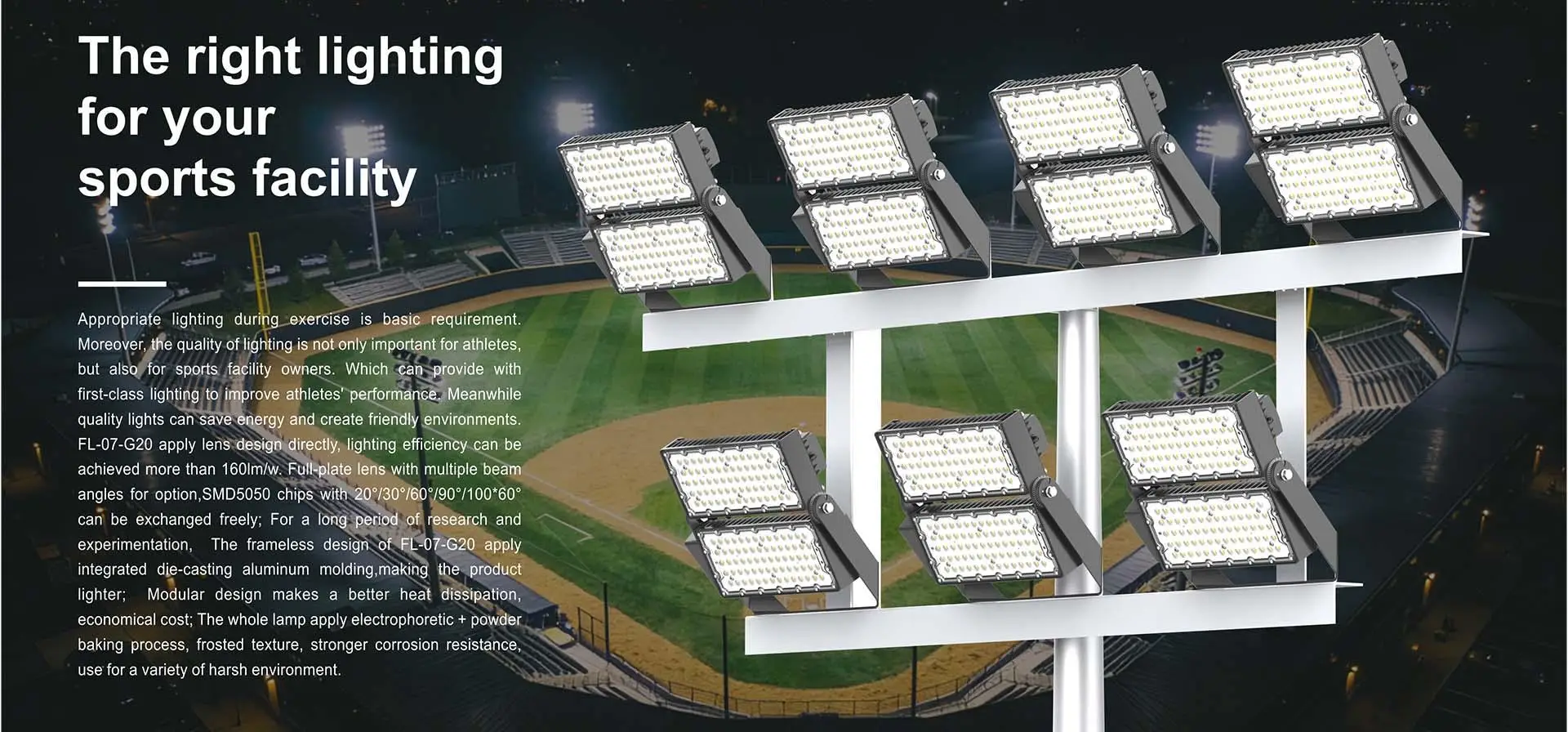
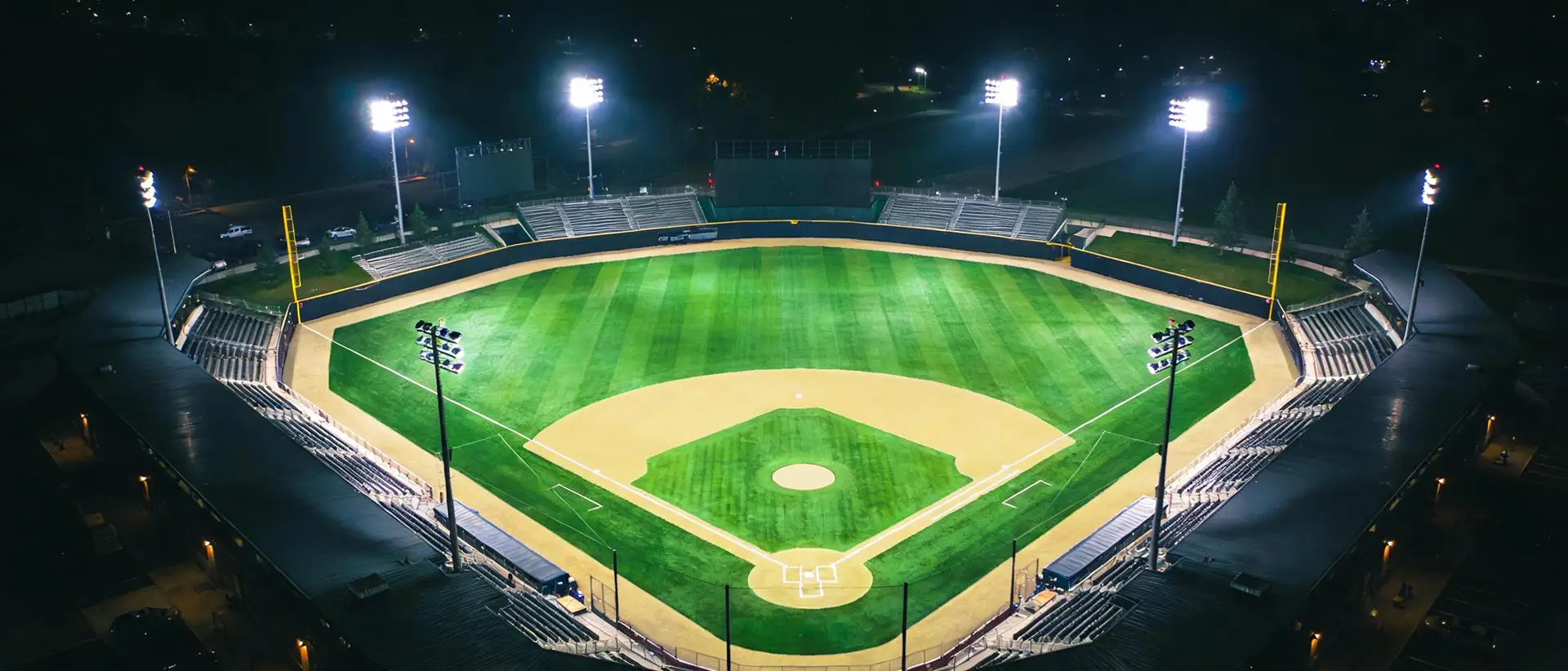
Baseball field lighting design is different from lighting a rectangular sports field. The infield and outfield have different visual tasks, dimensions and target levels. Players must track a small, fast ball against the sky, stands and surrounding background. The lighting system therefore needs carefully coordinated pole positions, mounting heights, beam distributions, uniformity and glare control.
Reading it as a checklist is the most practical approach: each section of a baseball field lighting design answers one decision — level, geometry, poles, optics, aiming or verification. Where a governing body publishes its own numbers, that document overrides generic advice.
This guide explains a practical design workflow and uses the 2025 Little League Lighting Standards and Safety Audit as a transparent example. Larger youth, high-school, collegiate and professional facilities should follow the current requirements of their governing organisation and ANSI/IES RP-6.
For the framework behind those documents, see our comparison of sports field lighting standards.
Why baseball lighting requires a specialised design
A baseball field combines several visual environments. Infield action is fast and concentrated. The outfield covers a much larger area and includes long, high ball trajectories. Players may look toward floodlights while following a fly ball, while spectators and officials need clear visibility across both zones.
The field is also asymmetrical around home plate. Pole locations that work for another sport can place bright luminaires in the batter’s or fielder’s critical line of sight. A baseball design must start from the real field geometry and preferred pole zones.
Baseball field lighting design standards
ANSI/IES RP-6 is the principal North American recommended practice for sports and recreational lighting and includes baseball. Governing bodies can add their own requirements. Little League publishes an accessible Lighting Standards and Safety Audit with minimum performance, layout, testing and maintenance criteria.
The project specification should identify:
- the governing organisation and current document edition;
- the division, field radius and base-path length;
- required infield and outfield light levels;
- uniformity and rate-of-change limits;
- measurement grid and meter height;
- spill-light, structural and electrical requirements.
Little League light levels in baseball field lighting design
The 2025 Little League standard lists the following target horizontal levels for standard competition:
| Area | Target level | Approximate lux | Maximum-to-minimum uniformity |
|---|---|---|---|
| Infield | 50 footcandles | Approximately 538 lux | 2:1 |
| Outfield | 30 footcandles | Approximately 323 lux | 2.5:1 |
The same table limits the maximum rate of change to 10% per 10 feet. This helps prevent abrupt transitions that make a moving ball harder to follow. Lux values above are conversions using 1 footcandle = approximately 10.764 lux; the controlling Little League requirement is stated in footcandles.
These targets should not be applied to professional or broadcast baseball. Higher levels of play can require different horizontal, vertical, colour and flicker performance.
Infield and outfield zones in baseball field lighting design
The brighter infield target reflects the speed and detail of close action. The outfield target is lower, but the area is much larger. A report that gives one average for the entire field can conceal non-compliance in both zones.
Every baseball field lighting design should provide separate summaries for the infield and outfield, including average, minimum, maximum, uniformity ratio and rate of change. The plot should show every grid value so hotspots and dark bands can be identified.
Field dimensions and calculation grid
Little League defines grid spacing by field radius and base-path length. In the cited standard, examples include 20-by-20-foot grids for 60-foot base paths, 25-by-25-foot grids for 70-foot base paths and 30-by-30-foot grids for a 300-foot-radius field with 90-foot base paths.
The same document requires the light meter to be held horizontally 36 inches above the field surface for its performance measurements. A project governed by another organisation must use that organisation’s grid and sensor position.
Include warning tracks, bullpens and any additional playing areas in the project brief. ANSI/IES RP-6 includes specific consideration for bullpen lighting, and a dark bullpen can create a safety and operational gap even when the main field complies.
Pole layout in baseball field lighting design
Common layouts use four poles for smaller fields and six poles for larger fields. The cited Little League diagrams show four-pole arrangements for 200- and 225-foot-radius fields and six-pole arrangements for fields from 250 to 300 feet in the listed examples. Minimum mounting heights in those examples range from 60 to 70 feet depending on field size and pole group.
These diagrams are starting references, not substitutes for site design. Pole setbacks may change because of stands, dugouts, fences, property lines, underground services or multi-field layouts. Little League notes that taller poles may be required for glare control or when poles must be set farther back.
Protect the batter and fielders from glare
The batter needs a clear view of the ball leaving the pitcher’s hand. Infielders and outfielders need to follow low line drives and high fly balls. Bright sources close to these sightlines can reduce visibility even if the measured lux is high.
Glare control measures include:
- placing poles outside critical viewing zones;
- using sufficient mounting height;
- selecting controlled optics for each target area;
- limiting upward tilt and visible high-angle intensity;
- using visors or shields where the photometric design supports them;
- checking observer views for the batter, pitcher, catcher and fielders.
Little League cautions that LED can provide lower spill light than metal halide, but glare may be worse if the LED fixture is not properly designed. Optical control matters more than the light-source label.
Select beam distributions by target zone
Long throws to centre field may require narrow distributions, while areas nearer a pole use medium or wider optics. The infield often needs careful cross-lighting so players and the ball are visible without severe shadows.
Optic selection is where a baseball field lighting design succeeds or fails: the same pole layout and total wattage can produce very different results depending on beam choice.
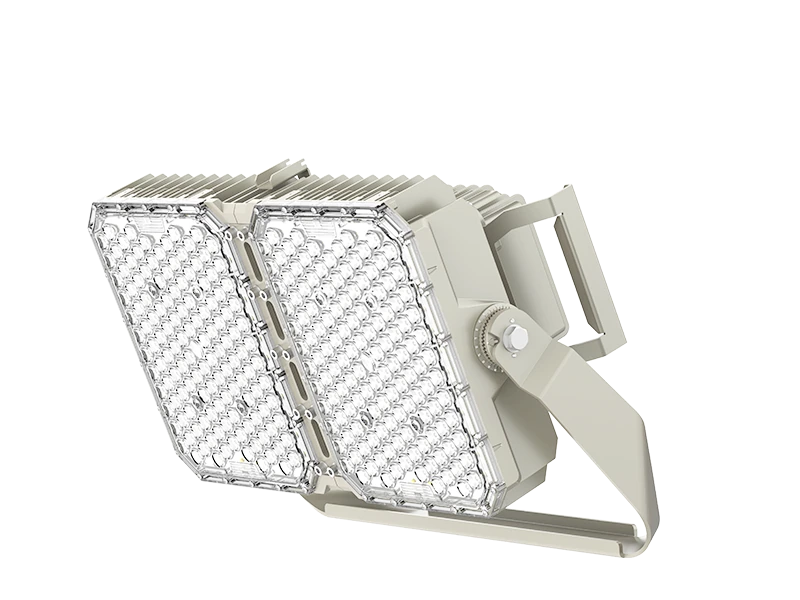
Every luminaire in the design should be linked to an exact photometric file and aiming point. The final schedule should list pole ID, mounting height, fixture model, wattage, optic, tilt and target coordinate. This gives installers a usable plan and allows the commissioning team to diagnose differences.
Design for maintained light levels
Little League requires target levels to be sustained over time and discusses constant-light-output and recoverable light-loss-factor methods. For LED, it recommends considering expected operating hours and obtaining lumen-maintenance information based on TM-21.
A proposal should explain its maintenance factor, cleaning assumptions and control strategy. Avoid comparing a maintained LED design with an initial metal-halide design or vice versa.
Write the maintenance factor into the baseball field lighting design documents, because the annual audit is measured years after handover.
Control off-field light in baseball field lighting design
Baseball fields can place outfield poles and luminaires close to residential boundaries. The calculation should show spill illuminance and luminous intensity toward points of concern. Local ordinances may also limit pole height, upward light and operating hours.
Little League asks for off-field lighting drawings showing spill levels in footcandles and candela. This is a valuable procurement requirement because it makes each bidder demonstrate neighbourhood impact before installation.
Electrical, structural and control design
High-power sports lights require coordinated electrical and structural engineering. The package should address connected load, inrush current, circuits, voltage drop, surge protection, earthing, wind load, foundations and pole reactions.
Controls can provide separate practice, game and maintenance modes. Automated monitoring helps identify fixture or circuit failures before a game. If a field is part of a multi-field complex, zoning should prevent unused fields from operating at full output.
Commissioning closes the loop on the baseball field lighting design: measured values, not drawings, decide whether the field can host play.
Commissioning and annual inspection
Little League requires new plans to be approved by the local District Administrator and calls for lighting systems to be checked annually before the season. Field testing should verify that the installed baseball field lighting design follows the approved drawings and meets the required performance.
The commissioning record should include:
- fixture and pole identification;
- final aiming angles or target points;
- grid readings for infield and outfield;
- average, minimum, maximum and uniformity;
- control modes and output settings;
- voltage and electrical observations;
- corrective actions and final acceptance.
Baseball field lighting design checklist
| Design item | Required information |
|---|---|
| Field | Base paths, field radius, fence, warning track, bullpens and orientation |
| Performance | Infield/outfield levels, uniformity, rate of change and maintenance factor |
| Poles | Quantity, coordinates, setbacks, mounting heights and foundations |
| Luminaires | Exact photometric files, optics, output, visors and aiming points |
| Environment | Property boundaries, roads, residences, spill and curfew |
| Verification | Calculation grid, measurement method, commissioning and annual audit |
Request a baseball field lighting calculation
ROKEE provides LED sports lights, photometric files, optical selection and DIALux support for outdoor fields. Send your baseball field plan, pole information and required standard for a project-specific lighting proposal.
Authoritative references
- Little League Lighting Standards and Safety Audit, 2025
- Illuminating Engineering Society Sports and Recreational Areas Lighting
Frequently asked questions
How many lux does a Little League baseball field need?
The 2025 Little League standard specifies 50 footcandles for the infield and 30 footcandles for the outfield, approximately 538 and 323 lux respectively.
Why is the baseball infield brighter than the outfield?
Infield play involves fast, detailed action over short distances. The higher target supports rapid ball and player visibility, while the larger outfield uses a lower but still controlled level.
How many light poles are needed for a baseball field?
Smaller fields commonly use four poles and larger fields may use six, but field dimensions, setbacks, glare and the governing standard determine the final layout.
How high should baseball field light poles be?
The cited Little League examples use minimum mounting heights of 60 or 70 feet depending on the field and pole group. Actual projects may require taller poles for greater setbacks or glare control.
How often should baseball field lights be tested?
Little League calls for annual checks before the season. Other facility owners should follow their governing standard, warranty and maintenance plan.
Related Posts