
Most gas station canopy projects fail on one of two things: they are lit far…
Football Field Lighting Lux Levels Explained
Football field lighting lux levels vary from a few hundred lux for training to several thousand lux for elite televised stadiums. The correct number depends on the governing standard, competition level, camera use and measurement method. Average horizontal lux alone is never enough to approve a design.
Treat the tables as a specification reference, not as a design: football field lighting lux levels only become meaningful when they are tied to a field size, a camera position and a maintenance factor.
This guide uses published FIFA Lighting Guide values to explain the scale of football-lighting requirements. It also shows why minimum illuminance, uniformity, vertical light, glare, colour and flicker must be reviewed with the headline lux target.
Once the numbers are settled, turn them into a written specification with our football field lighting requirements checklist.
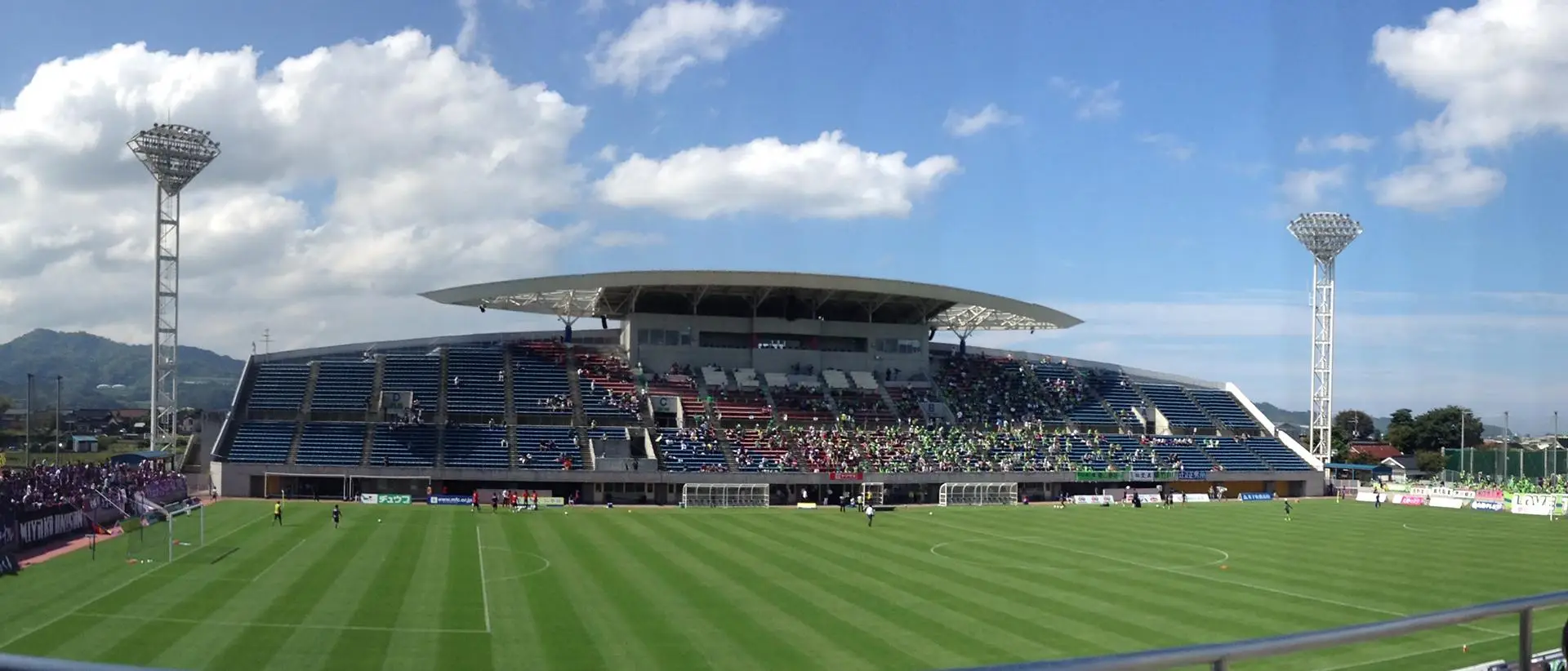
What does lux mean on a football field?
Lux is the unit of illuminance. One lux equals one lumen per square metre. On a football pitch, a light meter records illuminance at defined grid points rather than at a single convenient location.
The design or test report then calculates several values:
- Eh average: average horizontal illuminance across the pitch;
- Eh minimum: the lowest horizontal grid value;
- Eh maximum: the highest horizontal grid value;
- U1h: minimum horizontal illuminance divided by maximum;
- U2h: minimum horizontal illuminance divided by average;
- Ev: vertical illuminance on one or more reference planes.
A 500-lux average with very low minimum values can be visually worse than a slightly lower average with strong uniformity. This is why lux and uniformity must always be read together.
FIFA football field lighting lux levels for training pitches
The FIFA Lighting Guide defines three training-pitch grades. The following summary uses its maintained performance requirements and design examples.
| FIFA training grade | Typical use | Average horizontal illuminance | Horizontal uniformity |
|---|---|---|---|
| Grade 3 | Standard training | > 300 lux | U1h > 0.40; U2h > 0.60 |
| Grade 2 | Match practice | > 500 lux | U1h > 0.40; U2h > 0.60 |
| Grade 1 | FIFA World Cup training | > 750 lux | U1h > 0.40; U2h > 0.60 |
Higher grades add more demanding vertical-light, colour and flicker requirements. The FIFA guide lists horizontal glare rating below 50 for all three grades, but the required colour temperature and colour rendering increase at higher levels. Grade 1 also requires a flicker factor below 1%.
These figures apply to FIFA’s training-pitch grades and procedures. A local league, school, municipality or national association may specify a different target.
Football field lighting lux levels for televised stadiums
Televised stadium classes are substantially more demanding because cameras need consistent horizontal and vertical light. The summary below is based on FIFA Lighting Guide Standards A to D.
| FIFA stadium standard | Average horizontal lux | Minimum horizontal lux | Average vertical lux in each listed plane |
|---|---|---|---|
| A | > 2,500 | > 1,500 | > 1,500 |
| B | > 2,000 | > 1,200 | > 1,000 |
| C | > 1,250 | > 800 | > 700 |
| D | > 1,000 | See the applicable FIFA procedure | > 400 |
Standards A and B specify horizontal U1 above 0.50 and U2 above 0.70. Standards C and D specify horizontal U1 above 0.40 and U2 above 0.60 in the cited guide. Vertical uniformity, match-continuity, colour, glare, maintenance factor and flicker requirements also vary by standard.
The correct FIFA class depends on the tournament and match stage. A venue should obtain the event-specific requirement rather than selecting football field lighting lux levels from this summary alone.
Horizontal versus vertical football field lighting lux levels
Horizontal illuminance tells us how much light reaches the pitch surface. It is the main metric for standard training and many non-televised matches. Vertical illuminance tells us how much light reaches a vertical plane facing a camera or field direction.
Vertical light is important because players, faces and much of the ball’s movement are not horizontal surfaces. A field can have high horizontal lux while players appear dark to cameras if the lighting comes from unsuitable directions.
FIFA’s stadium test procedure measures vertical illuminance in four directions at every pitch grid point. This allows the assessment to reflect cameras looking from different sides of the stadium.
Why uniformity matters more than peak football field lighting lux levels
Consider two simplified fields:
- Field A averages 500 lux but falls to 150 lux in one corner.
- Field B averages 450 lux and stays above 350 lux across the pitch.
Although Field A has the higher average, Field B is likely to provide a more consistent visual environment. A proper report therefore includes the minimum and maximum, not only the average.
Uniformity is shaped by pole positions, mounting heights, beam distributions, aiming and luminaire quantity. Adding more total lumens does not automatically improve it.
Initial lux and maintained lux
Initial lux describes performance when the system is clean and new. Maintained lux accounts for expected losses over time. FIFA’s cited tables use a maintenance factor of 0.90 for LED and 0.80 for HID. Other projects should use a factor justified by the equipment, operating environment and maintenance plan.
If a calculation reports 600 initial lux with a 0.80 maintenance factor, the maintained value is 480 lux. A requirement for 500 maintained lux would not be satisfied even though the initial result is above 500.
Maintained football field lighting lux levels, not day-one values, decide whether the pitch passes acceptance testing.
How football field lighting lux levels are measured
Measurements must use the grid, sensor position and orientation required by the governing document. FIFA’s normal stadium procedure divides a 105 m by 68 m pitch into 96 reference points. At every point, the test records horizontal illuminance and vertical illuminance in four directions, producing 480 readings.
FIFA’s training-pitch procedure is different. Grade 3 and Grade 2 use 40 reference points, while Grade 1 World Cup training uses 96. FIFA’s stadium procedure places the horizontal sensor 1 m above the pitch. Another standard can specify a different height, so the test team must follow the selected document exactly.
Converting football field lighting lux levels to footcandles
Football requirements are usually expressed in lux, although some North American briefs use footcandles. One footcandle is approximately 10.764 lux, so 50 footcandles is about 538 lux. Use the conversion only to compare units; do not round a converted value in a way that reduces the stated minimum.
Confirm whether the source value is an average, minimum or maintained requirement before converting it. A figure labelled “500 lux average maintained” is not interchangeable with “500 lux minimum initial.” The unit conversion changes the number, but it does not change the measurement plane, grid, uniformity formula, maintenance basis or acceptance method.
Common mistakes when specifying football field lighting lux levels
Using an average without a minimum
This allows bright areas to compensate mathematically for dark areas. Always specify uniformity and, where required, a minimum value.
Confusing training and stadium classes
A 500-lux match-practice training target is not the same as a televised stadium class. The measurement grids and additional metrics differ.
Using initial light instead of maintained light
The proposal may look compliant on day one but fall below the requirement during normal operation.
Ignoring vertical illuminance
High horizontal lux does not guarantee good broadcast images. Camera directions must be calculated separately.
Mixing standards
Taking lux from FIFA, uniformity from EN 12193 and a grid from another guide can create a requirement that no authority recognises. State the controlling document and edition.
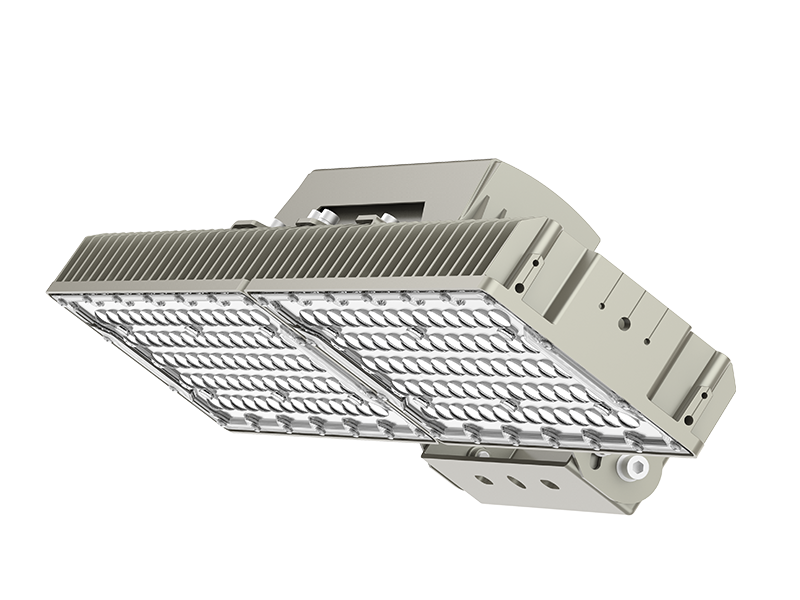
Every step above feeds the same output: football field lighting lux levels converted into fixture count, wattage and aiming.
From target lux to fixture quantity
A rough lumen estimate cannot produce a final fixture count. The calculation needs the exact field dimensions, pole positions, mounting heights, luminaire photometric files, maintenance factor and required uniformity.
Two fixtures with the same wattage and total lumens can produce very different results because of optical efficiency and distribution. Long-throw narrow beams may be needed for central zones, while wider or asymmetric optics cover areas closer to the poles. A professional model combines these distributions and checks glare and spill at the same time.
Information needed for a football lighting calculation
- scaled pitch and site plan;
- target standard, class and edition;
- training, match and broadcast operating modes;
- existing or proposed pole coordinates and heights;
- camera positions and directions;
- stands, roofs and obstructions;
- property boundaries and spill-light limits;
- electrical capacity and control requirements.
Request a football-field photometric plan
ROKEE supports football projects with LED sports lights, IES/LDT data, optical selection and DIALux simulation. Send the field drawing and required football field lighting lux levels to receive a project-specific layout and luminaire schedule.
Authoritative references
Frequently asked questions
How many lux are needed for a football training field?
In the cited FIFA guide, training grades require average horizontal illuminance above 300 lux, 500 lux or 750 lux depending on the grade. Local and competition requirements may differ.
Is 200 lux enough for football?
It may be accepted for some recreational or local uses under a specific authority, but it does not meet the FIFA training grades summarised here. Confirm the governing standard before design.
Is 500 lux good for a football field?
It matches the average horizontal target for FIFA Grade 2 match practice in the cited guide. It is not sufficient evidence for televised stadium compliance and must be assessed with uniformity and other metrics.
What lux level is required for televised football?
FIFA’s televised stadium Standards A to D in the cited guide range from more than 1,000 to more than 2,500 average horizontal lux, with separate vertical illuminance and quality requirements.
Where should lux be measured on a football pitch?
Measure at the grid points, height and orientations required by the selected standard. FIFA stadium and training procedures use different grids.
Related Posts