
CRI and TLCI both describe color performance, but they answer different questions. Learn how to specify LED sports lighting for spectators, players and broadcast cameras.
LED Light Salt Spray Test: What the Hours Prove
An LED light salt spray test is an accelerated corrosion exposure, not a calendar that converts chamber hours into years at a project site. A claim such as “1,000 hours salt spray tested” is useful only when the supplier also identifies the test method, specimen, preparation, exposure, inspection and pass criteria.
Coastal and industrial buyers should read the report as evidence about a defined sample under defined conditions. They should not treat a larger hour count as automatic proof that every part of the installed luminaire will last longer.
A useful LED light salt spray test record connects the chamber result to the exact housing, coating, bracket and fasteners offered for the project.
What happens in a salt spray chamber
A salt spray chamber exposes specimens to a controlled corrosive fog. ASTM B117 describes the apparatus, procedure and conditions for operating a salt spray environment. The standard does not prescribe a universal exposure period or pass/fail threshold for every product. Those requirements come from the relevant product specification, customer agreement or qualification program.
ISO 9227 covers neutral salt spray and other salt-spray methods for assessing corrosion resistance of metallic materials and protective coatings. ISO also cautions that these tests are not intended to rank different materials for long-term corrosion resistance or directly predict service life.
This is why the phrase “tested to ASTM B117” is incomplete. The procurement record should show how long the sample was exposed and what condition was accepted afterward.
What test hours can and cannot tell you
| A salt spray result can help show | It does not automatically prove |
|---|---|
| Whether a defined coating system resists a continuous salt-fog exposure for the stated time | An equivalent number of years beside the sea |
| Whether visible blistering, rust or coating creep stayed within the agreed limits | Resistance to UV, wet-dry cycles, abrasion, chemicals or thermal cycling |
| Whether the tested sample and preparation met the stated acceptance criteria | That every production batch and field-modified assembly is identical |
| A repeatable qualification or quality-control comparison when the procedure is held constant | That a longer test always means a better complete luminaire |
Real coastal exposure includes drying, sunlight, wind-blown grit, temperature changes and salt deposits in crevices. Industrial sites may add acidic or alkaline contaminants. A chamber test simplifies this environment so results can be compared under controlled conditions; simplification is useful, but it has limits.
Seven details to check in the report
Review these seven items before accepting any LED light salt spray test claim in a technical submittal.
1. Test standard and method
Record the exact standard and edition, plus the method used. “Salt test” is not sufficient. ASTM B117 and ISO 9227 may be referenced in different purchasing programs, and the agreed acceptance document should be identified.
2. Specimen identity
Was the test conducted on a complete luminaire, a housing, a coated panel, a bracket or a set of fasteners? A flat coating coupon cannot reveal water traps, edges, threads and dissimilar-metal contacts in the assembled product.
3. Exposure duration
Hours provide context only when the rest of the test is known. Do not convert 1,000 hours or 2,000 hours into an unsupported number of outdoor years.
4. Surface preparation
Some coating evaluations use intentional scribe marks to examine corrosion creep from exposed metal. Others evaluate an intact assembly. The report should explain preparation, orientation and any masking.
5. Acceptance criteria
Look for limits on red rust, white corrosion, blistering, flaking, loss of adhesion and creep from edges or scribe lines. “Passed” without the threshold prevents a meaningful comparison.
6. Inspection timing and photographs
Results should state how specimens were rinsed, dried and inspected after exposure. Before-and-after photographs help the buyer understand which surfaces changed.
7. Laboratory and report traceability
Check the laboratory, report number, dates, sample description and authorization. When the project risk is high, ask whether the laboratory’s accreditation scope covers the reported method.
Why the complete luminaire matters
The value of an LED light salt spray test increases when the specimen represents the interfaces that will actually face the coastal environment.
Coating performance is only one part of a marine light. Low-copper aluminum, stainless-steel grade, passivation, pretreatment, powder chemistry, film thickness and curing all influence corrosion behavior. Poorly selected fasteners can create galvanic couples. Sharp edges and threaded holes may have thinner protection than broad housing surfaces.
Cable glands, control sockets, mounting brackets and field hardware should be included in the review. A corrosion-resistant housing paired with an ordinary steel bracket is not a marine system. Likewise, drilling the housing or replacing factory fasteners on site can remove protection and invalidate the intended configuration.
Salt spray, IP and corrosion category are different
An IP rating describes dust and water ingress under IEC 60529 tests. It does not rate corrosion resistance. Our IP65 vs IP66 vs IP67 guide explains that distinction in detail.
Environmental corrosion categories and coating specifications also answer different questions from a salt spray report. If the project references an atmospheric-corrosivity or protective-paint standard, the engineer should translate the actual site category into material, coating, inspection and maintenance requirements. Do not assume that one chamber duration automatically satisfies a named coastal category.
How to compare two supplier claims
Put both reports side by side. Confirm that the method, specimen type, exposure time and acceptance criteria are comparable. Then examine product design and production controls. A supplier with a longer exposure on a small coating panel may provide less relevant evidence than one with a slightly shorter, well-documented test on the complete offered assembly.
For each LED light salt spray test, record the model, material system, duration, result and approval decision in the project submittal log.
- Request the actual report, not only a brochure icon.
- Match the report’s model and materials to the quotation.
- Confirm the tested fasteners, bracket, cable gland and coating color/configuration.
- Check IP, IK, surge, temperature and photometric performance separately.
- Agree on receiving inspection and repair procedures for shipping damage.
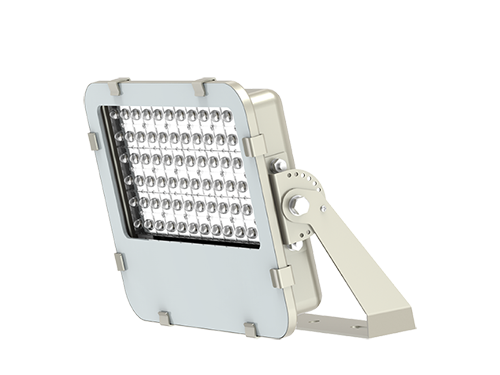
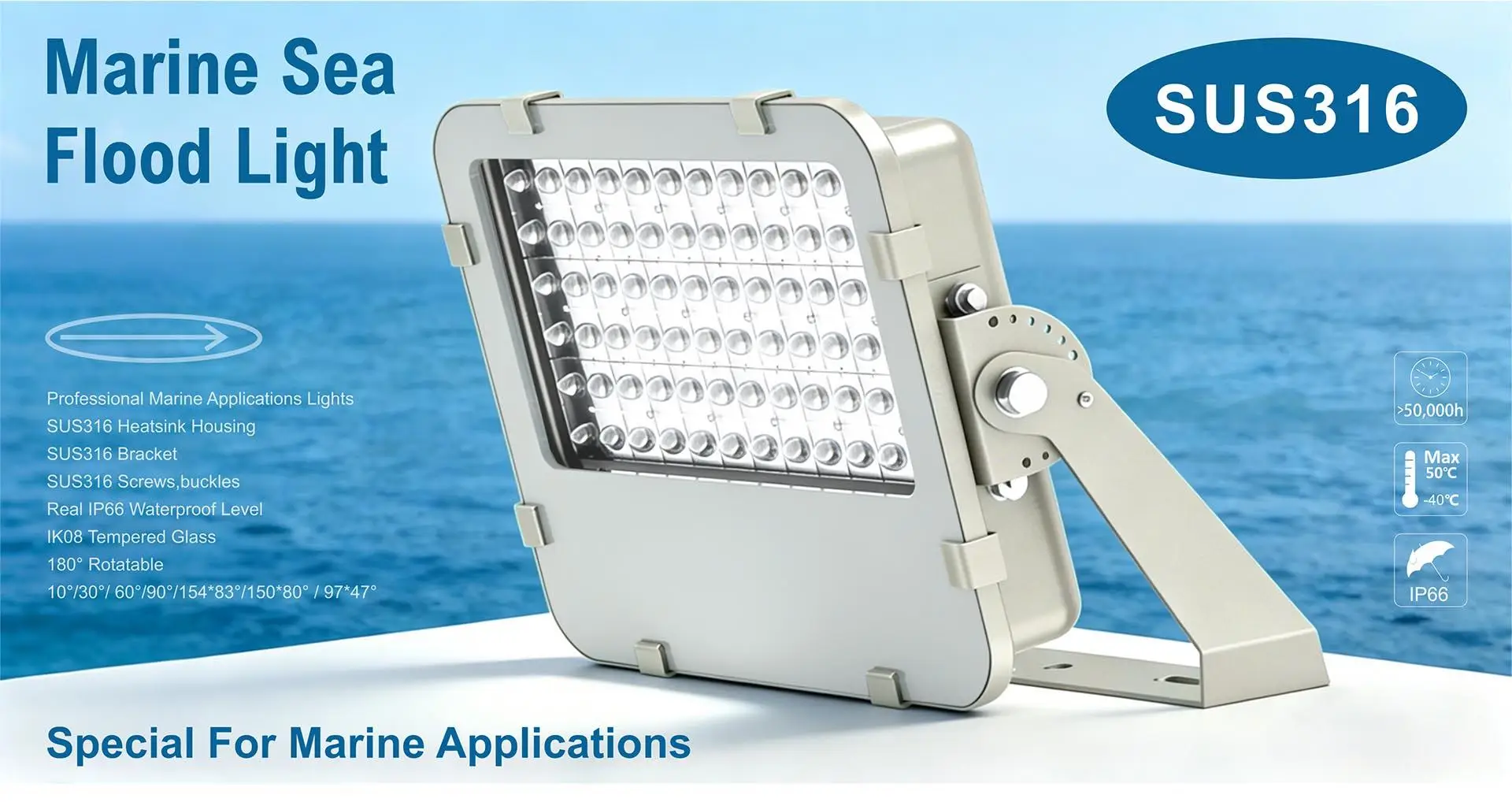
ROKEE’s G6 SUS316 marine LED flood light is intended for corrosive outdoor applications. For a broader discussion of material and optical selection, read the separate marine LED flood lights guide. Send the site distance from the coast, chemical exposure, mounting details and required documentation through our project enquiry page.
Frequently asked questions
How many years does a 1,000-hour salt spray test equal?
There is no reliable universal conversion. Chamber exposure does not reproduce all outdoor wet-dry, UV, temperature, abrasion and chemical conditions.
Is 2,000 hours always better than 1,000 hours?
Not automatically. Compare the standard, specimen, preparation and acceptance criteria. A longer but poorly documented or irrelevant specimen test may not provide better evidence for the offered luminaire.
What is the difference between ASTM B117 and ISO 9227?
Both are widely used salt-spray references, but their scope and procedures are published separately. The project should name the required method and acceptance criteria rather than treating the titles as interchangeable labels.
Does an IP66 marine light resist salt corrosion?
IP66 addresses dust and powerful water-jet ingress. Corrosion resistance depends on materials, pretreatment, coating, fasteners and relevant corrosion testing.
Should a complete LED light be salt spray tested?
Complete-assembly testing can reveal risks at edges, joints, fasteners and brackets that a flat coupon cannot. The right specimen and acceptance method should follow the project’s qualification plan.
Related Posts