
CRI and TLCI both describe color performance, but they answer different questions. Learn how to specify LED sports lighting for spectators, players and broadcast cameras.
LED Street Light Color Temperature: 3000K vs 4000K vs 5000K
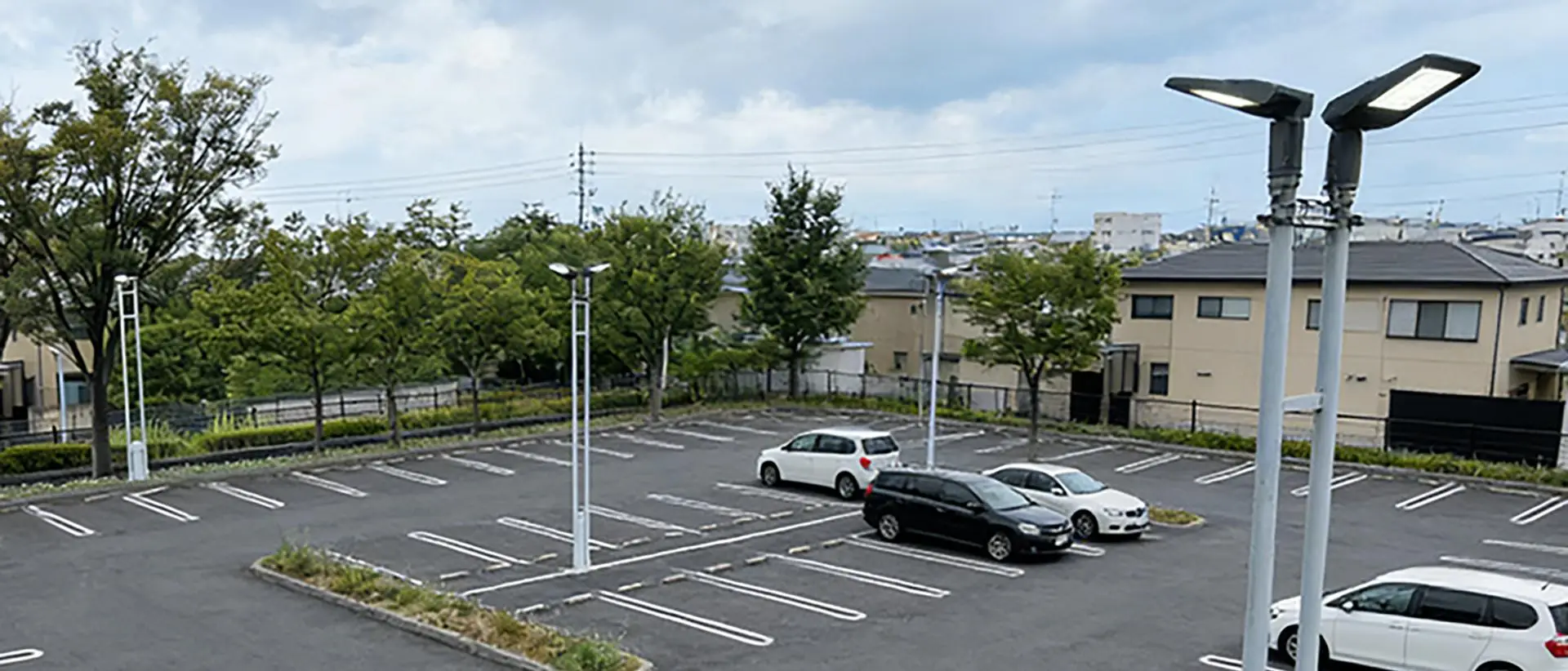
For most public-road projects, 3000K or 4000K is the practical LED street light color temperature range. Choose 3000K where residential comfort, dark-sky policy or ecological sensitivity carries more weight. Choose 4000K where visual discrimination and a neutral appearance are priorities. Use 5000K only when the project has a clear operational reason and local rules allow it.
CCT does not tell you how bright a road will be. Lux, luminance, uniformity, glare and optical distribution decide the visual result. Color temperature describes the apparent warmth or coolness of the source.
What LED street light color temperature actually means
Correlated color temperature is expressed in kelvins. Lower values appear warmer or more amber; higher values appear cooler or more bluish. It is a description of appearance, not quality. A well-designed 3000K street light can outperform a poor 5000K unit, and the reverse is also true.
| CCT | Visual appearance | Typical project fit |
|---|---|---|
| 2200–2700K | Amber to very warm white | Historic areas, ecological zones, dark-sky-sensitive sites |
| 3000K | Warm white | Residential streets, parks, mixed-use districts and many general roads |
| 4000K | Neutral white | Urban collectors, commercial districts, junctions and industrial roads |
| 5000K | Cool white | Selected industrial or high-activity sites where specifically justified |
These are design tendencies, not universal rules. Municipal standards, road class, surrounding land use and environmental review take precedence.
Why 3000K is a common LED street light color temperature
Warm-white LED street lighting is generally perceived as less harsh in residential areas and contains less short-wavelength energy than a comparable higher-CCT source. DarkSky’s luminaire programme limits eligible general outdoor products to 3000K maximum, reflecting its aim to reduce sky glow and ecological impact.
That does not mean 3000K eliminates light pollution. An unshielded 3000K luminaire producing excessive output can be worse than a well-controlled 4000K installation. Direction, quantity and operating time remain fundamental. Use the lowest light level that safely performs the task, keep light below the horizontal where required and dim it when traffic is low.
Where a 4000K LED street light color temperature makes sense
4000K provides a neutral-white appearance familiar in commercial and industrial settings. It may support colour recognition and visual contrast where drivers, pedestrians and security teams need to distinguish objects quickly. It is often used on urban traffic routes, logistics roads and large junctions.
The decision should be made with a mock-up where possible. Residents may accept 4000K on a main route but object to the same source outside bedroom windows. A single city-wide CCT simplifies maintenance; a context-based policy may produce a better night-time environment. The authority has to decide which benefit matters more.
When a 5000K LED street light color temperature is difficult to justify
5000K was common in early LED roadway projects because cool-white packages offered higher efficacy and a visibly dramatic change from high-pressure sodium. The efficiency gap has narrowed, and lower-CCT products are now widely available. For many residential and urban projects, the extra cool appearance brings complaints without delivering a proportionate safety benefit.
There are still applications where a project team may select 5000K—large industrial yards, inspection-oriented sites or an existing network standard, for example. The choice should be supported by a visual task and an environmental review, not by the assumption that a higher number is brighter or safer.
CCT is not the same as blue-light content
CCT is a useful shorthand for colour appearance, but it does not fully describe spectral power distribution. Two LEDs with the same nominal CCT can distribute energy differently across the visible spectrum. The U.S. Department of Energy notes that nonvisual and sky-glow effects depend on spectrum, quantity and duration of exposure, not CCT alone.
For a sensitive site, ask for the spectral power distribution rather than relying only on the carton label. Then reduce the total exposure through shielding, appropriate light levels and curfew dimming.
Color rendering is a separate decision
CRI describes how a source renders colours relative to a reference. CCT describes whether the light appears warm or cool. A 3000K and a 4000K luminaire can both have CRI 70 or CRI 80. Specifying one does not guarantee the other.
Roadway projects should set the colour-rendering requirement according to the task. Residential wayfinding, CCTV, pedestrian recognition and industrial inspection may justify different values. High CRI can reduce efficacy or cost more, so it should solve a stated need.
Weather does not create one universal answer
Claims that warm light always penetrates fog better are often overstated. Visibility in fog, rain and dust depends on droplet or particle size, intensity, beam control, background luminance and observer position. Excess light can increase backscatter and reduce contrast regardless of CCT.
For difficult weather, start by controlling intensity and glare. Use an optical distribution that keeps high-angle light out of drivers’ eyes and avoids over-lighting the foreground. If local trials show a warmer source improves comfort or contrast, use that evidence for the project rather than a generic internet rule.
Match LED street light color temperature to the road
| Area | Sensible starting point | Main reason |
|---|---|---|
| Residential street | 2700–3000K | Comfort, reduced cool appearance, night-time context |
| Urban main road | 3000–4000K | Balance between visual performance and community acceptance |
| Commercial district | 3000–4000K | Colour recognition and active pedestrian environment |
| Industrial or logistics road | 4000K | Neutral appearance and operational visibility |
| Park, waterfront or habitat edge | 2200–3000K | Environmental sensitivity, subject to specialist review |
| Historic district | 2200–3000K | Material appearance and established night-time character |
Where a city wants one standard for stock control, 3000K is a defensible general starting point. Use exceptions for locations where a documented visual task calls for something else.
Test a mock-up before a large conversion
A spreadsheet cannot predict public reaction. Install a short trial section using the proposed wattage, optic, mounting height and CCT. Measure road luminance or illuminance and uniformity, then inspect glare from a driver’s position and light trespass at nearby windows.
Compare options at equal maintained performance. A 3000K luminaire should not be judged at a lower light level than a 4000K alternative, and a demonstration should not be run with one fixture tilted differently from the other.
Controls can matter more than a 1000K difference
A road running at full output all night creates more exposure and energy use than one dimmed after traffic falls. Photocells, schedules, adaptive dimming and central management can reduce output without switching off critical routes. Field-selectable CCT may help standardise stock, but lock the selected setting during commissioning so later maintenance does not create a patchwork street.
What to put in the street-light specification
- nominal CCT and permitted chromaticity tolerance;
- minimum colour-rendering requirement;
- photometric file for the selected CCT and wattage;
- road class, maintained light target and uniformity;
- glare and upward-light limits;
- dimming schedule and control interface;
- batch colour-consistency requirement;
- on-site measurement and visual acceptance procedure.
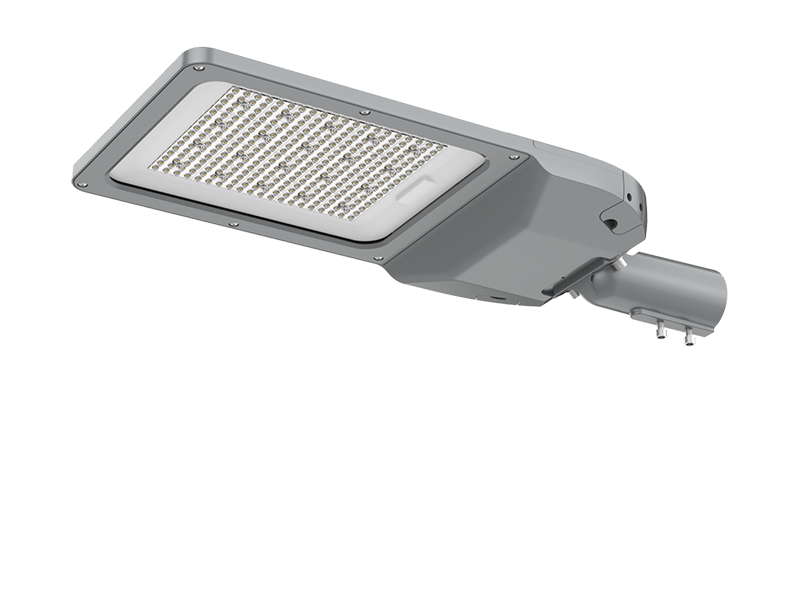
Review ROKEE’s LED street light range and the commercial LED street light specification guide. For a road calculation, send the road width, pole layout, mounting height, target class and preferred CCT.
Frequently asked questions
What is the best LED street light color temperature?
There is no universal best value. 3000K is a strong general starting point for residential and mixed-use roads, while 4000K may suit commercial, junction and industrial routes.
Is 5000K brighter than 3000K?
No. CCT describes appearance, not light quantity. Brightness on the road depends on lumen output, optical distribution, mounting and surrounding conditions.
Are 3000K street lights dark-sky friendly?
They can be part of a responsible design, but CCT alone is not enough. Shielding, low upward light, appropriate output, dimming and operating hours also matter.
Does warmer street lighting improve fog visibility?
Not automatically. Visibility depends on spectrum, intensity, optical control, fog characteristics and observer geometry. A project trial is more reliable than a general claim.
Can one road use different colour temperatures?
It can, but visible colour changes may look inconsistent and complicate maintenance. Use different CCTs only where zones have a clear functional or environmental reason.
Authoritative references
Related Posts