
ATEX is EU law. IECEx is a voluntary international certificate built on the same IEC…
Outdoor LED Lighting Solutions for Commercial Properties: A Specifier’s Guide
Most failed exterior lighting projects fail at the brief, not at the luminaire. Outdoor LED lighting solutions for commercial properties have to satisfy four parties at once: the people who use the site, the insurer and safety officer, the neighbours who see the spill light, and the finance team paying the electricity bill. A design that answers only one of those is not a solution, it is a purchase.
This guide sets out how to specify outdoor LED lighting solutions for office campuses, retail parks, hotels, car parks, logistics aprons and mixed-use developments: which lighting tasks exist on the site, which standards and targets apply, which luminaire families fit each task, how to control light trespass and glare, and what documentation to demand before acceptance.
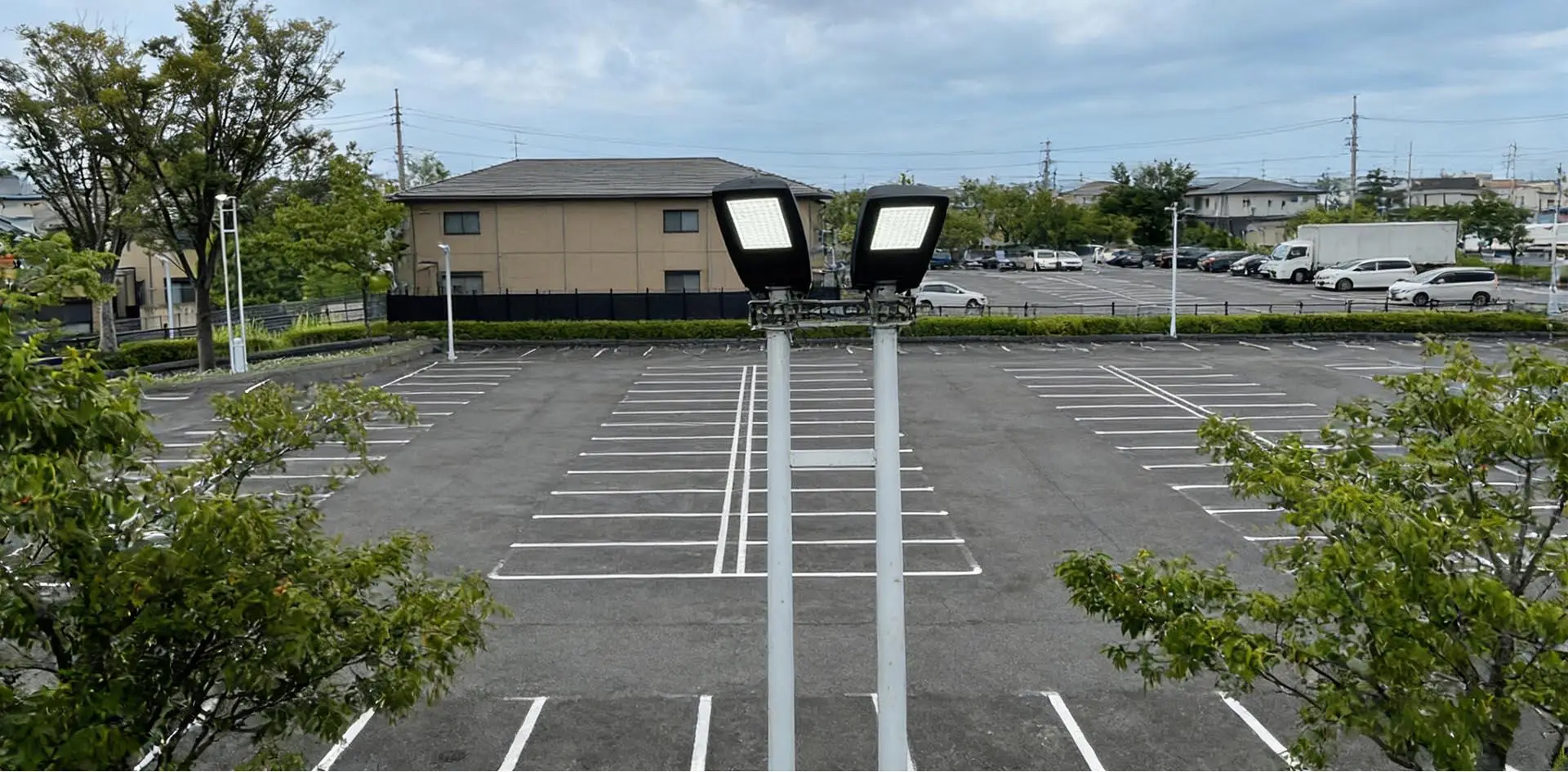
1. Separate the site into lighting tasks, not into fixture types
The first useful drawing for an exterior project is not a luminaire layout, it is a task map. Walk the boundary and mark what has to be seen, by whom, from where.
- Vehicle circulation — entry lanes, drive aisles, junctions and turning areas.
- Pedestrian routes — entries, footpaths, stairs, ramps and crossing points.
- Parking bays and car park decks — horizontal illuminance plus vertical illuminance for face recognition.
- Loading and service areas — task light for handling, with glare control for adjacent offices and roads.
- Building envelope — façade, signage, canopy and entrance identity.
- Amenity areas — terraces, gardens, seating, walkways between buildings.
- Security and CCTV zones — defined by the recognition level the camera system must achieve, not by lux alone.
Each task has a different target level, a different uniformity requirement and a different glare criterion — which is why outdoor LED lighting solutions have to be specified zone by zone. Outdoor LED lighting solutions that use a single fixture type across all seven tasks usually over-light the circulation and under-light the pedestrian edges, which is exactly backwards from a safety and liability point of view.
2. Choose the standard before the target number
Exterior lighting is governed by more than one document, and mixing clauses from different standards is the most common technical error in commercial projects.
| Application | Typical reference | What it fixes |
|---|---|---|
| Outdoor work places (loading areas, aprons, yards) | EN 12464-2 | Maintained illuminance, uniformity, glare rating for outdoor tasks |
| Roads and traffic routes inside or beside the site | EN 13201-2 | Luminance classes, uniformity, disability glare and surroundings |
| Covered or multi-storey car parks | EN 12464-1 | Traffic and pedestrian illuminance with vertical requirements |
| CCTV-assisted identification | EN 62676 series | Image usability levels that translate into vertical illuminance and uniformity |
| Local planning conditions | Authority-specific | Curfew hours, upward light limits, obtrusive light caps |
Where the site boundary meets a public road, the road authority usually controls the road lighting class and may control spill light onto it. Confirm that early: it decides pole positions and sometimes the entire optical concept, and it is the one input that can invalidate an otherwise complete set of outdoor LED lighting solutions. Our street lighting design guide covers the road-side calculations in more detail.
3. Lighting tasks decide the fixture family
Once the tasks are mapped, outdoor LED lighting solutions almost select themselves. In practice, most commercial sites use four to six families, and the discipline is to keep each family on the task it was designed for.
| Family | Task it belongs to | Optical signature |
|---|---|---|
| Asymmetric area light | Car parks, yards, aprons | Forward throw with backlight control, minimal upward light |
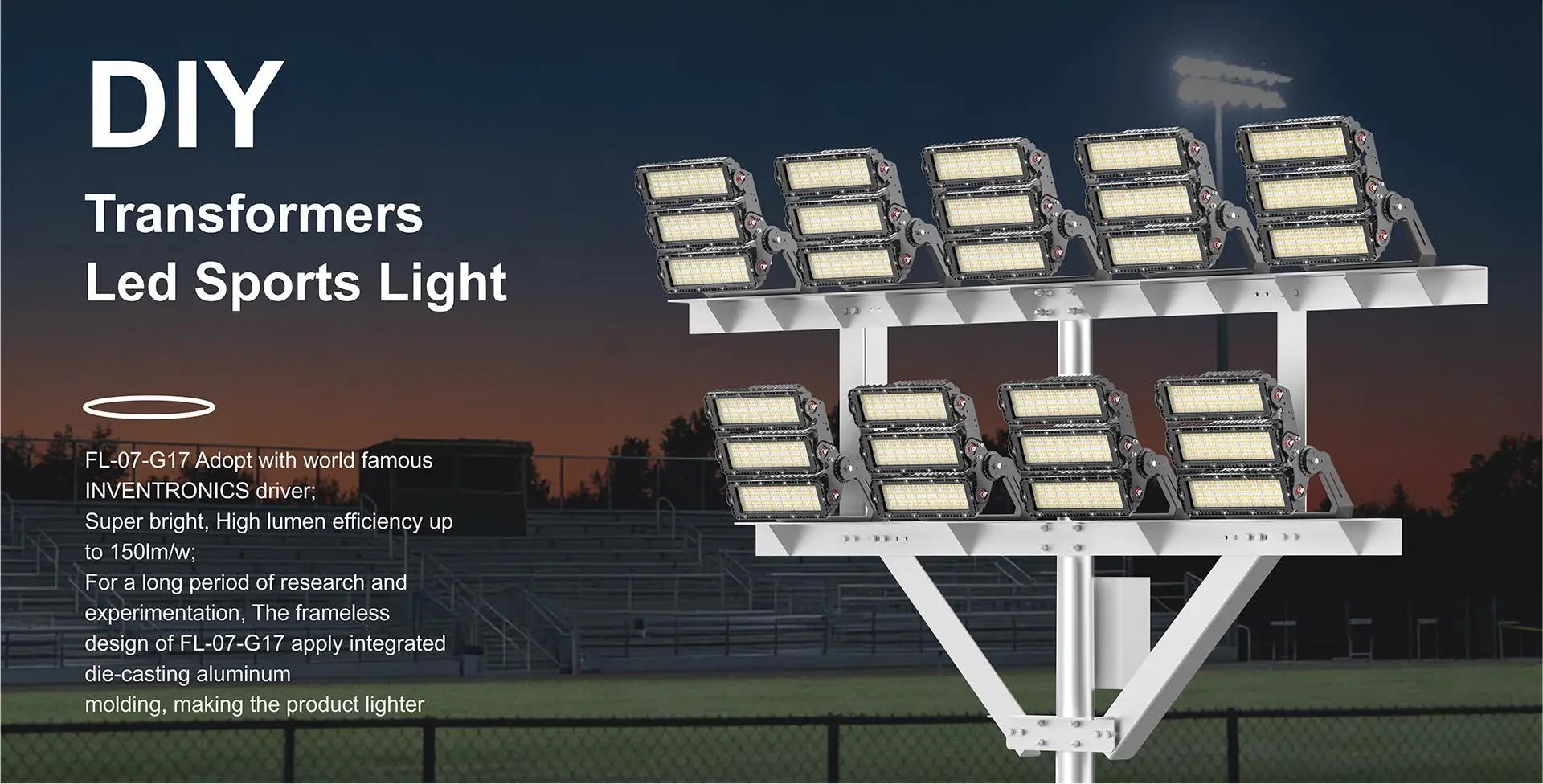
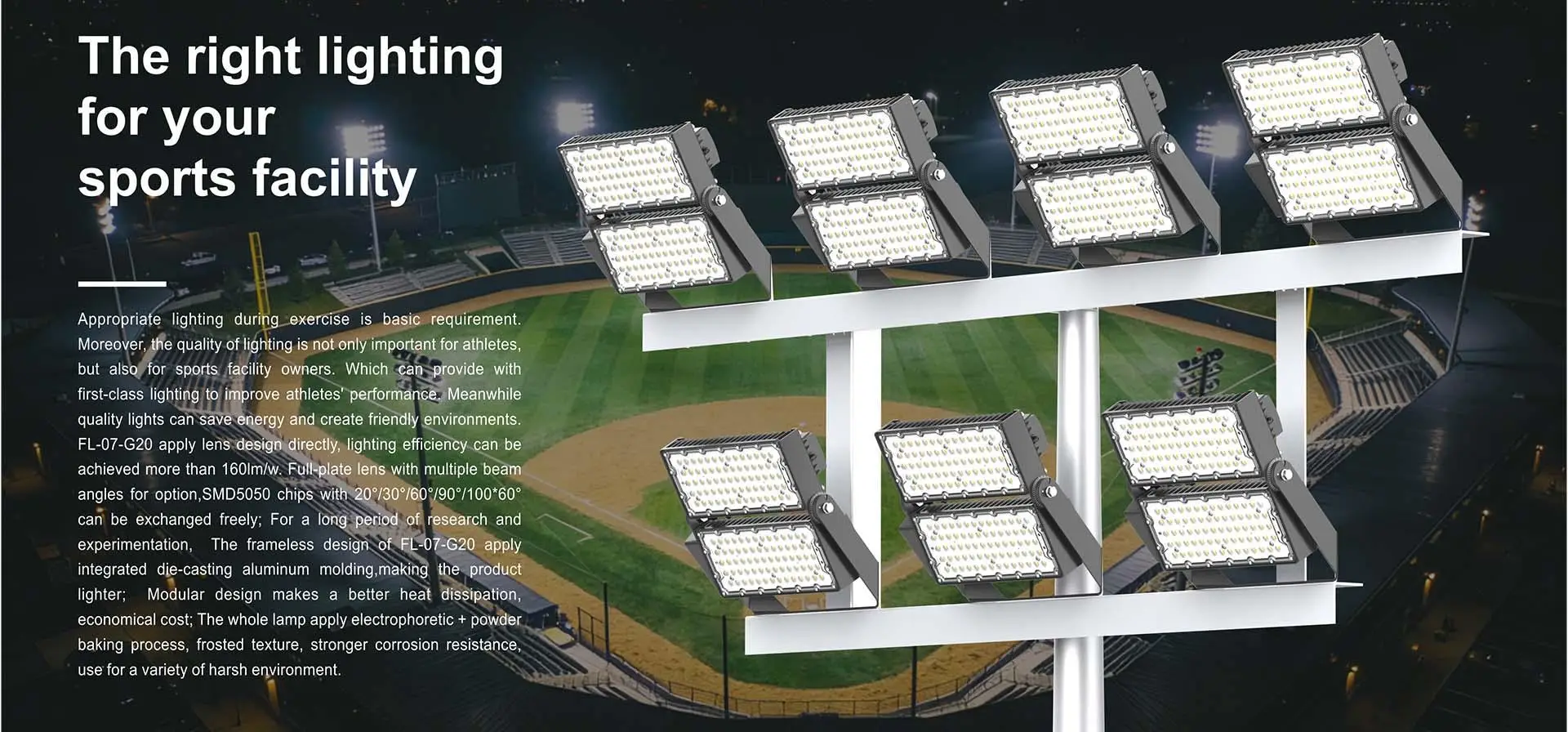
| Floodlight | Façades, signage, sports courts, large open areas | Narrow to wide beams, high output, precise aiming |
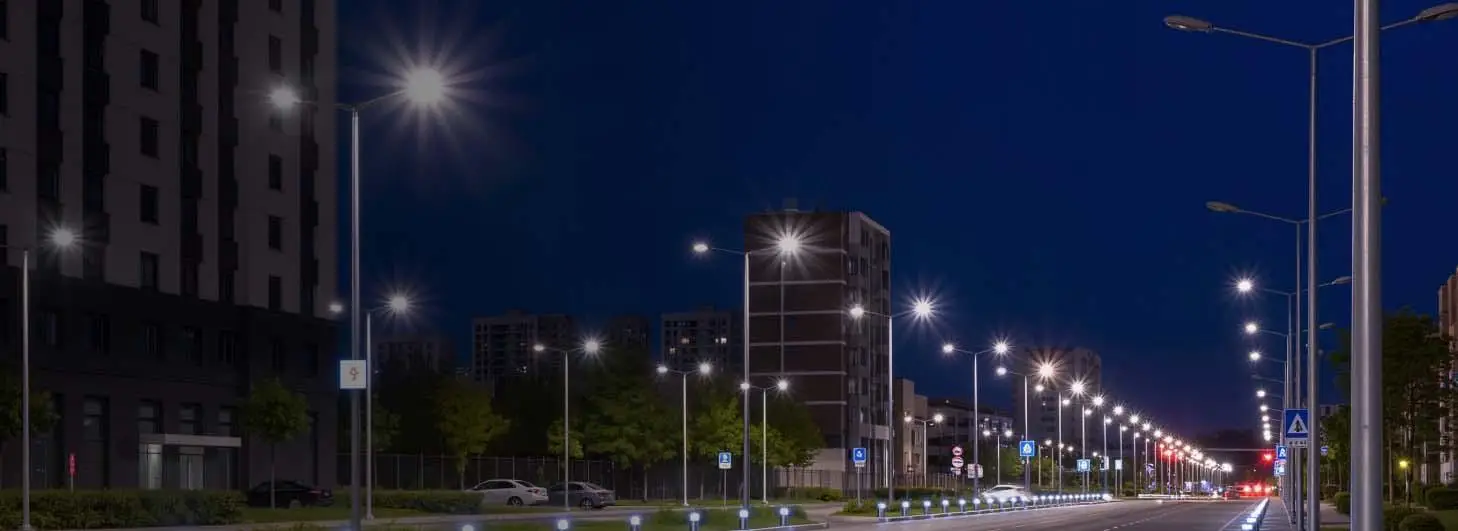
| Street light | Site roads and access routes | Road-optimised distribution with defined longitudinal uniformity |
| Wall pack | Building perimeter, service doors, escape routes | Downward and forward distribution, tight backlight |
| Bollard and garden light | Landscape, terraces, walkways | Low mounting, glare shields, warm colour |
| Wall washer | Façade texture and architectural emphasis | Linear, grazing distribution with controlled beam width |
The LED flood light range covers façade and open-area duties, the LED wall pack range covers perimeter lighting, and the LED garden light range covers amenity areas. For larger open surfaces, our guide to LED flood lights for large outdoor areas explains how output and aiming change with area size.
4. Light trespass is a boundary problem, not a fixture problem
Neighbour complaints, planning refusals and post-installation disputes almost always trace back to the same three causes, and they are the reason planning authorities now scrutinise outdoor LED lighting solutions far more closely than they did with discharge lighting: light aimed above the horizontal, light aimed off the site, and light aimed at a window. Good outdoor LED lighting solutions deal with all three at the design stage.
- Upward light output ratio (ULOR). Specify a low or zero ULOR for area and street lighting, and confirm it from the photometric file rather than the datasheet.
- Backlight and side control. Flat-glass asymmetric optics with a defined backlight category keep light on the task and off the boundary.
- Shields and visors. Where a fitting is close to a boundary, an external shield is often cheaper than redesigning the layout.
- Mounting height and setback. Raising a pole can reduce glare into windows but increases throw distance; moving it closer to the task usually reduces both.
- Aiming discipline. On-site aiming must follow the design coordinates. A floodlight aimed “a bit higher” for visual effect is the fastest way to create a complaint.
Ask for the calculation to show vertical illuminance on the nearest residential façade, not only horizontal illuminance on the ground. That single number answers most planning objections.
5. Colour quality and colour temperature in exterior applications
Colour temperature is the part of outdoor LED lighting solutions most often argued about after installation. In commercial exterior lighting, three points matter.
3000 K versus 4000 K. 4000 K gives better peripheral detection and a more neutral appearance on CCTV, and suits circulation and car parks. 3000 K is more comfortable in hospitality, residential-adjacent and landscape settings. Mixing both on one site without a logic looks accidental; choose by zone and keep it consistent.
CRI and spectrum. For car parks and CCTV, a CRI in the low 70s is normally sufficient, but the spectrum must not distort colour rendering on signage or branded façades. Where the lighting is part of the architecture, specify CRI 80 and above.
Consistency across a batch. Exterior lighting is highly visible at night, so a 200 K difference between two production batches shows up immediately on a façade. Specify a colour consistency tolerance in MacAdam steps and keep a batch record.
6. Controls that fit how a commercial site is actually used
Exterior lighting on a commercial property runs for thousands of hours a year, so the control strategy inside outdoor LED lighting solutions has a direct effect on operating cost — but the strategy has to respect safety obligations.
- Photocell switching removes dependence on manual operation and seasonal time changes.
- Astronomical time clocks handle curfew switching without a separate sensor per circuit.
- Part-night dimming is the standard approach: full output during opening hours and CCTV-critical periods, reduced output after curfew while maintaining safe circulation and escape routes.
- Presence-based boost restores full output in a zone when movement is detected, which suits low-traffic service yards and stair cores.
- Circuit-level monitoring reports failures without a night survey, which matters on multi-building sites.
Whatever the protocol — 0–10 V, DALI-2 or a wireless mesh — confirm that the dimming range is genuinely usable. Some drivers dim to 10% and then flicker or drop out; a dimming curve that stops at 20% is often the honest specification.
7. Durability is the real differentiator outdoors
Exterior luminaires live in rain, wind-driven dust, salt air, temperature cycling and voltage transients, which is why durability separates otherwise similar outdoor LED lighting solutions. Two products with identical photometrics can have very different ten-year outcomes.
| Parameter | Typical commercial requirement | Why it matters |
|---|---|---|
| Ingress protection | IP66 for exposed positions, IP65 minimum elsewhere | Water ingress kills drivers long before LEDs degrade |
| Impact resistance | IK08 minimum, IK10 in vehicle areas | Stone throw and vehicle contact are routine |
| Surge protection | 10 kV / 10 kA combined waveform at driver level | Lighting circuits are frequently the first casualty of a storm |
| Corrosion | Marine-grade finish or stainless fasteners near coast and roads | Salt and de-icing agents attack fixings first |
| Ambient rating | Stated maximum ambient, not “typical” | Roof-mounted fittings in hot climates run far above air temperature |
| Driver access | Replaceable without removing the luminaire | Determines the cost of every future failure |
8. Photometric evidence and acceptance testing
Exterior lighting is measurable, and outdoor LED lighting solutions should therefore be bought with measurements attached. A credible package for outdoor LED lighting solutions includes IES or LDT files for every model and optic, a calculation for each zone with the maintenance factor stated, and a layout drawing with pole coordinates, mounting heights and aiming angles.
After installation, verify a sample of zones: horizontal illuminance on a defined grid, vertical illuminance at the CCTV-critical points, and a visual check for glare from the pedestrian routes and from the nearest boundary. Compare against the approved calculation before sign-off, and correct aiming rather than adding fixtures if the result is low in a localised area.
The lighting projects we publish show the level of documentation expected on a commercial site, including pole layouts and post-installation results.
9. Checklist for outdoor LED lighting solutions
| Stage | Confirm |
|---|---|
| Task map | Circulation, pedestrian, parking, loading, façade, amenity and CCTV zones defined on one drawing |
| Standards | Governing documents agreed with the authority; no mixing of classes |
| Targets | Maintained illuminance, uniformity, vertical illuminance and glare limits stated per zone |
| Optics | ULOR, backlight category and shield requirement stated per family |
| Colour | CCT by zone, CRI where relevant, batch tolerance in MacAdam steps |
| Controls | Switching method, curfew dimming levels, boost logic and protocol |
| Durability | IP, IK, surge, corrosion and ambient ratings specified per position |
| Documentation | IES/LDT files, zone calculations, layout drawing and acceptance test plan |
Build the lighting solution around the site
ROKEE supplies outdoor LED lighting solutions for commercial and industrial properties — area lights, floodlights, street lights, wall packs and landscape fittings — with photometric files, DIALux calculation support and configuration control from sample to shipment. Review the street and outdoor lighting applications we support, or send your site plan and target standards for a zone-by-zone proposal.
Frequently asked questions
How many lux does a commercial car park need?
Traffic routes in a car park are commonly designed around 75 lux horizontal with good uniformity, pedestrian routes around 50 lux, and entrances and payment areas higher. Where CCTV identification is required, vertical illuminance at the face position matters more than the horizontal figure. Confirm against the project standard and the camera specification.
What is the best colour temperature for outdoor commercial lighting?
4000 K suits car parks, circulation and CCTV-driven areas because it supports peripheral detection and neutral camera images. 3000 K suits hospitality, residential-adjacent and landscape zones. Choose per zone and keep the choice consistent across the site.
How do I stop light spilling into neighbouring properties?
Use asymmetric optics with controlled backlight, keep ULOR low, add shields on fittings near the boundary, and verify vertical illuminance on the nearest façade in the calculation. Correct aiming after installation is part of the solution, not an optional extra.
Can outdoor LED lighting solutions be dimmed at night?
Yes, and part-night dimming is standard practice. Reduce output after curfew while keeping escape routes, CCTV zones and pedestrian paths at their required levels. Presence-based boost can restore full output where movement is detected.
What IP and IK ratings are needed outdoors?
IP66 for exposed positions and IP65 as a minimum elsewhere. IK08 is a reasonable baseline, with IK10 in vehicle areas. Near coastlines, add a corrosion-resistant finish and stainless fasteners to the specification.
Authoritative references
- BS EN 12464-2:2014 Light and lighting — Lighting of work places: Outdoor work places
- BS EN 13201-2:2015 Road lighting — Performance requirements
- International Commission on Illumination (CIE): obtrusive light and exterior lighting guidance
- DesignLights Consortium: qualified outdoor luminaires and technical requirements
Related Posts