
A 1000W LED stadium light is not a brightness rating — it is a power…
ATEX vs IECEx vs NEC: What’s the Difference?
ATEX is EU law. IECEx is a voluntary international certificate built on the same IEC 60079 standards. NEC is the US code, which classifies hazards by Class and Division rather than zones. No certificate substitutes for another, so the ATEX vs IECEx vs NEC decision is legal before it is technical.
The rest of this guide is the detail behind those four sentences: how the markings decode, how zones map to equipment categories, what a project in each market has to hold, and what to send a supplier so the quote comes back for the right certificate the first time.
1. ATEX vs IECEx vs NEC in one table
| ATEX | IECEx | NEC / CEC | |
|---|---|---|---|
| Region | European Union and EEA | International, recognised in 40+ countries | United States and Canada |
| Legal status | Mandatory to place equipment on the EU market | Voluntary scheme; acceptance depends on the country | Mandatory through local electrical code and inspection |
| Governing document | Directive 2014/34/EU, applied through EN IEC 60079 | IEC 60079 series, administered by IECEx | NEC Article 500 (Class/Division), Articles 505 and 506 (Zones) |
| Mark on the product | CE plus the hexagonal Ex logo | Plain Ex, no hexagon, no CE | Class/Division/Group, or AEx with a zone |
| Who certifies | Notified body for categories 1 and 2; self-declaration for category 3 | IECEx certification body, plus a quality assessment report | Nationally recognised testing laboratory: UL, Intertek/ETL, CSA |
| Hazard description | Zone 0/1/2 (gas), 20/21/22 (dust) | Zone 0/1/2 (gas), 20/21/22 (dust) | Division 1/2 by class, or zones under Article 505/506 |
| Document issued | EU-type examination certificate plus declaration of conformity | Certificate of Conformity plus a QAR for the factory | Listing report and follow-up inspection |
The ATEX vs IECEx vs NEC split shows up in procurement as well: an EU order and a Gulf order for the same luminaire can usually be covered by one certificate set, while a US order cannot.
2. What each system actually is
The three names get used as if ATEX vs IECEx vs NEC were three versions of the same thing. They are not: one is a directive, one is a scheme, and one is a code.
ATEX is legislation, not a certification brand. Directive 2014/34/EU governs equipment placed on the market, while Directive 1999/92/EC governs the workplace and puts area classification on the employer. Equipment falls into categories 1, 2 and 3, and the higher-risk categories require a notified body to issue an EU-type examination certificate before the CE mark can go on the product.
IECEx is a conformity assessment system run under the International Electrotechnical Commission, described in its own words on iecex.com. Its output is a Certificate of Conformity together with a quality assessment report covering the factory’s production control. The scheme is voluntary, so its value comes entirely from acceptance: Australia and New Zealand recognise it directly, and many operators in the Middle East and Southeast Asia write it into their specifications.
NEC is the US electrical code, adopted state by state and published by NFPA. Hazardous locations are handled two ways. Article 500 uses Class — I for gases and vapours, II for dusts, III for fibres — with Division 1 where the hazard is present in normal operation and Division 2 where it appears only under abnormal conditions. Articles 505 and 506 add a zone system aligned with the rest of the world. Either way the equipment needs a listing from a nationally recognised testing laboratory before an inspector will pass it, which is why the US provisions in NFPA 70 are worth reading before a tender is written.
Legal force is the thread running through ATEX vs IECEx vs NEC, and it decides what follows: what the label looks like, who signs the paperwork, and whether a luminaire bought for one project can be moved to the next.
3. Reading the marking on the fixture
The ATEX vs IECEx distinction is visible on the label long before it appears in the datasheet, and it takes about ten seconds to check.

| Marking | Scheme | Decoded |
|---|---|---|
| CE 0080 Ex II 2 G Ex db IIC T4 Gb | ATEX | CE mark; notified body 0080; group II (surface industry); category 2; gas; flameproof enclosure; gas group IIC; 135°C maximum surface temperature; EPL Gb |
| Ex db IIC T4 Gb | IECEx | Same technical content, no CE mark and no hexagon |
| Class I, Division 2, Groups B, C, D, T4 | NEC Article 500 | Gas hazard; abnormal conditions only; covers hydrogen, ethylene and propane; 135°C surface |
| Class I, Zone 1, AEx db IIC T4 Gb | NEC Article 505 | Zone system in US format; “AEx” is the US prefix for the IEC protection concept |
The visual tell is the hexagon. A hexagonal Ex symbol alongside CE means ATEX. A plain Ex without the hexagon is IECEx or a national scheme modelled on it. If neither appears and the label reads Class and Division, the luminaire was listed for North America, and the EU documentation will have to be issued separately. Two of the three share a marking language and the third does not, which accounts for most of the confusion around ATEX vs IECEx vs NEC on a spec sheet.
Each element of the string carries independent meaning, and ATEX vs IECEx vs NEC arrange them differently, so one set of technical content can appear in three orders on a label. The ATEX explosion-proof lighting guide decodes them one at a time in the order they appear.
4. Zones, categories and EPL are the same ladder
All three systems place equipment on the same ladder, so ATEX vs IECEx vs NEC are really three vocabularies for one idea: how likely the explosive atmosphere is, and therefore how much protection the equipment has to carry.
| Likelihood | Zone (gas) | Zone (dust) | ATEX category | EPL |
|---|---|---|---|---|
| Continuous, or present for long periods | Zone 0 | Zone 20 | 1 | Ga / Da |
| Occasionally, during normal operation | Zone 1 | Zone 21 | 2 | Gb / Db |
| Unlikely, and then only briefly | Zone 2 | Zone 22 | 3 | Gc / Dc |
ATEX category 2 belongs in Zone 1, not Zone 2. The numbers are offset by one, and specifications copied between documents get this wrong more often than any other detail in the field. Because the same ladder is written three ways, a tender that asks for “Zone 2 equipment, ATEX category 2” is internally inconsistent and will come back as a query.
5. Temperature classes and gas groups
Temperature classes are the one place where the three schemes stop disagreeing, because ATEX vs IECEx vs NEC descend from the same IEC table. T1 allows a maximum surface temperature of 450°C, T2 300°C, T3 200°C, T4 135°C, T5 100°C and T6 85°C. A luminaire marked T4 is safe in an atmosphere whose ignition temperature sits above 135°C.
The class describes the surface temperature of the equipment, not the ambient temperature it can work in; a T4 rating says nothing about whether the luminaire survives a 50°C plant room, and that figure has to be read separately from the datasheet.
Gas groups differ in naming between the IEC-based schemes and North America, and the mapping is not one to one.
| IEC / ATEX | Typical gas | NEC group |
|---|---|---|
| IIA | Propane, methane | Group D |
| IIB | Ethylene | Group C |
| IIC | Hydrogen, acetylene | Groups A and B |
Gas group and temperature class transfer cleanly between ATEX vs IECEx vs NEC. Ambient range does not, because it is a product rating rather than a certification one, and each scheme treats it separately.
IIC is the most severe IEC group and covers the gases placed in Groups A and B, which is why a luminaire marked IIC is generally accepted where a Group B listing is requested. The reverse does not hold.
6. Can one test programme cover all three?
For ATEX vs IECEx, largely yes. Both rest on the IEC 60079 series, so one set of type tests at an IECEx certification body can usually support an IECEx Certificate of Conformity and an EU-type examination certificate, with the notified body adding the EU quality assessment on top. This is the normal route for a manufacturer supplying Europe and the Middle East from a single production line, and it is why ATEX vs IECEx certificates so often arrive as a pair.
North America is a separate project rather than an extension. UL 60079 and UL 844 impose different construction details, different conduit entry threads, different marking conventions and a factory inspection under a different scheme. The artwork for the label changes too, so the housing has to be tooled with both markings in mind if the same luminaire is going to serve both markets.
7. What a project in each market has to hold
Certificate expectations follow the market rather than the technology. For any given order, the ATEX vs IECEx vs NEC answer depends on where the site is and who operates it.
| Market | What the buyer will ask for |
|---|---|
| European Union, EEA | ATEX certificate, CE marking, EU declaration of conformity |
| United Kingdom | UKCA marking under the UK equipment regulations; CE may still be accepted for older stock |
| Middle East | Usually IECEx, sometimes ATEX, and frequently both where an international operator sets the specification |
| Australia, New Zealand | IECEx, or the local ANZEx scheme |
| United States | Listing by UL, Intertek or CSA to UL 844 or UL 60079, plus a Class/Division or Zone marking |
| Canada | CSA certification to the Canadian Electrical Code |
| India | PESO approval alongside BIS requirements |
8. Which certificate fits the application
Reading the certificate against the job rather than the country saves a round of clarification later. In practice ATEX vs IECEx vs NEC follow the site and the operator:
| Application | Typical classification | Certificate normally required | Format |
|---|---|---|---|
| Chemical or pharmaceutical plant, EU | Zone 1, gas group IIB | ATEX category 2 | explosion proof high bay |
| Offshore platform or shipyard, Middle East | Zone 1 and Zone 2 | IECEx Certificate of Conformity plus QAR | explosion proof flood light |
| US refinery or tank farm | Class I, Division 2 | UL or Intertek listing to UL 844 | flood or high bay, US listing |
| Grain handling, flour or wood processing | Zone 21 or Zone 22, dust | ATEX category 2 or 3, dust group III | linear explosion proof light |
| Paint booth, solvent storage | Zone 2, gas group IIA | ATEX category 3 | linear or compact flood |
Dust is the case most often missed. A grain silo or a woodworking hall is classified under Zone 21 or 22 rather than a gas zone, the equipment group becomes III instead of II, and the luminaire needs a dust protection concept such as Ex tb rather than a flameproof enclosure. The same lighting logic applies as in general industrial lighting for warehouses, but the certificate and the ingress rating are what decide whether the installation passes.
9. Five mistakes we see in tender documents
These five come up repeatedly in hazardous-area enquiries, and each one costs a round of clarification that a careful specification would have avoided. All five turn on some part of ATEX vs IECEx vs NEC.
- An IECEx certificate is treated as EU compliance, and the order stalls because a separate ATEX certificate is still needed before the product can legally be placed on the EU market.
- ATEX paperwork is offered on a US project, where inspectors want a listing from a recognised laboratory regardless of what the EU certificate says.
- The specification asks for category 2 equipment in Zone 2, which is one step over-protected, or category 3 in Zone 1, which is one step unsafe.
- An IECEx Certificate of Conformity is requested on its own, and the operator rejects it because the quality assessment report is what proves the factory itself is audited.
- A temperature class is quoted as an ambient rating, so T4 is read as a 135°C working environment when it only describes a 135°C surface.
10. What to send a supplier when you ask for a quote
Most delays on hazardous-area projects come from an incomplete enquiry rather than from the certificate itself, and the ATEX vs IECEx vs NEC decision is usually the first thing left unstated. Most suppliers can quote the right luminaire and the right certificate from six pieces of information:
- Start with the classification: zone or division, whether the hazard is gas or dust, and the gas group or dust group.
- Name the certificate set the project needs — ATEX, IECEx, a North American listing, or more than one.
- State the ambient temperature range on site as its own figure, separate from the temperature class.
- Give the mounting height, layout and target lux level, or the pole and mast arrangement where the area is outdoors.
- Supply details matter more than they look: voltage, frequency, and whether cable entries are metric or NPT, because the thread changes with the certificate.
- List the documentation pack expected at delivery: certificate, QAR, drawings and the declaration of conformity.
If the area has not been classified yet, the place to start is explosion proof LED lights for hazardous areas; for a broader view of protection concepts and enclosure types, the explosion proof LED lights guide covers the same ground from the product side.
11. What this means for your order
On ATEX vs IECEx, the technical requirements come from one family and a manufacturer can hold both from a single test programme — the difference is legal force. NEC sits on a different standard set and always needs its own listing. When a project spans markets, settle the certificate set before the luminaire is designed, because the label, the cable entries and sometimes the housing change with it.
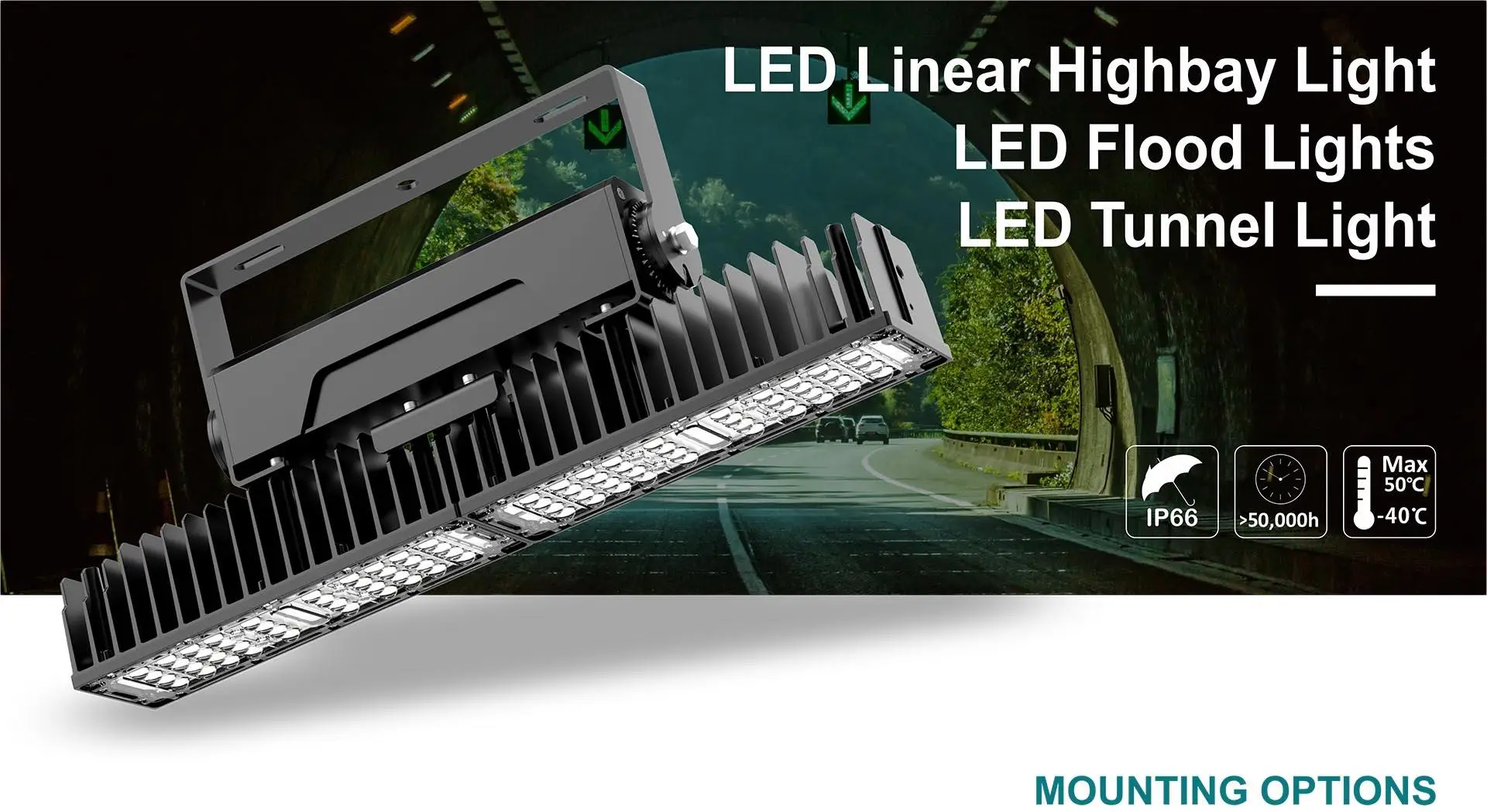
The certificate and the zone have to be settled together, whichever way ATEX vs IECEx vs NEC resolve for a project, because a luminaire ordered against the wrong one cannot be re-marked after delivery. ROKEE supplies LED explosion proof lights in high bay, flood and linear formats for Zone 1, Zone 2, Zone 21 and Zone 22, with certification documents issued per project. Send the six items in section 10 and the quote comes back with the right certificate attached.
Related Posts